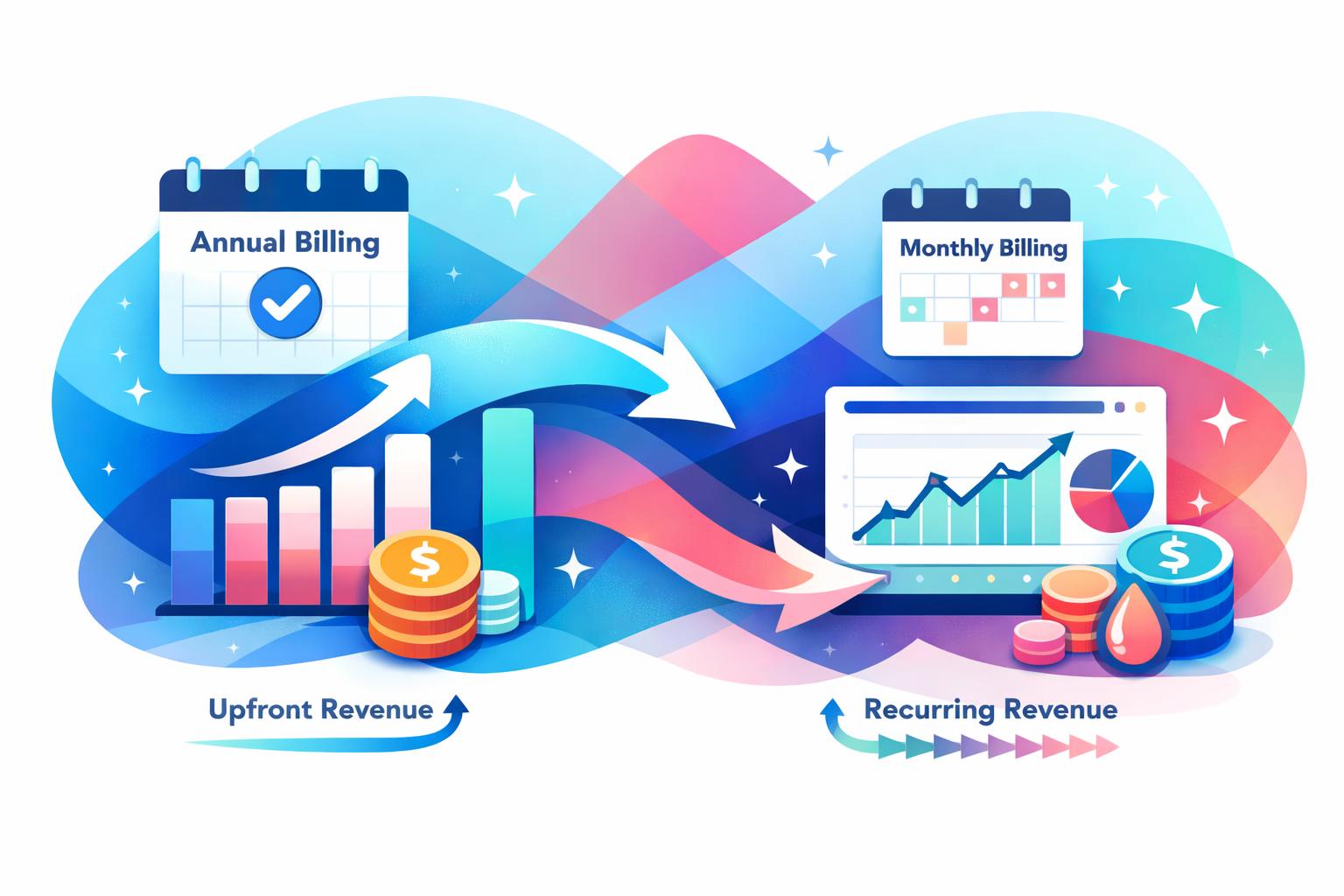
Managing the annual vs monthly billing impact on SaaS cash flow is one of those quiet but defining choices that influence everything—from growth pace and hiring plans to valuation. What seems like a simple pricing decision is actually a critical **cash‑flow lever**, **retention lever**, and **growth lever** all in one. This post explores how billing frequency changes the financial shape of a SaaS business, how annual payments create a meaningful cash advantage, and how tools like MainFoundry’s billing and analytics help teams manage these trade‑offs effectively.
How Annual vs Monthly Billing Impacts SaaS Cash Flow
At a basic level, monthly customers pay incrementally and can cancel easily, while annual customers pay upfront—often at a discounted effective rate. This timing difference is what drives the distinct cash‑flow patterns between the two. Monthly billing spreads cash collection evenly but frontloads expenses for marketing and support, often leading to early negative cash positions even with sound unit economics.
With annual billing, that dynamic flips. Twelve months of revenue arrive upfront, giving teams accessible capital earlier. This can significantly extend operating runway and create flexibility without changing headcount or raising new funds. Many SaaS leaders discover that even a partial shift toward annual contracts unlocks months of additional liquidity for experimentation or product investment.
“Annual billing transforms customer‑funded growth into a lever for longer runway and faster reinvestment.”
Customer acquisition economics also shift meaningfully. Prepaid revenue can offset customer acquisition costs almost immediately, turning slow payback periods into near‑instant recovery. Yet monthly billing remains valuable, particularly for early‑stage or small buyers who prioritize flexibility. The real advantage comes from balance—using monthly plans to drive adoption while annual contracts sustain capital efficiency.
To visualize these trade‑offs, finance teams rely on connected data. Platforms that unify subscription and financial metrics—like MainFoundry’s subscription management—show real‑time runway, payback, and billing composition without relying solely on spreadsheets.
The Cash Advantage of Annual Contracts—and How to Use It Wisely
Beyond timing, annual billing reshapes customer behavior. Annual plan holders revisit their decision less frequently, reducing churn and boosting lifetime value. Financial commitment also deepens usage and integration—customers who’ve already invested tend to engage more deeply, leading to better product adoption and stronger expansion opportunities. For investors, predictable renewal cycles create a perception of stability that translates directly into valuation.
However, this benefit comes with operational complexity. Upgrades, downgrades, refunds, and proper revenue recognition need robust processes. Finance teams must recognize revenue gradually even as cash arrives upfront. Tools that connect subscription events to accounting—such as MainFoundry’s finance management features—help bridge this gap by aligning cash flow with recognized earnings automatically.
Pro Tip: Frame annual savings as “one or two months free” rather than percentage discounts to make pricing intuitive while preserving value perception.
Discount presentation matters. Displaying an annual plan in monthly terms but billed yearly helps minimize sticker shock. Timing also plays a role—offering annual upgrades after a few months of successful usage boosts conversion because customers trust the platform’s value. The most effective teams test their annual discount rates against real cash‑flow outcomes using unified analytics rather than surface‑level MRR snapshots.
Balancing Growth Metrics With Cash Needs in a Hybrid Model
Most sustainable SaaS businesses blend both billing types rather than choosing one exclusively. Early‑stage teams favor monthly plans for frictionless adoption and rapid feedback, while mature companies leverage annual contracts for stability. Segmenting by customer type also helps—self‑serve tiers may stay monthly, mid‑market plans mix both, and enterprise deals often commit annually or longer to match complex onboarding.
The challenge is alignment. Growth teams track MRR and sign‑ups; finance teams watch cash balance and burn. Without shared visibility, pricing adjustments may optimize one metric while hurting another. Integrated platforms like MainFoundry Workspaces and its AI‑powered analytics assistant let teams model scenarios collaboratively, comparing cohort behavior by billing term and forecasting cash implications months into the future.
Visibility turns billing strategy from a debate into a measurable, data‑driven decision.
Key Takeaways
- Annual billing accelerates cash flow and shortens CAC payback, often extending runway significantly.
- Monthly billing supports acquisition by lowering upfront commitment and speeding early growth.
- Retention and valuation typically improve under annual contracts due to reduced churn and predictable renewals.
- Balanced models evolve with scale, using both billing types strategically across segments.
- Unified analytics platforms like MainFoundry provide the clarity to test, model, and adjust billing mixes confidently.
Related Reading
Explore more on subscription strategy with Billing Intelligence for SaaS Companies for actionable insights.