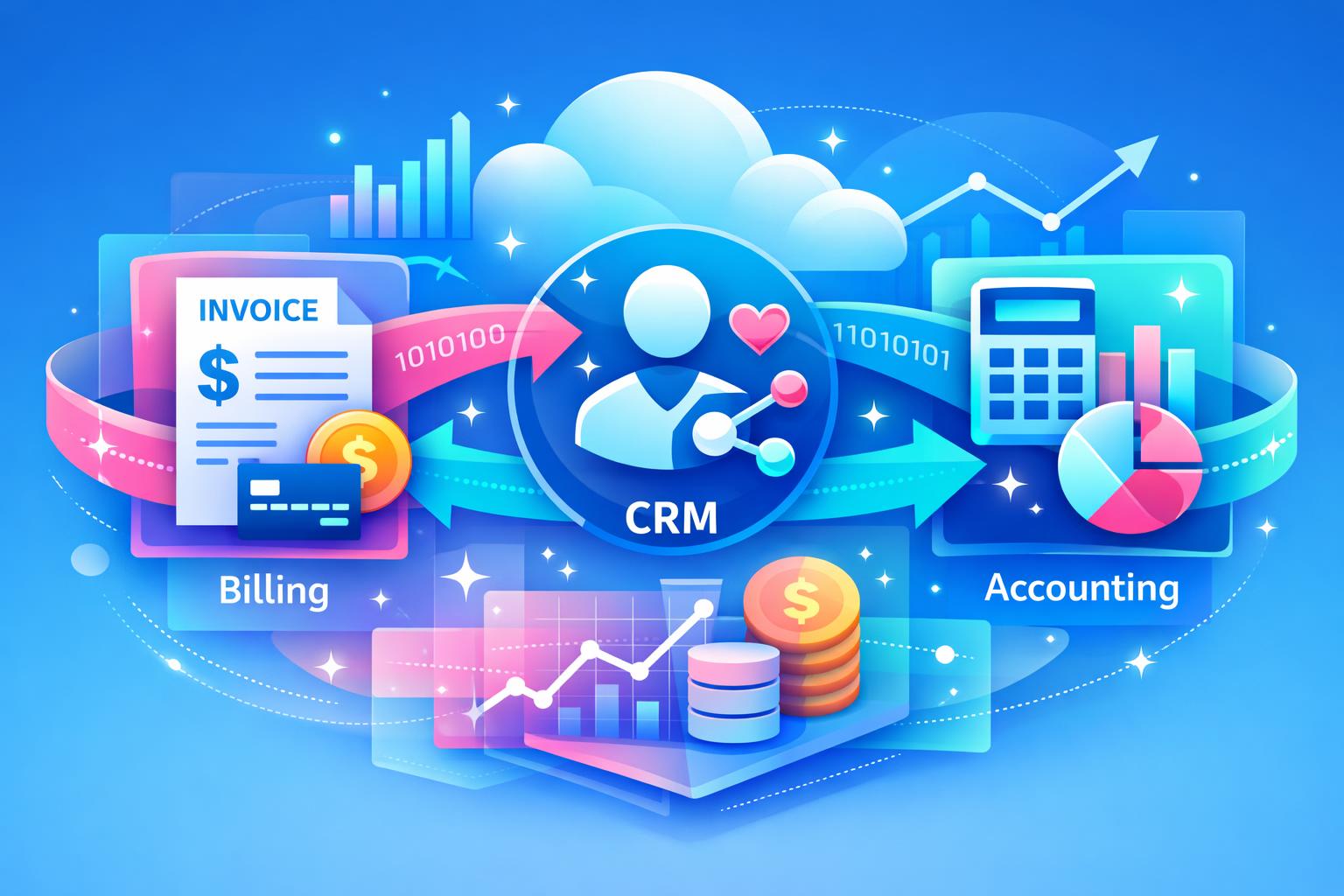
Ask any SaaS finance leader what slows them down most, and the answer often isn’t strategy—it’s cleanup. When billing, CRM data, and accounting tools don’t connect, finance teams lose time fixing discrepancies and re-entering data. This post explores why accounting integration matters for SaaS growth, unpacking how disconnected systems create operational drag, why integration unlocks agility and accuracy, and how platforms like MainFoundry’s native e-conomic sync help teams maintain clarity as they scale.
We’ll cover the hidden costs of manual processes, the benefits of integrated billing and finance data, and actionable takeaways for SaaS CFOs and controllers ready to modernize their financial stack for confidence, speed, and flexibility.
Why Accounting Integration Matters for SaaS Finance Teams
Disconnected systems can quietly undermine growth. In early stages, manual fixes may feel manageable, but as revenue and customer complexity expand, those same workarounds become operational debt that hinders accuracy and slows forecasting. Common issues include manual invoice copying, reconciliation mismatches, and reporting delays that make closing the books a recurring struggle.
When teams can’t trust their numbers, questions like “What did we actually earn this month?” become surprisingly hard to answer. For SaaS finance teams, this uncertainty limits insight into true monthly recurring revenue and obscures performance trends. Integration eliminates this friction by ensuring billing transactions automatically sync to accounting, aligning invoices, payments, credits, and renewals without manual effort.
“Integrated financial systems replace cleanup work with clarity—turning accounting from an afterthought into a strategic advantage.”
MainFoundry’s subscription and billing management connects directly with financial records, reducing duplicate work and errors. Paired with insights from the unified customer database, finance teams gain full visibility from contract to cash, enabling faster reconciliation and cleaner reporting without complexity.
How Integrated Billing and Accounting Reduce Risk and Unlock Visibility
SaaS revenue recognition requires precise tracking, especially when contracts change mid-cycle. When systems rely on manual exports and imports, discrepancies and missing data are inevitable. An integrated platform creates a single source of truth—billing actions such as upgrades and cancellations update accounting automatically, reducing reconciliation risk and supporting accurate deferred revenue balances.
By syncing data in real time, finance teams move from month-end reconciliation to continuous reporting. Leaders can see ARR, churn, and cash positions dynamically, enabling faster decisions and confident forecasting. Integrated systems also improve audit readiness with linked invoices, payments, and contracts stored in one location for transparent review.
Pro Tip: Pair accounting integrations with strong data governance and role-based access. Tools like MainFoundry’s platform security approach enhance control and safeguard sensitive financial data.
For European SaaS teams, native integrations are particularly valuable. MainFoundry’s synchronization with e-conomic allows billing data to flow directly into familiar accounting environments without relying on middleware, ensuring local compliance while removing manual entry. The result is scalable accuracy—finance operations stay lean even as complexity increases.
Key Takeaways
Accounting integration isn’t optional for subscription-driven businesses—it’s a foundation for financial clarity and scale. In short, why accounting integration matters for SaaS comes down to eliminating redundancy, improving accuracy, and empowering smarter decisions across finance and operations.
- Disconnected billing and accounting systems cause inefficiency, data errors, and delayed financial reporting.
- Integrated platforms automate invoice flow and improve revenue recognition compliance.
- Real-time financial visibility strengthens forecasting and decision-making speed.
- MainFoundry’s e-conomic sync offers reliable, region-aware accounting integration for European teams.
If your finance workflows still rely on spreadsheets and manual imports, now is the moment to modernize. Explore MainFoundry or start a conversation with the team at mainfoundry.com/contact to see how integrated billing and accounting can simplify your SaaS finance operations.