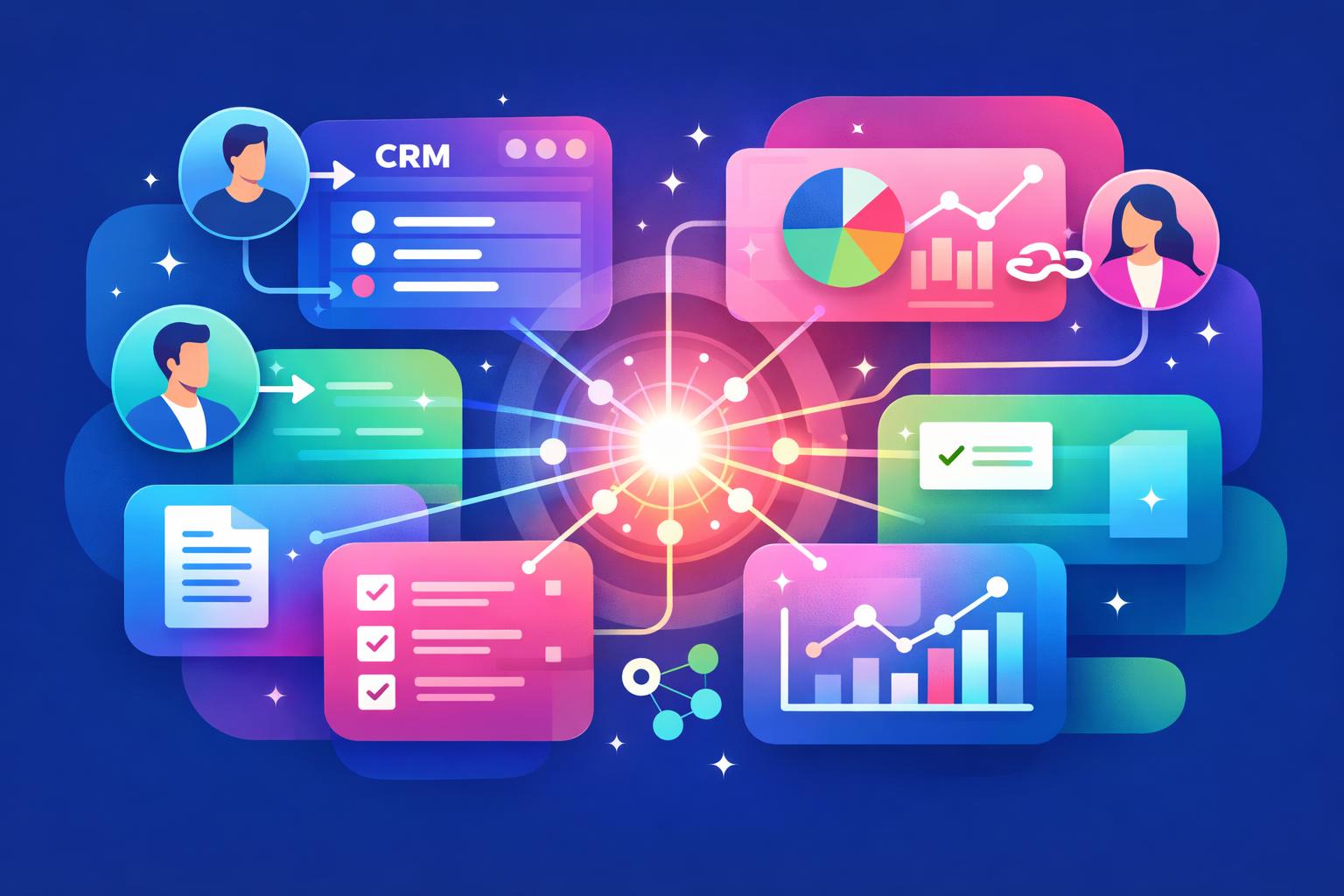
Modern teams juggle countless tools to manage projects, customers, and operations—often losing time and context in the process. Custom workspaces are changing that dynamic by adapting to how your team actually works instead of forcing your process into rigid software. This post explores how custom workspaces streamline collaboration, why they outperform traditional systems like Monday.com or Notion, and how MainFoundry Custom Workspaces unify operations, CRM, and marketing in one flexible platform.
Why Custom Workspaces Outperform Rigid Project Tools
Most teams don’t lack tools—they struggle with too many disconnected ones. Traditional project management applications assume uniform processes, yet every team’s workflow is unique. Custom workspaces flip this model by letting you build around your process rather than bending your team to fit a tool’s limitations.
With MainFoundry, teams can customize tables with fields, statuses, and views that mirror their real operations. Development teams might track feature requests with effort estimates and linked customers, while support or success teams see which accounts requests affect, thanks to seamless connections to CRM contacts. This shared data model means no more switching between apps to cross-check customer or project details.
“Structure without rigidity—that’s what allows teams to scale operations without losing clarity.”
This visibility transforms coordination. Managers can quickly identify bottlenecks, track overdue work, and see all relevant context—notes, history, and files—in one workspace. Because these environments live within a unified platform, they also avoid the “monolith problem.” Teams maintain flexibility while benefiting from consistent data and integrated reporting across systems like CRM, marketing, and finance.
How MainFoundry Custom Workspaces Replace Tools Like Monday.com or Notion
Platforms like Monday.com or Notion offer flexibility—but often at the expense of consistency and context. Over time, their boards and pages drift apart, becoming disconnected from operational systems. MainFoundry Custom Workspaces solve this by bridging work management with connected data about customers, revenue, and communications.
Each workspace includes tailored fields, from numeric values and dropdowns to references between related records. A customer request can link directly to a CRM company, unifying touchpoints like emails, meetings, and deals. As a result, work never loses its business context. Developers, marketers, and customer success teams all access the same source of truth across use cases—development tracking, onboarding flows, hiring pipelines, or editorial planning.
Connected data turns scattered tasks into measurable impact.
For instance, marketing analytics and attribution tools within MainFoundry reveal how workspaces contribute directly to conversions and ROI. Editorial calendars connect content plans to campaign outcomes, helping teams prioritize high-impact initiatives.
This system also supports automation and intelligence through MainFoundry’s AI-powered business platform, which can summarize workspace data or suggest next actions. On the security front, all data is protected by a unified platform security framework, ensuring compliance and consistent access control across all records.
Key Takeaways
- Custom workspaces adapt to each team’s real processes rather than forcing standard templates.
- Integrating workspaces with CRM and marketing data eliminates fragmentation across tools.
- A shared, secure data model provides structure, clarity, and reliable reporting as teams scale.
- Replacing multiple tools like Monday.com or Notion fosters unified visibility and smoother collaboration.
- To explore implementation, connect with the MainFoundry team at mainfoundry.com/contact.
Related Reading
Discover how modular design powers flexibility in customizable workspaces for any process.