Most B2B SaaS teams publish plenty of content, yet few can clearly explain how that content moves buyers from awareness to conversion. Blog traffic may rise, webinars feel busy, and demos trickle in—but leadership still asks: *Is our content actually driving revenue?* This article explains **how to build a SaaS content marketing funnel** that aligns with buyer intent at every stage and connects content to measurable business outcomes. You’ll learn how to map content to the SaaS buyer journey, track it across stages, and optimize it to deliver real revenue impact using modern analytics platforms such as MainFoundry.
Mapping Content to the SaaS Buying Journey
A strong **SaaS content marketing funnel** mirrors how buyers make decisions—from exploring problems, to comparing approaches, to validating final choices. It begins with a clear understanding of your ideal customer profile, including company size, roles involved, and shared pain points. This clarity ensures your content touches real decision-makers rather than generic audiences.
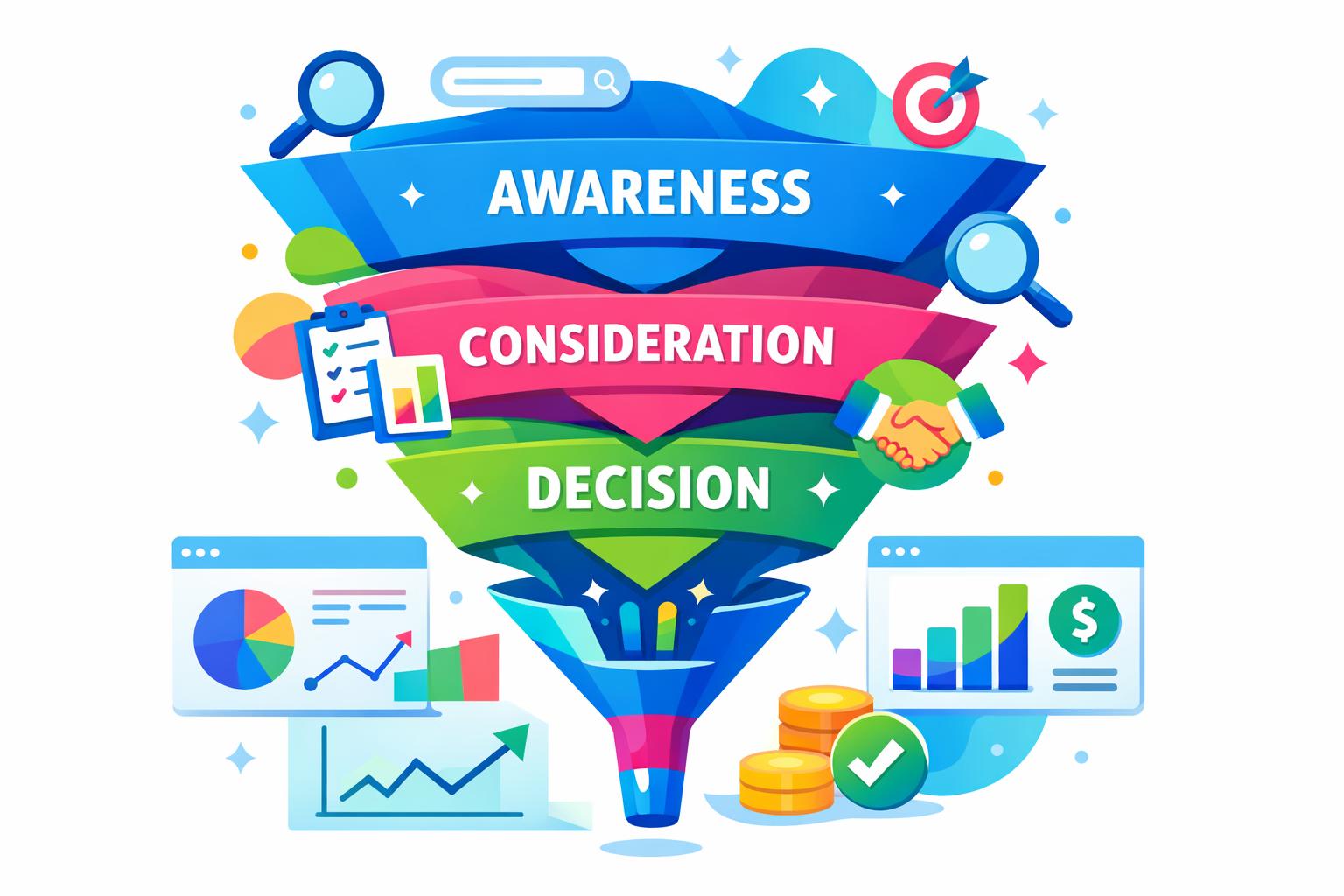
Most SaaS funnels align around three stages: awareness, consideration, and decision. Awareness content focuses on education and discovery—for example, SEO articles and industry explainers that introduce your brand as a credible voice. Consideration assets go deeper, helping prospects compare different solutions through guides, webinars, and early-stage case studies. Decision content should remove final friction with product demos, detailed testimonials, and proof of ROI.
In reality, buyers rarely move linearly through these stages. A prospect might revisit beginner content before booking a demo, which makes a balanced funnel critical. Platforms like MainFoundry simplify mapping by connecting marketing activity with sales engagement in one CRM view. When you can see how content interacts with real contacts across time, the funnel becomes measurable and adaptable.
“A well-mapped funnel doesn’t just attract attention—it clarifies how each piece of content supports revenue generation.”
Tracking and Optimizing Funnel Performance
Measurement separates effective content strategies from content guessing games. Tracking begins with stage-appropriate metrics: awareness should focus on qualified organic visitors and repeat engagement; consideration should examine time spent and depth of interaction; decision metrics look at conversion signals such as demos or trial sign-ups. Understanding intent behind numbers prevents misleading conclusions based on raw traffic alone.
Closed-loop analytics simplify this process. For example, MainFoundry’s marketing attribution connects content interactions directly to deals and pipeline. This multi-touch visibility reveals which assets appear early in conversion journeys and which accelerate close rates later. Instead of attributing success to the last click, you see full influence across the funnel—a critical step for strategic investment and alignment between marketing and sales.
Pro Tip: Start with simple attribution models—first touch, last touch, and assisted conversions. Consistency across teams matters more than complexity when evaluating how content drives pipeline growth.
Optimization comes from analyzing friction points. For instance, strong awareness traffic but weak mid-funnel engagement may indicate poor progression cues, while slow decision conversions can signal lack of product proof. Iterative adjustments—like refining calls to action or enhancing top-performing guides—often outperform full overhauls. Over time, these insights directly translate into more efficient revenue generation.
Key Takeaways
- Map content to buyer intent across awareness, consideration, and decision stages—not random topics.
- Track content effectiveness using stage-specific metrics and multi-touch attribution.
- Connect marketing and sales data with unified analytics platforms like MainFoundry to understand real revenue influence.
- Continuously refine funnel performance by identifying friction points and scaling what works.
- Integrate analytics, CRM data, and optimization into one strategy to turn insights into sustainable growth.
Related Reading
Explore how to develop a SaaS lead nurture strategy for deeper insights into progressing leads through your funnel effectively.