Category: Definitions

  • Revenue Recognition SaaS Guide for ASC 606 Compliance

    Revenue Recognition SaaS Guide for ASC 606 Compliance

    Understanding revenue recognition for SaaS businesses can feel complex, but once you grasp the logic behind ASC 606, everything becomes clearer. Subscription models often involve customers paying before services are fully delivered, which raises the question of when earned income can legitimately be reported. This guide walks through ASC 606 as it applies to SaaS, illustrating how deferred revenue works, why billing systems matter, and how to align subscription accounting with real service delivery. By the end, you’ll see how cash collected turns into recognized revenue in a structured and compliant way.

    How ASC 606 shapes revenue recognition for SaaS companies

    ASC 606 standardizes how companies report earned revenue, ensuring consistency across industries. For SaaS businesses, the principle centers on when value is actually delivered rather than when the payment is received. Because software access typically occurs continuously over a subscription period, income is recognized gradually rather than all at once. This gradual pattern provides auditors and investors with an accurate reflection of business performance over time.

    ASC 606 follows five distinct steps: identifying the contract, determining performance obligations, setting the transaction price, allocating that price across obligations, and recognizing revenue once promises are fulfilled. In SaaS settings, those obligations may include software access, onboarding, and ongoing support—each treated according to when the company delivers value.

    “Revenue recognition under ASC 606 focuses on when the customer receives value—not when the company receives payment.”

    For most SaaS products, consistent service delivery means straight‑line recognition over the contract duration. A twelve‑month subscription often equals twelve equal portions of income recognized monthly. When billing and accounting systems are disconnected, this process requires manual adjustments. Tools like MainFoundry’s subscription and billing management platform prevent that by linking invoices with specific service periods, improving alignment across finance operations.

    Deferred revenue and when SaaS subscription income is recognized

    Deferred revenue is often mistaken for earned income, but it’s actually a liability reflecting cash collected for services not yet delivered. For instance, if a customer pays $1,200 upfront for an annual plan, only one‑twelfth of that becomes earned revenue after the first month—the remainder stays on the balance sheet until fulfillment.

    Subscription services typically use straight‑line recognition because customers receive consistent access. However, usage‑based fees or setup charges may follow different patterns: the former is recorded as usage occurs, while distinct onboarding services may be recognized immediately if they satisfy separate obligations.

    Pro Tip: Accurate revenue recognition starts with clean contract structures and billing data. Ensure invoice line items distinguish between recurring services, one‑time fees, and usage‑based charges for clarity in financial reporting.

    Platforms like MainFoundry’s finance management and revenue tracking tools enable teams to manage subscriptions, upgrades, and renewals as structured events, simplifying MRR and ARR calculations without violating ASC 606 guidelines. As companies scale, integrating CRM (CRM management), billing, and workflow systems (custom workspaces) helps maintain data consistency and compliance. Accurate recognition isn’t only an accounting formality—it also drives reliable growth metrics and investor confidence.

    Key Takeaways

    • Under ASC 606, SaaS revenue recognition depends on when customers receive service rather than when payment is made.
    • Deferred revenue reflects prepaid obligations that convert into income as services are delivered.
    • Clean billing data and structured contracts are essential for precise reporting and automation.
    • Integrated tools like MainFoundry streamline subscription management and revenue tracking as your business scales.
    • Review how billing data flows into accounting to ensure compliance and accurate forecasts.

    Related Reading

    Learn how unified billing and CRM workflows support sustainable growth in MainFoundry’s integrated finance solutions.

  • MRR vs ARR Guide for SaaS Recurring Revenue

    MRR vs ARR Guide for SaaS Recurring Revenue

    Recurring revenue is the heartbeat of sustainable SaaS growth, transforming one-off transactions into predictable financial momentum. Instead of starting from zero every month, SaaS companies build steady income through ongoing subscriptions that compound over time. In this post, we’ll unpack how recurring revenue works, clarify the difference between Monthly Recurring Revenue (MRR) and Annual Recurring Revenue (ARR), and show why both metrics are vital indicators for founders, operators, and investors alike. You’ll also see how platforms like MainFoundry simplify the process of tracking these metrics without the manual effort typically required.

    How Recurring Revenue Works in SaaS

    In a SaaS business, recurring revenue comes from customers paying continuously for access to software or services. This model generates compounding value over time, contrasting sharply with one-time purchase models where every sale starts from scratch. The predictability it provides helps companies plan growth, invest confidently, and demonstrate long-term stability to investors.

    However, recurring revenue isn’t static—it evolves daily as new customers subscribe, others upgrade, and some churn. Managing those fluctuations effectively requires clear metrics such as MRR and ARR. MRR aggregates all predictable monthly revenue, excluding one-time charges or implementation fees. ARR extends the same logic across a twelve-month horizon, providing a broader perspective on growth and stability.

    For instance, a startup with $50,000 in MRR effectively runs at $600,000 ARR. The beauty of these metrics lies in their clarity—finance teams rely on MRR for short-term signals such as early retention shifts, while ARR lets executives assess the business’s overall trajectory. Both measures are interdependent, showing how short-term trends accumulate into long-term success.

    “MRR reveals monthly health, while ARR shows long-term resilience—the two together define SaaS sustainability.”

    That’s why advanced SaaS platforms like MainFoundry’s billing management module automate the tracking of MRR and ARR in real time. By eliminating spreadsheet dependencies, teams can focus on strategic decisions rather than manual reconciliation. This integration also connects financial signals directly with CRM activities and account renewals, giving every stakeholder a consistent source of truth.

    Why Investors Care About MRR and ARR

    For investors, few metrics offer a clearer window into a SaaS company’s health than reliable recurring revenue. These measures remove the noise of one-time contracts or seasonal swings, offering a consistent indicator of growth potential and customer retention. Strong ARR demonstrates momentum and future cash-flow stability, while MRR reveals the dynamics behind that headline number.

    When ARR increases steadily, it indicates solid renewal rates and healthy contract values. Consistent MRR growth, in turn, signals that the sales funnel is converting effectively and existing customers are expanding usage. Together, these metrics provide both strategic clarity and operational insight, allowing investors and leadership teams to align around shared data.

    Pro Tip: Automate MRR and ARR reporting early. Manual updates introduce lag and errors that obscure real business performance over time.

    MainFoundry’s unified system ensures these numbers stay accurate by syncing subscription activity with finance and CRM data automatically. This alignment not only supports transparent reporting but also empowers leadership to identify churn risks or upsell opportunities instantly. To explore how finance automation strengthens SaaS revenue operations, visit MainFoundry’s billing features.

    Key Takeaways

    • Recurring revenue defines predictable SaaS performance, separating subscription income from one-off sales.
    • MRR reflects short-term operational momentum; ARR indicates overall business scale and consistency.
    • Investors prioritize these metrics to gauge growth predictability and underlying financial health.
    • Automating metric tracking reduces errors and strengthens cross-team visibility.
    • Platforms like MainFoundry centralize MRR and ARR, linking them seamlessly with CRM and finance operations.

    If you’re building or scaling a SaaS business, treat recurring revenue as a real-time growth signal, not a static monthly calculation. To learn how to simplify subscription analytics, visit mainfoundry.com or start a conversation at Contact MainFoundry.

  • SaaS Subscription Billing Models That Drive Growth

    SaaS Subscription Billing Models That Drive Growth

    Modern SaaS businesses thrive on predictable revenue and long-term customer relationships—and subscription billing models are central to achieving both. Instead of relying on one-off payments, these models enable ongoing access and continuous engagement. Yet, choosing the right structure isn’t straightforward. This post explores the most effective subscription billing approaches for SaaS growth, from flat-rate simplicity to usage-based flexibility, and how tools like MainFoundry’s billing management system can automate complexity while preserving scalability.

    Understanding Subscription Billing in SaaS

    At its core, subscription billing shifts SaaS from transactional sales to recurring relationships. Customers pay monthly, quarterly, or annually for continued software access, giving businesses consistent cash flow and deeper engagement. This structure fosters loyalty and financial predictability—a vital combination for any technology venture competing in a dynamic market.

    However, while the concept is simple, implementation can quickly grow complex. Managing upgrades, prorated invoices, discounts, and trial periods requires precision. Platforms like MainFoundry’s subscription and billing management automate these processes, enabling SaaS teams to test and scale different pricing models without burdening operations or finance teams.

    “Well-structured subscription billing doesn’t just produce invoices—it shapes how value flows between company and customer.”

    Choosing the Right Subscription Billing Model

    Selecting the best billing model means aligning how users perceive value with how your SaaS earns revenue. Some companies favor clarity through flat-rate billing—a single predictable price for all customers. This straightforward approach suits early-stage tools and simpler services but can limit growth when user bases vary widely in needs and scale.

    Others adopt tiered billing, which categorizes plans by usage or feature sets. It’s flexible and adaptive, letting both startups and enterprises find the right fit. Yet, manual invoice management across thousands of accounts can strain resources—automation makes this flexibility sustainable.

    If collaboration and team access are central, then per-seat billing may be ideal. Charging per user mirrors actual usage patterns, commonly used by communication platforms and CRMs. Meanwhile, usage-based billing ties cost directly to activity—per API call or gigabyte processed—creating fairness but variable monthly revenue. Many teams stability combine this method with a base rate for predictability.

    Pro Tip: Consider hybrid subscription setups that blend flat-rate reliability with usage-driven growth; they help balance predictable income while rewarding high engagement.

    With intelligent automation, MainFoundry supports these models seamlessly, managing renewals, expired trials, tax compliance, and prorations behind the scenes—so your team can focus on strategy instead of spreadsheets.

    How Subscription Models Shape SaaS Growth

    Your subscription structure doesn’t just determine how cash flows—it affects acquisition, retention, and lifetime value. Misaligned pricing leads to churn if customers feel under- or over-served. Conversely, well-calibrated billing can enhance satisfaction and profitability. For instance, flat rates bring stable income but can miss opportunities from power users who’d pay more for premium access. Usage-based or tiered models let customers scale naturally with their evolving needs.

    With actionable insights from MainFoundry’s marketing attribution and finance management tools, teams can measure recurring revenue metrics—including MRR and churn—to fine-tune pricing strategies. This data-driven approach transforms speculation into strategic growth planning, helping leaders evolve subscription models with confidence.

    Subscription model alignment is one of the most powerful levers for scaling SaaS profitability without sacrificing customer trust.

    Key Takeaways

    • Match pricing to customer behavior and value perception—not competitors’ strategies.
    • Automate billing early using reliable tools like MainFoundry’s billing system to eliminate manual errors.
    • Stay flexible with hybrid models that blend stability and growth potential.
    • Use subscriptions data and analytics before changing pricing—test decisions before rollout.
    • Focus on long-term retention; the right structure creates sustainable SaaS revenue growth.

    Related Reading

    Explore more strategies in SaaS pricing optimization and marketing analytics for actionable insights into scaling recurring revenue.

  • Effektive metoder til at måle og forbedre kundetilfredshed

    Effektive metoder til at måle og forbedre kundetilfredshed

    Kundetilfredshed er en af de mest afgørende målepunkter for enhver virksomheds sundhed. Det handler ikke blot om et tal på en rapport, men om, hvor loyale dine kunder er, og hvor stærkt dit brand står i markedet. Denne artikel viser, hvordan du kan måle kundetilfredshed gennem metoder som CSAT, CES, NPS og CSI – og hvordan du kan omsætte data til strategiske forbedringer, der styrker kundeoplevelsen og skaber vækst. Du får både praktiske metoder og eksempler på, hvordan systematisk opfølgning kan gøre kundetilfredshed til din virksomheds konkurrencefordel.

    Hvordan du måler kundetilfredshed effektivt

    At måle kundetilfredshed giver indblik i, hvor godt dine produkter og processer møder kundernes forventninger. De mest anvendte målemetoder — CSAT, CES, NPS og CSI — giver hver deres unikke perspektiv på tilfredshed, oplevelse og loyalitet. Valget afhænger af, hvad du vil evaluere: en specifik oplevelse, effektivitet, relation eller samlet brandopfattelse.

    CSAT (Customer Satisfaction Score) spørger direkte kundens tilfredshed med en oplevelse, typisk på en skala fra 1 til 5 eller 1 til 10. Det giver hurtige “snapshots” efter hændelser som køb eller support. CES (Customer Effort Score) måler, hvor nemt det var at få hjælp eller udføre en handling, og lavere indsats er lig med større loyalitet. NPS (Net Promoter Score) går et skridt videre og måler villigheden til at anbefale dit brand, mens CSI (Customer Satisfaction Index) samler flere faktorer i et samlet indeks, som ofte bruges til benchmark-analyser i større organisationer.

    Ved at kombinere disse metoder kan du både måle driftseffektivitet og brandloyalitet. Moderne CRM-platforme som MainFoundry CRM samler feedback og kommunikation ét sted – hvilket gør det enkelt at analysere kundernes oplevelser på tværs af kanaler og opdage mønstre over tid.

    “Effektiv måling af kundetilfredshed handler ikke kun om tal – det handler om at omsætte indsigter til beslutninger, der forbedrer relationer og oplevelser.”

    Fra måling til forbedring: sådan omsætter du kundedata til handling

    At indsamle feedback er kun starten. Den egentlige værdi opstår, når du segmenterer data, sammenligner over tid og handler strategisk. Hvis du fx ser lav tilfredshed i din support men høj ved levering, ved du, hvor indsatsen skal ligge. Hurtig reaktion på utilfredshed er afgørende for at bevare goodwill og bruge feedbacken som læringskilde. Med platforme som MainFoundry kan opfølgninger tildeles automatisk, og teams får klare ansvarsområder, så ingen kundestemmer går tabt.

    Derudover giver AI-drevne samtaleanalyser et dybere indblik end klassiske spørgeskemaer. Ved at bruge Call Intelligence fra MainFoundry kan du identificere mønstre i kunders frustrationer eller ros og øjeblikkeligt omsætte dem til handlingspunkter. Det betyder, at du løbende kan forbedre processerne og styrke relationerne på baggrund af konkrete data.

    Når du har sat forbedringsprojekter i gang, bør du også løbende spore udviklingen. Et stigende NPS-tal eller faldende churn-rate er klare indikatorer på, at din kundeoplevelse styrkes. Ved at integrere økonomiske nøgletal og feedback i ét samlet workspace – som MainFoundry Workspaces – kan du forbinde kundedata direkte til omsætning og beslutningstagning.

    • Mål kundetilfredshed regelmæssigt for at reagere hurtigt på ændringer
    • Del feedback internt for at sikre læring på tværs af teams
    • Udpeg konkrete forbedringsprojekter baseret på segmenterede data
    • Gentag målinger for at validere effekt og skabe kontinuerlig forbedring

    Pro Tip: Brug automatiserede CRM-workflows til at sikre, at kundefeedback fører direkte til opgaver – det øger både reaktionsevnen og kundetilliden.

    Centrale pointer og næste skridt

    Kundetilfredshed er mere end et måltal — det er et strategisk værktøj, der skaber kobling mellem data, kultur og handling. Når måling kombineres med forbedringsarbejde, skabes en løkke af læring og loyalitet, som styrker hele virksomheden.

    • Måling uden handling er spild af indsats – involvér alle teams i at reagere på data
    • Tværgående samarbejde er nøglen til helhedsindsigt – brug fælles mål og dashboards
    • Teknologisk integration forstærker indsigten – kobling af CRM, marketing og analyseværktøjer gør beslutninger datadrevne

    Ved at anvende en datadrevet tilgang, reagere hurtigt på feedback og implementere forbedringer på tværs af organisationen, kan du forvandle tilfredse kunder til loyale ambassadører. Ønsker du at dykke dybere ned i, hvordan MainFoundry understøtter CRM, marketinganalyse og automatiseret kundefeedbackstyring, kan du læse mere på www.mainfoundry.com.

  • Sådan optimerer du din salgstragt med CRM

    Sådan optimerer du din salgstragt med CRM

    En velfungerende salgstragt er hjertet i enhver effektiv salgsproces. Den visualiserer kundernes rejse fra det første møde med dit brand til det endelige køb – og i bedste fald loyalitet. Denne artikel dykker ned i, hvordan du forstår og optimerer de vigtigste faser i salgstragten, så du kan konvertere flere leads, styrke kundetilliden og skabe langsigtet vækst. Vi gennemgår både struktur, analyse og automatisering – med konkrete metoder og værktøjer som MainFoundry til at samle data, marketing og salg på ét sted.

    Forstå salgstragtens faser

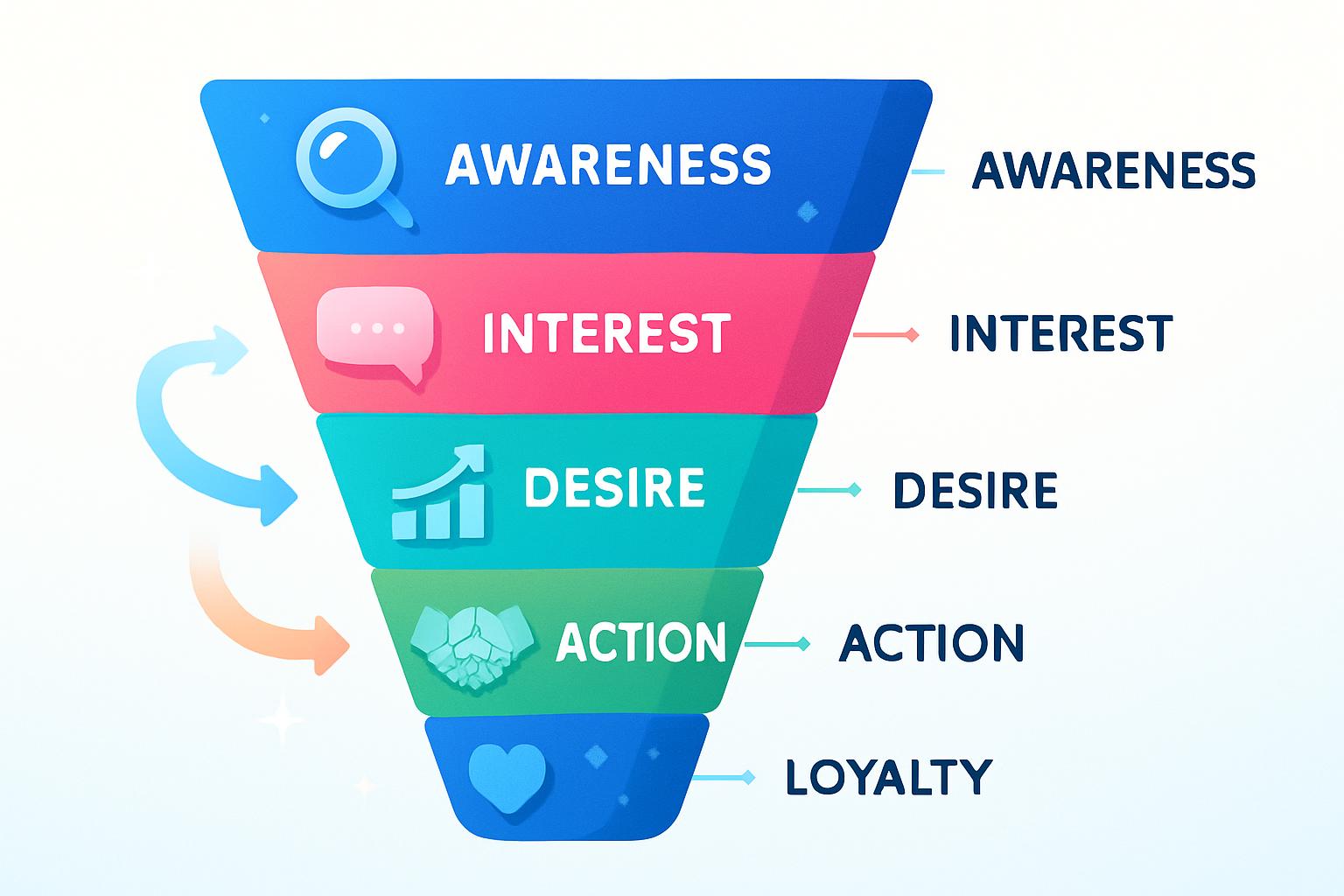
    En klassisk salgstragt er baseret på AIDA-modellen – Awareness, Interest, Desire, Action – som viser, hvordan relationer udvikles fra første kontakt til køb. Hver fase har sit eget formål og kræver forskellig kommunikation og indhold for at lede kunden videre i beslutningsprocessen.

    Opmærksomhedsfasen (Top of Funnel / ToFu) handler om synlighed og rækkevidde. Du skal vække interesse gennem annoncer, sociale medier, søgeordsoptimering eller webinarer, og det er vigtigt at måle, hvilke kanaler der driver kvalificeret trafik, ikke blot volumen. At forstå, hvor opmærksomheden kommer fra, gør det muligt at skalere de mest effektive kilder.

    Interessefasen (Middle of Funnel / MoFu) fokuserer på at engagere potentielle kunder, der begynder at udforske dit produkt. Det kan være via download af e-bøger, tilmelding til nyhedsbreve eller deltagelse i events. Ved hjælp af CRM‑integration kan du segmentere leads, vurdere deres købssandsynlighed og tilpasse dialogen til deres behov.

    Beslutningsfasen (Desire) drejer sig om tillid og overbevisning. Her skal du tilbyde casestudier, demoer og analyser, der hjælper kunden med at forstå værdien af din løsning. Det er ikke et spørgsmål om at presse salget, men om at give indsigt, så beslutningen bliver naturlig og logisk.

    Handlingsfasen (Bottom of Funnel / BoFu) er, hvor købet effektueres. Automatisering spiller her en central rolle. I systemer som MainFoundry kan du opsætte salgs‑pipelines, der automatisk opdaterer status, værdi og næste trin. Det sikrer, at ingen muligheder falder mellem to stole og at salgsprocessen forbliver effektiv hele vejen til afslutning.

    “Når salgstragten anvendes strategisk, bliver den et styringsværktøj, ikke blot en model. Det giver bedre forståelse for, hvad der faktisk driver dine kunder.”

    En ofte overset “ekstra fase” er efterkøbsfasen, hvor onboarding, support og fortsat værdikommunikation skaber loyalitet og reducerer churn-rate. Dette efterløb kan være afgørende for gentagne køb og stærke kunderelationer.

    Sådan optimerer du din salgstragt

    At forstå faserne er kun det første skridt – det er i optimeringen, at værdien skabes. Du bør betragte salgstragten som et aktivt styringsværktøj, der måler, hvor leads falder fra, og hvordan processerne kan forbedres på baggrund af data. Hver fase skal have sine egne KPI’er – rækkevidde, kvalificering og konvertering – så du ved præcis, hvor indsatsen bør forstærkes.

    For hver 10 leads i toppen af tragten, kan du forvente at lukke ét salg i bunden – hvis du optimerer hele kæden.

    Det klassiske forhold mellem pipeline‑størrelse og succesrate gør det muligt at forudsige resultater og allokere ressourcer strategisk. Dashboard‑værktøjer giver dig overblik over pipeline‑størrelse, gennemsnitlig cyklustid og tabte deals – alt sammen værdifuld indsigt til justering af salgsindsatsen.

    For at øge hastighed og præcision bør du tilføje automatisering, herunder marketing automation og intelligente e‑mail‑flows, der plejer leads med relevant indhold. Platforme som MainFoundry forbinder CRM, marketing og økonomidata, så du i ét samlet system kan se, hvor dine indsatser giver størst afkast.

    Pro Tip: Hold din database ren og opdateret. AI‑assistenter kan automatisk opsummere møder, identificere næste trin og foreslå opfølgninger, hvilket frigør tid og øger nøjagtigheden.

    Salgstragten bør aldrig ses som en statisk model. Justér eller omdøb trin, så de afspejler din virksomheds reelle proces. For komplekse B2B‑salg, hvor beslutningskæderne er lange, kan tilføjelse af stadier som “kvalificering” eller “undersøgelse” gøre data mere præcise og teamsamarbejdet mere målrettet.

    Key Takeaways

    • En salgstragt gør kunderejsen målbar og struktureret.
    • Tilpas indhold og CTA’er efter, hvor kunden befinder sig i processen.
    • Brug data og pipeline‑analyser til at identificere flaskehalse.
    • Automatisér opgaver og opfølgninger for at øge tempo og præcision.
    • Integrér CRM‑, marketing‑ og økonomidata i én platform for fuldt overblik.

    Related Reading

    Læs også vores guide om CRM og marketingintegration for at lære, hvordan samlet dataforståelse kan styrke din salgsproces.

  • CRM Strategies to Strengthen Your Sales Funnel

    CRM Strategies to Strengthen Your Sales Funnel

    Every purchase begins with awareness and ends—ideally—with loyalty. Understanding the **sales funnel** gives your business a clear framework for guiding prospects through every stage of that journey. From building initial interest to nurturing repeat customers, an effective funnel helps you forecast revenue, align marketing and sales, and optimize conversion points. In this post, you’ll discover how each funnel stage works, why cross-team collaboration is critical, and how unified tools like MainFoundry’s CRM and marketing platform simplify the process from outreach to retention.

    Mapping the Sales Funnel: From Awareness to Loyalty

    A well-structured funnel outlines how potential customers move from **awareness** to **purchase**, and ideally, to repeat engagement. This not only clarifies your customer journey—it also sets measurable checkpoints for each stage of progress.

    Awareness is the moment prospects first discover your brand. They might encounter your business through organic content, ads, referrals, or events. The goal is exposure—showing up where they already are and offering value before expecting engagement. Using analytics from MainFoundry’s marketing dashboard helps identify which channels drive high-quality leads.

    Interest follows when prospects begin exploring how your company can solve their challenges. Educational materials such as webinars, guides, or case studies build credibility. Here, the CRM becomes indispensable—features like MainFoundry’s Activity Timeline and contact enrichment ensure every touchpoint is visible and actionable across teams.

    Desire develops as leads evaluate options. They compare value, ROI, and reliability, often narrowing choices to just a few. Sales teams can leverage personalized demos or success briefs to strengthen the match between solution and need. Consistency between marketing messaging and sales presentations at this stage builds trust.

    Action marks the conversion—signing a contract, making a purchase, or joining a subscription. Reducing resistance is key: straightforward proposals, transparent terms, and automatic billing through MainFoundry’s invoicing feature can help finalize deals faster.

    Loyalty completes the funnel—though in many ways, it begins a new cycle. Following up with personalized updates, onboarding, and education transforms one-time buyers into long-term advocates. Automation tools inside MainFoundry’s custom workspaces help teams nurture engagement seamlessly.

    “A well-managed sales funnel doesn’t end with a sale—it begins a relationship built on value and trust.”

    Aligning Marketing and Sales for a Healthier Funnel

    When marketing and sales operate on shared data and priorities, the sales funnel flows more naturally. Marketing can identify high-potential leads, while sales can share feedback to refine targeting. This synergy increases efficiency at every stage, from engagement through conversion.

    A unified platform such as MainFoundry synchronizes marketing events, CRM activity, and billing performance into one integrated view. Teams can track which campaigns move leads forward, which interactions stall progress, and where personalization can improve outcomes. This shared visibility eliminates silos and ensures decision-making is based on complete, real-time insight.

    Pro Tip: Use combined CRM and marketing analytics to pinpoint exactly where prospects drop off in your funnel. Tailor follow-ups to those friction points for better conversion rates.

    Key Takeaways

    • The **sales funnel** maps the journey from awareness through loyalty, providing structure for nurturing leads effectively.
    • Alignment between marketing and sales ensures smoother transitions and more accurate forecasting.
    • Tracking stage-by-stage conversion metrics highlights where processes can be optimized.
    • Automation can accelerate efficiency, but personal connection still drives lasting loyalty.
    • Unified systems like MainFoundry bring CRM, marketing, and billing together to elevate every step of the funnel.

    Related Reading

    Discover how integrated tools simplify customer management in MainFoundry’s all-in-one business platform, or connect with our team at MainFoundry Contact to streamline your funnel from awareness to renewal.

  • Optimizing Sales Funnel Stages for Growth

    Optimizing Sales Funnel Stages for Growth

    A well-structured sales funnel is the backbone of sustainable business growth. It charts how potential customers evolve from initial awareness to loyal advocacy, allowing you to measure and optimize each interaction along the way. This post breaks down the major sales funnel stages, reveals how to identify conversion bottlenecks, and shows how integrated solutions like MainFoundry’s CRM and Marketing suite can help streamline every step from first contact to renewal.

    Understanding the Stages of the Sales Funnel

    A typical sales funnel moves through six phases: Awareness, Interest, Evaluation, Decision, Action, and Loyalty. Each one narrows the audience while deepening engagement, helping sales and marketing teams focus efforts strategically. The names may vary by industry, but the goal is the same—guide qualified leads toward committed relationships built on trust and measurable value.

    At the Awareness stage, prospects encounter your brand for the first time through search results, social media, or campaigns. To evaluate performance, marketers should track reach, impressions, and engagement metrics. Using tools like MainFoundry’s marketing analytics dashboard, you can visualize buyer journeys in real time and connect campaign performance directly to conversions, ensuring message resonance translates into leads.

    Next, during the Interest phase, curiosity grows through discovery calls or initial engagement where buyers share their needs. Modern CRMs streamline this process. Systems such as MainFoundry’s allow automatic logging of emails and meetings within a unified timeline view, giving sales teams clarity and context for every conversation.

    At the Evaluation stage, prospects weigh options and expect evidence—personalized demos or industry-specific case studies are common here. Sales teams can harness tools like the AI Assistant to surface insights from past deals, generate proposals, and recommend next actions based on engagement data.

    Throughout the Decision and Action stages, multiple stakeholders may finalize terms or approve budgets. To keep collaboration seamless, custom workspaces let teams organize documents, tasks, and progress on a single board. When pipeline updates automatically sync with the CRM, closing deals becomes a frictionless handoff rather than a disconnected process.

    Finally, the Loyalty stage focuses on post-sale engagement—renewals, support, and upsells. With billing and subscription features automated, follow-up reminders and renewal tracking happen seamlessly. This ongoing visibility sustains customer relationships and extends lifetime value.

    “A healthy sales funnel doesn’t end at the sale—it nurtures loyalty that compounds into long-term growth.”

    How to Strengthen Your Sales Funnel Performance

    A strong funnel is one you actively monitor and optimize. Analyzing conversion rates between stages reveals slow points where momentum fades. By tightening those transitions, teams move prospects faster and more efficiently. The best organizations combine structured data tracking with human adaptability, enhancing top-of-funnel awareness and improving bottom-of-funnel close rates through teamwork and automation.

    • Define metrics per stage. Measure awareness via engagement rates and evaluate conversions through deal velocity.
    • Align marketing and sales goals. Shared dashboards eliminate inconsistent qualification standards and confusion.
    • Automate repetitive tasks. Using AI for follow-up emails, reports, and proposals frees your team for high-value work.
    • Visualize pipeline bottlenecks. Workspace boards make delays easy to spot and address quickly.
    • Close the feedback loop. Post-sale insights inform future campaigns and strengthen personalization.

    Pro Tip: Integrate your CRM, marketing analytics, and billing systems to eliminate data silos—the single biggest barrier to accurate funnel insights.

    Key Takeaways

    A successful sales funnel isn’t simply a path to purchase—it’s a blueprint for sustainable growth and operational alignment. By understanding each stage, tracking the right metrics, and automating collaboration, you turn data into action and prospects into repeat customers. For teams looking to unify sales, marketing, and finance workflows, MainFoundry provides everything in one integrated workspace designed for clarity, speed, and efficiency.

    Related Reading

    Explore how MainFoundry CRM enhances customer lifecycle management to complement your funnel strategy.

  • KPI Dashboard Best Practices for Business Success

    KPI Dashboard Best Practices for Business Success

    Every successful business eventually outgrows static spreadsheets and fragmented reports. The shift toward KPI dashboards represents a turning point—one where real-time visibility replaces guesswork, and decisions become grounded in measurable outcomes. In this post, we’ll explore how these dashboards transform scattered data into actionable insight, highlight the different types suited for specific teams, and share practical steps to build a dashboard that actually drives business success.

    Turning Data into Action with KPI Dashboards

    A KPI dashboard acts as a visual command center that consolidates performance metrics—such as revenue growth, conversion rates, and customer churn—into one place. Leaders no longer need to jump between departmental reports. Instead, they gain real-time visibility across marketing, finance, and operations at a glance, empowering faster and more confident decision-making.

    Modern dashboards update automatically by connecting directly to tools like CRMs, accounting systems, and marketing platforms. For example, MainFoundry provides seamless integrations so that when your finance track cash flow or marketing measures conversion, each department works off the same live data. This unified perspective drives alignment, accountability, and ultimately, stronger business outcomes.

    “KPI dashboards turn raw numbers into clarity, giving leaders real-time insight into what’s working and what’s not.”

    Pro Tip: Keep dashboards focused on five to ten strategic KPIs. Too many metrics dilute insight and slow action.

    Key Dashboard Types and What They Reveal

    Not all dashboards are the same. The most effective version reflects how your business operates—and how your teams make decisions day to day. Executive dashboards summarize financial KPIs like ROI and revenue growth, while operational dashboards monitor productivity, order timings, and workflow efficiency. Analytical dashboards dig deeper into performance patterns and anomalies, often leveraging AI to uncover root causes. Industry-specific dashboards, built on customizable platforms like MainFoundry’s custom workspaces, adapt metrics to unique business models—be it SaaS, manufacturing, or retail.

    Connecting these insights in one view allows teams to spot correlations between metrics that might otherwise stay hidden. For example, a sudden drop in net promoter score could correspond with declining order fulfillment efficiency—a connection visible instantly on a combined dashboard.

    • Actionable insights: Identify trends early and react before they affect performance.
    • Alignment and accountability: Keep everyone focused on shared objectives in one consistent view.
    • Efficiency gains: Reduce manual reporting through automated updates from connected systems.
    • Improved forecasting: Access real-time data to make confident predictions and strategic decisions.

    Building a KPI Dashboard That Drives Results

    An effective dashboard does more than look good—it connects strategy, data, and culture. Begin by defining clear objectives and selecting KPIs tied directly to business outcomes rather than activity. Integrate data sources across CRM, finance, and marketing tools using platforms such as MainFoundry’s billing management tools to eliminate silos and ensure accuracy. Design intuitive visuals with color-coded signals—green for success, yellow for potential risk, and red for issues—and always provide context on data spikes or drops for actionable interpretation.

    Treat dashboards as living systems, reviewed collectively in recurring meetings. This practice keeps teams aligned as goals evolve and transforms the dashboard from a static report into a dynamic feedback loop guiding continuous improvement.

    Key Takeaways

    • A KPI dashboard creates a single source of truth that connects every department to real-time data.
    • Focus only on KPIs that reflect genuine progress toward business goals to maintain clarity and impact.
    • Design visuals that highlight priorities and reveal performance patterns at a glance.
    • Collaboratively review dashboard insights to foster accountability and continuous improvement.
    • Explore MainFoundry’s all-in-one platform to unify CRM, marketing, and finance metrics into one connected workspace.

    Related Reading

    Check out MainFoundry’s Marketing Analytics Suite for deeper insights on integrating campaign data into your KPI strategy.

  • Essential SaaS Metrics Every Business Should Track

    Essential SaaS Metrics Every Business Should Track

    In the world of software-as-a-service, success isn’t defined solely by new signups. It’s about understanding what drives sustainable growth—your recurring revenue, profitability, and customer loyalty. Tracking the right SaaS metrics ensures you don’t just measure success but continuously refine your product, pricing, and acquisition strategy. This post breaks down the essential KPIs every SaaS business should monitor, featuring insights on financial health, customer acquisition efficiency, and retention—plus how platforms like MainFoundry simplify it all.

    Financial Metrics That Define SaaS Growth

    Predictable revenue fuels every SaaS model. Monthly Recurring Revenue (MRR) and Annual Recurring Revenue (ARR) are the twin pillars of financial visibility. MRR gives a snapshot of consistent monthly income, while ARR—MRR multiplied by 12—illustrates long-term strength for investors and internal forecasting. Monitoring both helps founders understand stability and future trajectory.

    Equally insightful are Average Revenue Per Account (ARPA) and Average Revenue Per User (ARPU), which show how much value each customer contributes. A rising ARPU usually signals effective upselling or higher perceived product value. For example, companies expanding client tiers can expect ARPA to strengthen in line with customer growth.

    Further financial clarity comes from analyzing Annual Contract Value (ACV). When ACV grows, it typically reflects longer-term trust and improved deal quality. By bringing MRR, ARR, and ACV together, leadership teams gain not only a snapshot of stability but insight into revenue scalability. MainFoundry’s finance module automates these calculations and visualizes patterns in real time, connecting financial KPIs directly with CRM and marketing data for smarter forecasting.

    “Revenue predictability isn’t just a financial metric—it’s the foundation of strategic clarity and investor confidence.”

    Customer Acquisition, Retention, and Operational Efficiency

    Customer Acquisition Cost (CAC) and CAC Payback Period serve as the reality check for growth strategies. CAC reveals how much it costs to win each new customer, while payback period shows how long it takes to recoup that spend. High costs or slow paybacks can expose inefficiencies in marketing channels—insights that help SaaS operators fix scaling bottlenecks before they impact cash flow.

    Understanding momentum over time is equally vital, and the Lead Velocity Rate (LVR) captures just that—tracking how fast qualified leads grow month over month. When your LVR increases consistently, it often predicts stronger upcoming MRR. However, retention keeps that momentum sustainable. The Churn Rate quantifies customer loss, while Net Revenue Retention (NRR) layers in upgrades and downgrades to reflect true customer health. High NRR means customers not only stay but expand their spending—a signal of strong product-market fit.

    Pairing Customer Lifetime Value (LTV) with CAC sharpens perspective. A LTV:CAC ratio near 3:1 is widely considered healthy, showing that acquisition spend generates durable returns. Integrated platforms like MainFoundry’s CRM and Marketing Analytics make it simpler to measure these KPIs collectively—combining campaign data, retention dashboards, and account insights in one workspace.

    Operationally, pairing efficiency with profitability gives the full picture. The Rule of 40 blends growth rate and margin—if the sum equals or exceeds 40%, your SaaS is balancing scale with stability. Add metrics like burn rate, runway, and gross margin to track durability. Tools such as MainFoundry’s AI Assistant automatically surface alerts when churn or margins shift, helping teams stay ahead rather than react.

    Pro Tip: Monitor NRR and Churn together—when NRR rises faster than churn declines, your upsell strategy is outperforming retention losses.

    Key Takeaways

    • Track predictability first: MRR and ARR are the heartbeat of SaaS stability and investor confidence.
    • Put efficiency metrics to work: CAC, LTV, and Rule of 40 help reveal how sustainable your scaling model really is.
    • Retention drives momentum: NRR and churn rates are critical for understanding customer value beyond acquisition.
    • Integrate your data: Combining CRM, marketing analytics, and finance insights uncovers connections hidden in silos.
    • Automate reporting: AI platforms like MainFoundry’s AI suite cut hours of manual data work and turn complex KPIs into actionable insight.

    Related Reading

    Explore how unified CRM strategies and finance analytics can help SaaS companies refine their growth models for long-term resilience.

  • Boost Customer Retention with CRM Strategies

    Boost Customer Retention with CRM Strategies

    Keeping your existing customers is one of the smartest ways to ensure sustainable business growth. While acquiring new buyers often grabs attention, it’s your customer retention rate (CRR) that truly determines long-term profitability. Understanding how to measure and improve retention allows you to identify growth opportunities before churn erodes your revenue base. In this guide, we’ll reveal how CRR is calculated, what supporting metrics sharpen your analysis, and which strategies and tools you can use to retain more customers effectively.

    How to Measure Customer Retention Rate

    The formula to calculate your customer retention rate is simple yet powerful: CRR = ((E - N) / S) × 100. Here, E stands for the total customers at the end of a period, N represents new customers gained, and S is your starting customer count. For instance, if you start with 2,500 customers, gain 600 new ones, and end with 2,800, the calculation gives you an 88% retention rate. That indicates strong loyalty, but also highlights space for optimization.

    Analyzing CRR in isolation doesn’t tell the full story. To get useful insights, compare it with complementary metrics such as churn rate, repeat purchase rate (RPR), customer lifetime value (CLV), and satisfaction indicators like Net Promoter Score (NPS) or Customer Satisfaction Score (CSAT). These help pinpoint the reasons behind retention trends rather than just the outcomes.

    For example, if a company notices RPR dropping below 20% while CLV shrinks simultaneously, it’s a red flag that customer experience or support processes may be weakening. Similarly, declining CSAT scores often reveal bottlenecks that prevent customers from returning. Platforms such as MainFoundry’s marketing analytics connect these insights across engagement points, letting you see how satisfaction metrics align with specific actions and campaigns.

    “When CRM, marketing, and analytics tools operate together, raw data transforms into actionable insight rather than disconnected reports.”

    Using integrated platforms such as MainFoundry’s CRM, you can visualize customer behavior trends, automate reports, and spot warning signs before churn occurs. With engagement and performance synchronized, every metric becomes a lens for proactive action.

    Practical Ways to Improve Customer Retention

    Improving retention requires consistent listening and swift action. Begin by tracking feedback through NPS and CSAT surveys. Promoters signal loyalty worth nurturing, while detractors highlight friction areas that demand change. For instance, when detractors point to delayed responses, linking CRM case handling with task management ensures prompt follow-up and demonstrates professionalism.

    Segmentation unlocks another layer of insight. Using predictive CLV models, you can identify which segments of customers offer the greatest potential. Tailoring messages, loyalty rewards, or renewal incentives based on these insights improves conversion and engagement rates. Tools like MainFoundry’s billing solutions can automatically trigger outreach or renewal alerts when customer value thresholds or churn risks change.

    Businesses that unify CRM, marketing, and finance see up to 30% faster response times and higher customer loyalty scores.

    A unified workspace closes the loop between teams. Sales, marketing, and service can access every client conversation, order, and note in a single timeline. With platforms like MainFoundry Workspaces, organizations can visualize retention objectives through customizable boards, track progress, and assign follow-ups effortlessly. This collaboration encourages accountability and transparency across departments.

    Pro Tip: Use automation rules within your CRM to flag customers showing signs of disengagement, like reduced logins or slower purchase cycles, so you can act before churn occurs.

    Key Takeaways

    • Continuously track your CRR and associated metrics to gauge loyalty performance over time.
    • Combine metrics like churn, CLV, and NPS for a complete understanding of customer behavior.
    • Act on feedback quickly to turn insights into measurable retention improvements.
    • Use customer segmentation powered by predictive analytics to tailor retention campaigns.
    • Leverage unified systems like MainFoundry’s AI-enabled platform to automate workflows and gain full visibility.

    Customer retention success goes beyond maintaining high numbers—it’s about building relationships grounded in trust and relevance. By measuring the right indicators and acting early, you strengthen your ability to deliver value again and again. Contact MainFoundry to learn how unified analytics and automation can help your business turn retention insights into lasting growth.

    Related Reading

    For more on customer analytics and CRM strategy, explore How Unified CRM Platforms Drive Customer Growth.