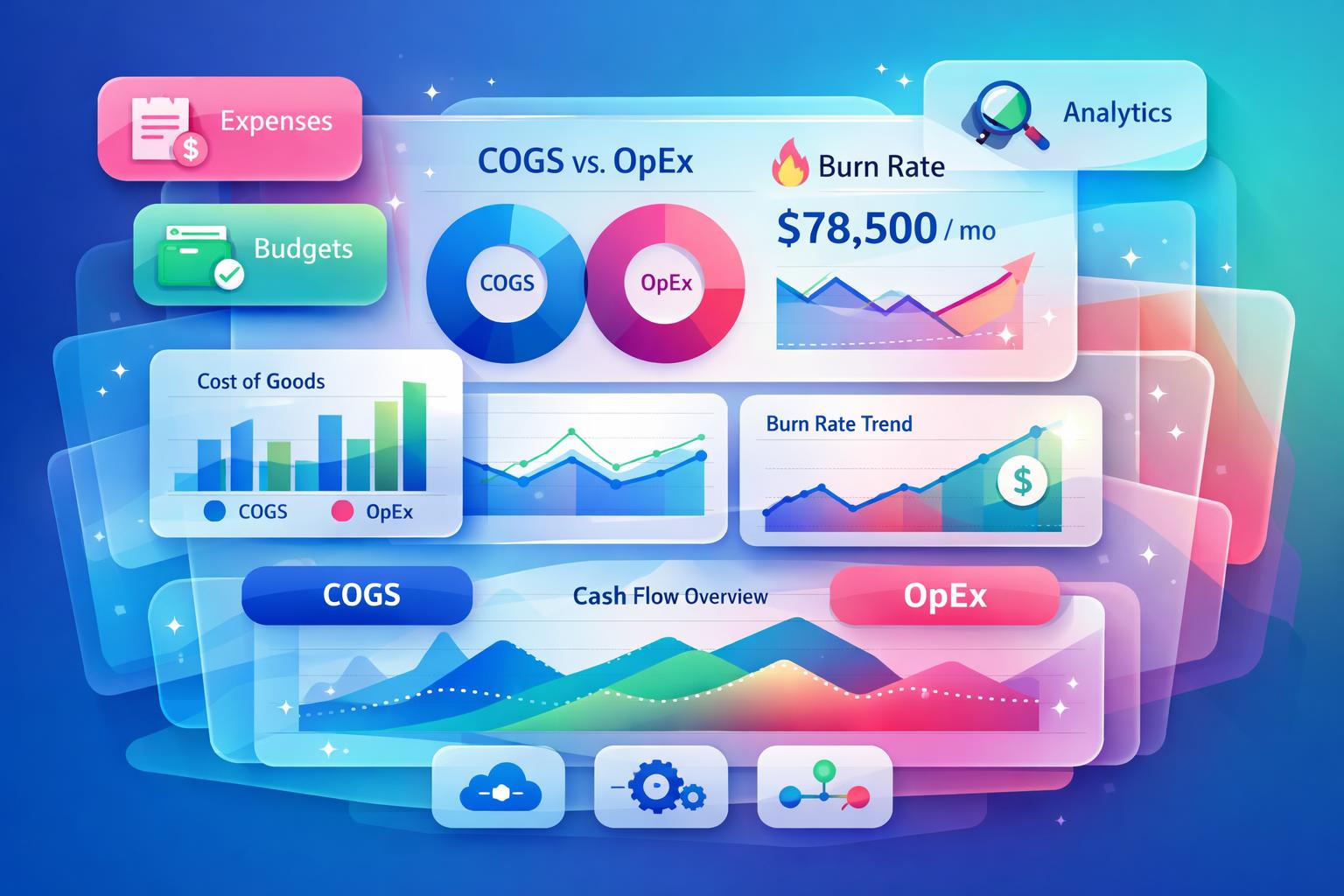
In fast-scaling SaaS companies, expenses shape how investors measure efficiency and how leaders steer growth. Because costs typically surge before revenue stabilizes, even small misclassifications can distort margins, burn rate, and cash flow forecasts. This guide breaks down how to manage expenses strategically—covering accurate cost classification, burn and runway tracking, budgeting discipline, and audit readiness. You’ll also see how a centralized platform like MainFoundry turns these processes into a synchronized financial engine.
Why Expense Management SaaS Matters for Modern Companies
SaaS companies follow a different financial rhythm. Product development, infrastructure, and customer acquisition investments occur well before recurring revenue stabilizes. That lag makes expense visibility essential from the earliest growth stages. Investors especially scrutinize burn efficiency and gross margin, so accurate categorization shapes credibility as much as accounting accuracy.
A sound approach begins with precise cost classification. Knowing which expenses belong in Cost of Goods Sold (COGS) versus Operating Expenses (OpEx) directly impacts reported margins. Hosting, infrastructure, and customer support tied to active users fall under COGS since they scale with service delivery. Sales, marketing, and R&D are OpEx because they fuel growth rather than delivery.
Maintaining this consistency gets tougher as headcount grows and roles blend across functions. That’s where systems like MainFoundry’s subscription and billing management tools help by embedding categorization logic directly into every expense workflow. These tools align cost centers, enforce approval flows, and ensure clarity across teams.
Another crucial factor is burn rate. Gross burn shows total outflows; net burn subtracts monthly revenue to reveal actual cash loss. SaaS leaders depend on these metrics to decide when to adjust hiring or marketing spend. Effective expense management software distinguishes cash timing from accrual data, helping teams spot risks before runway shortens.
Budgets connect every level—from COGS and R&D to Sales and G&A—into unified spending plans. When expense tracking platforms offer real-time budget visibility, teams can correct course instantly instead of reacting weeks later. Meanwhile, a centralized repository combines receipts, approvals, and audit trails that make diligence processes smoother and faster.
“Expense visibility is not merely about cost tracking—it’s the foundation of financial trust and strategic agility.”
How Expense Management SaaS Handles COGS, OpEx, Burn, and Budgets
Accurate expense categorization remains the cornerstone of reliable reporting. COGS covers direct service delivery costs—such as cloud infrastructure, production DevOps, and customer support without sales responsibilities. When these costs rise faster than recurring revenue, gross margin erodes, and leaders must act fast to sustain efficiency.
OpEx supports ongoing operations—think R&D, sales salaries, legal fees, and general administration. While COGS reflects scalability, OpEx signals long-term investment. Misclassifying these lines can mislead stakeholders, which is why documentation and enforcement matter so much. For instance, customer success might belong to COGS if responsible for retention, or OpEx if driving upsells.
MainFoundry’s Expenses module empowers finance teams to formalize these boundaries through custom mapping and approval workflows. Rules specify which vendors and departments align with each cost category, ensuring every transaction adheres to company policy.
Example: AWS invoices → auto-tagged as COGS
Salesforce license → auto-tagged as Sales OpEx
Because costs are categorized by department, timing, and cash flow, finance leaders can analyze burn composition and model scenarios quickly. Whether adjusting hiring or renegotiating contracts, transparent expense data supports evidence-based decisions. Integrated with secure financial data management practices and adaptable flexible workspaces, these insights remain reliable even as systems evolve.
Unified expense systems transform raw transaction data into dynamic forecasts that guide better strategic decisions.
Key Takeaways
- A robust expense management SaaS system integrates cost classification, burn analysis, budgeting, and audit control into one workflow.
- Consistent COGS vs. OpEx rules safeguard margin accuracy and enhance investor trust during scaling.
- Real-time visibility turns raw expense data into early signals for burn and efficiency management.
- Embedded budgets empower teams to stay accountable before overspending occurs.
- Centralized records and automated approvals keep finance teams audit-ready year-round.
To explore how integrated expense management can strengthen your financial operations, visit MainFoundry or connect with the team at MainFoundry Contact.