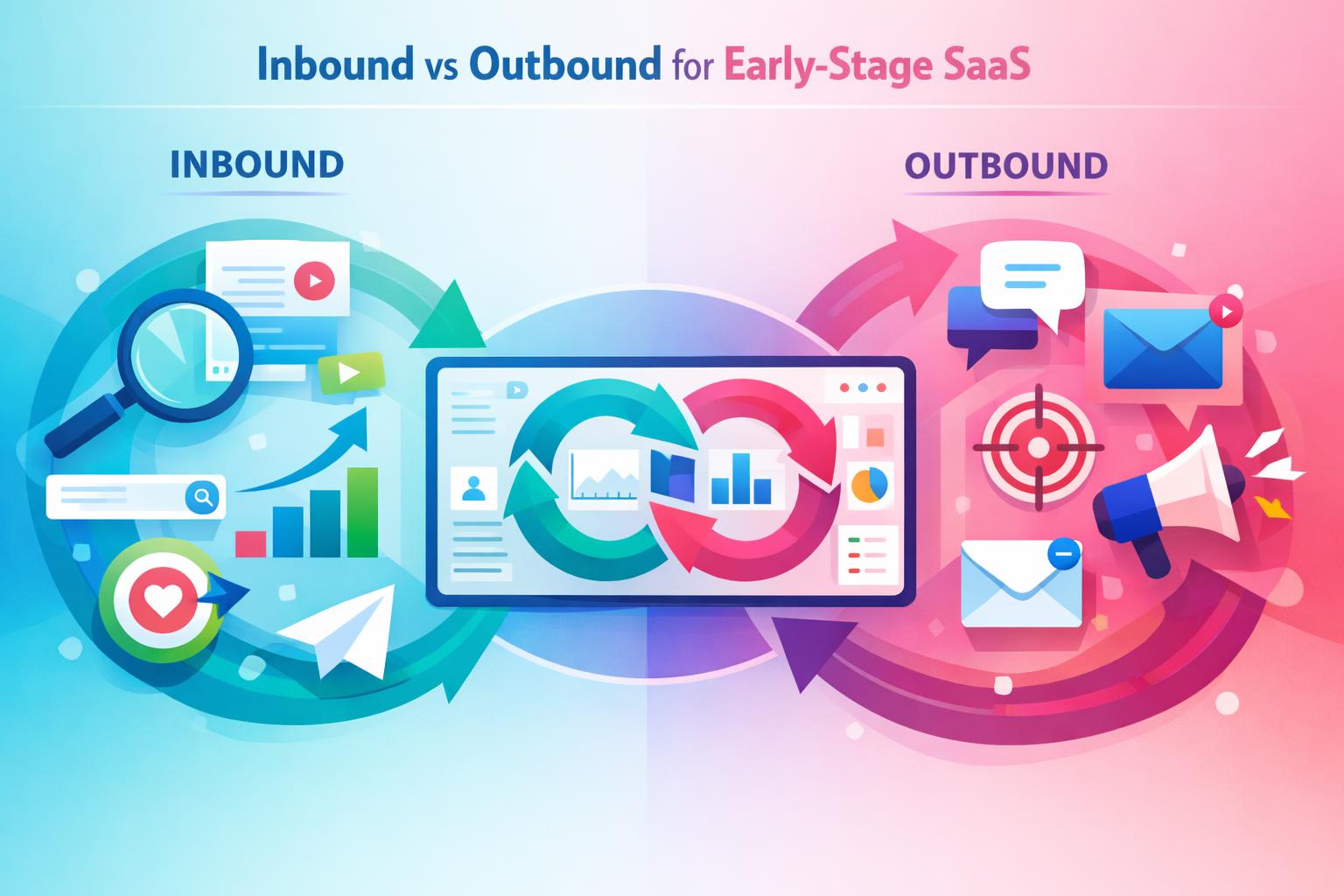
Early founders often struggle with whether to prioritize inbound vs outbound for early‑stage SaaS. The decision isn’t about ideology; it’s about achieving traction, learning quickly, and maintaining focus. In this post, we’ll break down how each motion behaves in the early stages, how long they take to deliver results, and when to lean into one over the other. You’ll also discover how platforms like MainFoundry can unify your CRM and marketing data to keep both approaches connected and continuously improving.
Inbound vs Outbound: How Early‑Stage SaaS Teams Learn Fast
Inbound and outbound aren’t opposing philosophies; they’re distinct feedback loops. Inbound attracts problem‑aware prospects through SEO, content, and thought leadership, while outbound delivers targeted messages to a known audience. For early‑stage SaaS, the difference that matters most is learning velocity — how fast you can discover what resonates.
Outbound brings quick signals. When founders personally run the first 50 to 100 outreach cycles, real feedback about objections, pricing, or priorities surfaces fast. In contrast, inbound takes longer to compound. It requires consistent effort before visibility or audience trust pays off, but when it does, each new asset reduces your acquisition cost and strengthens your brand foundation.
“Outbound gives you fast signals and clarity; inbound returns compounding scale once your story is proven.”
Resource requirements differ as well. Outbound depends on precise data, a narrow ICP, and message testing without damaging deliverability. Inbound demands deep understanding of customer language, requiring you to create content that reflects real conversations. That’s why many early SaaS founders find outbound indispensable for shaping their message before scaling content marketing.
Tools that unify signals from both sides accelerate learning. When CRM and marketing analytics connect, teams can spot trends across conversations, campaigns, and channels. For example, linking CRM data with marketing analytics ensures insights gained through outbound refine your inbound strategy in real time.
When to Invest in Inbound or Outbound as You Grow
Before product‑market fit, outbound should lead. Founder‑led outreach exposes what works, what doesn’t, and which personas convert fastest. A simple landing page aligned with your best email message can outperform a broad blog plan that lacks focus. In this stage, inbound supports rather than drives growth.
As repeatable success appears, the balance shifts. Now inbound earns its place as the compounding growth engine, carrying lessons from outbound into refined content, comparison pages, and thought leadership. Meanwhile, outbound becomes more surgical—targeting new verticals, higher‑value deals, or quick pipeline opportunities.
- Outbound delivers immediate feedback and early revenue but scales only as fast as personalization and founder bandwidth allow.
- Inbound scales sustainably once your positioning is sharp, turning insights into long‑term content equity with lower CAC.
- Hybrid approaches thrive when insights flow both ways—outbound shapes inbound content, and inbound data improves outbound targeting.
To make these loops stronger, MainFoundry’s AI platform adds automation and insight to both motions. It can summarize call transcripts, cluster objections, and recommend content topics or messaging tweaks based on real customer language. This evidence‑based approach amplifies every marketing investment and keeps your go‑to‑market engine aligned with what customers actually say and need.
At Series A stage, strategy shifts from proving fit to scaling efficiently. Inbound becomes the primary demand generator while outbound sharpens into a precision tool. Unified reporting that integrates billing and revenue tracking ensures that top‑of‑funnel growth aligns with retention and payback, preventing inflated vanity metrics.
Outbound helps you learn faster; inbound helps you scale stronger. The best teams engineer both to work together.
Key Takeaways
- Start with outbound when clarity is low — quick conversations reveal your ICP and messaging faster than any dashboard.
- Support proven outbound messaging with focused inbound assets like targeted landing pages or a few SEO‑backed resources.
- Shift toward inbound once patterns repeat; let content scale what conversations have validated.
- Unify data and execution so inbound and outbound inform each other in real time through shared systems.
- Your goal isn’t choosing forever — it’s choosing what matters most right now and ensuring your tools help you adapt quickly.
Related Reading
For deeper insights on GTM alignment, explore building unified marketing analytics workflows or connect with our team at MainFoundry Contact.