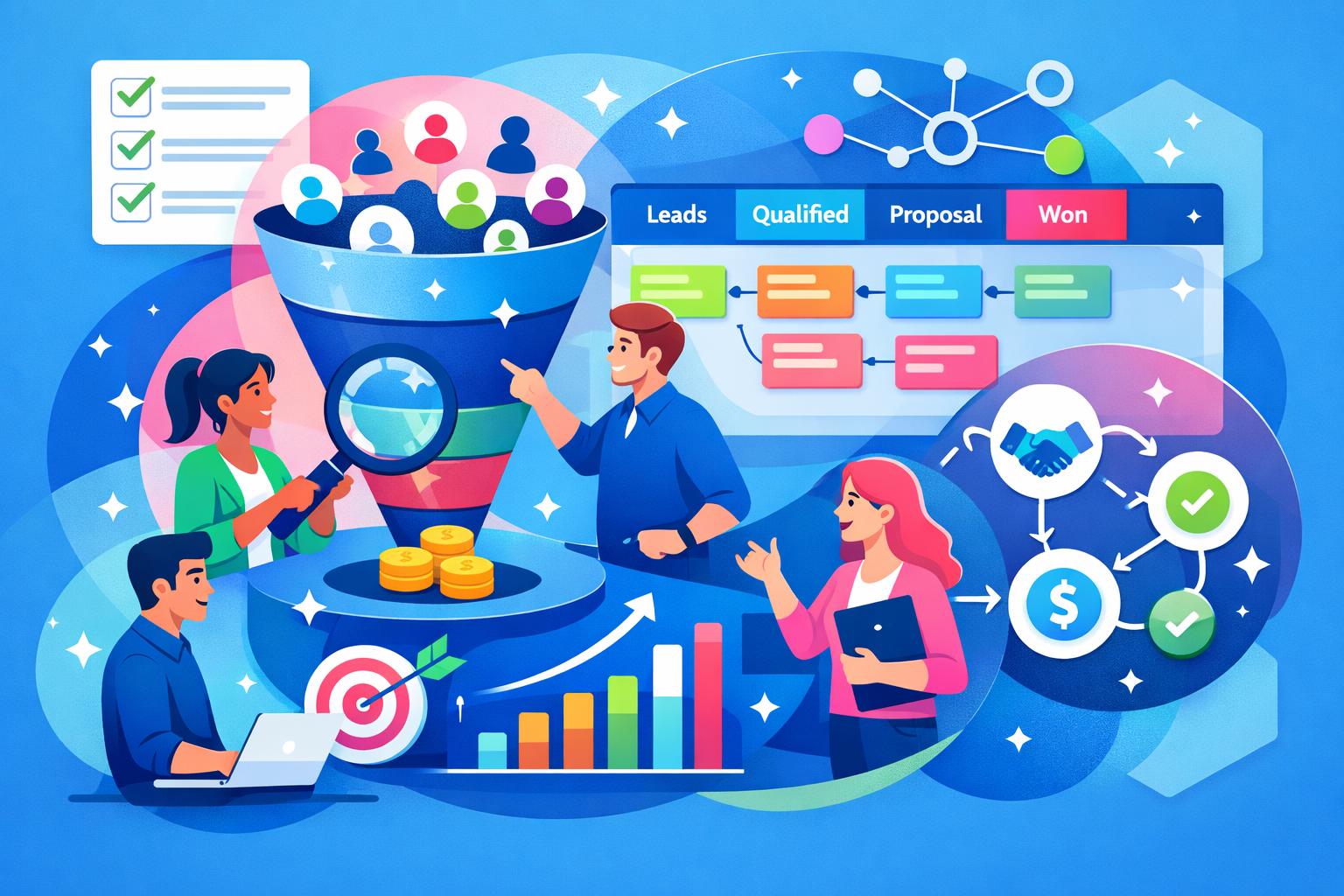
In sales, few practices are as critical yet inconsistently applied as lead qualification. While some teams rely on instinct and others on rigid checklists, the real challenge lies in maintaining consistency across every opportunity. Without a unified approach, pipelines quickly fill with deals that drain resources instead of driving revenue. This guide unpacks the three most effective lead qualification frameworks—BANT, CHAMP, and MEDDIC—showing when to use each, how they fit into the sales pipeline, and how modern CRMs simplify qualification tracking for higher accuracy and accountability.
Understanding Lead Qualification Frameworks
Every lead qualification framework exists to answer the same fundamental question: is this opportunity worth pursuing right now? Each model takes a distinct angle, which is why no single framework fits every sales scenario. The most common, BANT—budget, authority, need, and timeline—offers speed and simplicity, making it ideal for high-volume sales. However, because it focuses on surface-level criteria, BANT can fall short when navigating complex buying committees or multi-layered decision-making processes.
By contrast, CHAMP begins with the prospect’s challenges rather than budget or authority. This consultative approach encourages reps to explore pain points and urgency before discussing internal logistics. It works particularly well in mid-market or solution-focused sales where relationship-building drives momentum. Yet its flexibility also means less experienced reps may avoid tough questions unless reinforced through consistent guidance and process design.
For enterprise sales cycles, MEDDIC digs deeper by examining measurable impact, decision criteria, the economic buyer, and internal champions. This structured framework reduces risk in long, complex deals by ensuring reps fully map out the buying process. While more demanding to implement, MEDDIC’s rigor creates predictability and confidence when forecasting large opportunities. Many teams successfully blend frameworks—using BANT to triage inbound leads, CHAMP for discovery, and MEDDIC to validate late-stage deals.
“Frameworks are tools, not rules. They work best when adapted to fit deal complexity, not enforced as one-size-fits-all checklists.”
Using a flexible CRM, such as MainFoundry’s unified CRM for sales teams, helps standardize whichever framework your sales team chooses. Custom fields can record qualification details—from budget confirmation to identified champions—so vital context never gets lost between calls or handoffs.
How Qualification Evolves Across the Sales Pipeline
Lead qualification is an ongoing process that matures as deals progress. Early in the pipeline, reps focus on fast decision filters—confirming whether prospects have a real need, timeline, and authority. This prevents pipeline inflation and ensures early activities align with genuine opportunities. Lightweight BANT-style validation works effectively at this stage, helping teams focus energy where conversion potential is highest.
Mid-pipeline, qualification shifts toward prioritization. The emphasis moves from “is this deal real?” to “is this deal worth accelerating?” Here, CHAMP-based discovery helps clarify urgency and value, connecting the solution’s benefits directly to pressing business challenges. These insights inform cross-functional alignment and readiness to advance opportunities with clear momentum toward commitment.
During late-stage opportunities, qualification centers on risk reduction. MEDDIC principles become indispensable as teams confirm criteria, decision paths, and quantifiable success outcomes. Proactively surfacing deal blockers reduces last-minute surprises and strengthens forecast confidence. With MainFoundry’s customizable deal tracking, sales leaders can model stages around qualification milestones, linking every contact, meeting, and note to the same unified opportunity record for real-time visibility.
Pro Tip: Encourage reps to refresh qualification details after every major call. Keeping deal data current ensures accurate forecasting and prevents outdated assumptions from derailing late-stage momentum.
Qualification also plays a pivotal role in marketing alignment. By documenting why deals advance or stall, sales teams create valuable feedback loops for marketing teams. Tools like MainFoundry’s marketing analytics and attribution tools connect these insights directly to campaign sources, helping marketing refine lead generation strategies based on what truly converts.
Key Takeaways
- Match frameworks to deal complexity—simple deals benefit from BANT’s speed, while complex cycles demand MEDDIC’s depth.
- Treat qualification as continuous, refining confidence at every stage instead of applying it once at the start.
- Use your CRM as the central source of truth, ensuring qualification data is accessible and updated in real time.
- Empower your reps with AI-driven tools like MainFoundry’s AI-powered assistant to surface missing data and prompt next steps automatically.
To bring structure and visibility to your qualification process without slowing deals down, focus on integrating frameworks directly into your CRM workflow. Visit MainFoundry.com to explore how CRM, analytics, and automation combine to make lead qualification scalable—or contact the team directly at MainFoundry Contact to get started.