Blog

  • SaaS Conversion Tracking Setup for CRM Pipeline

    SaaS Conversion Tracking Setup for CRM Pipeline

    Knowing how to set up conversion tracking is one of the biggest growth levers for any SaaS business. When data is fragmented across platforms or defined inconsistently, every marketing and sales decision becomes guesswork. Effective conversion tracking eliminates that uncertainty by showing exactly how visitors move from clicks to customers. This guide walks through a practical process for building reliable SaaS conversion tracking—from defining meaningful conversion events to connecting them with your CRM and analyzing funnel performance. By the end, you’ll understand how to use unified tracking to improve pipeline accuracy, campaign ROI, and team alignment.

    Define and Capture SaaS Conversions

    Before turning on any tracking tools, start by mapping what truly counts as a conversion for your business. In SaaS, these typically fall into the categories of acquisition, activation, or monetization. For example, a “Start free trial” or “Request demo” action represents far more value than a simple blog view. Each event should clearly answer the question: what does this action tell us about readiness to buy?

    Once defined, the goal is to capture those conversion events consistently across the website and product. MainFoundry’s marketing analytics and conversion tracking tools support both direct tracking and server-side integrations, ensuring actions inside a dynamic app or landing page are logged the same way. Every conversion should include contextual data such as campaign source and timestamp, which allows for accurate attribution when that data flows into the CRM or analytics system.

    “Effective SaaS conversion tracking starts with intentional design—define what matters before you start measuring everything.”

    As conversions accumulate, syncing them with identifiable users unlocks even more value. In MainFoundry’s unified CRM, conversion events automatically attach to contacts and companies, populating their activity timeline. This means when a lead books a demo or starts a trial, sales can instantly see the context that led them there—saving time and improving follow-up relevance. The same data can trigger automated workflows or deal creation, bridging the gap between marketing activity and sales action.

    Analyze Funnel Performance and Align Teams

    After conversion tracking is in place, the next step is understanding what the data reveals. Funnel analysis should evaluate how users move from website visit to subscription, identifying where the biggest drop-offs occur. Because MainFoundry connects marketing analytics, CRM pipelines, and billing data, teams can easily view conversion metrics alongside deal stages to pinpoint leaks and growth opportunities.

    AI-driven analysis adds another dimension by surfacing hidden trends. Using MainFoundry’s AI capabilities, teams can ask natural-language questions like “Which channels deliver the highest trial-to-paid rate?” or “Where do enterprise leads typically drop off?” This creates a proactive environment where insights lead to quicker campaign adjustments, onboarding improvements, and better revenue forecasting across departments.

    Pro Tip: Align your conversion definitions across marketing, sales, and finance so every team interprets success metrics the same way. This shared understanding ensures better forecasting and accountability.

    Ultimately, the most valuable output of a unified conversion tracking system is organizational clarity. Marketing understands which campaigns actually drive qualified opportunities, sales can prioritize based on real intent signals, and finance gains confidence in recurring revenue predictions. That alignment transforms conversion data from static numbers into a shared language for decision-making.

    Key Takeaways

    • Define conversion events around real business intent, not vanity metrics.
    • Connect marketing analytics directly to CRM pipelines to make funnel metrics operational.
    • Use AI insights to detect performance patterns and optimize before momentum slows.
    • Unify teams around consistent data definitions to improve forecasting and accountability.
    • Explore integrated tracking and CRM solutions like MainFoundry’s conversion tracking tools to scale your SaaS revenue intelligence.

    Related Reading

    Check out How to Optimize Your SaaS Sales Funnel for more strategies to increase trial-to-paid conversions.


  • Marketing ROI for SaaS How to Measure Real Revenue

    Marketing ROI for SaaS How to Measure Real Revenue

    Measuring marketing ROI for SaaS might seem simple on paper, but in practice, it requires more than spreadsheets and click-through rates. Long sales cycles, recurring revenue, and multiple touchpoints make it easy to end up with reporting that looks good but lacks strategic clarity. This post walks you through how SaaS companies can calculate marketing ROI that truly reflects growth contribution. You’ll learn how to align revenue attribution with buyer journeys, account for long decision timelines, and cut through vanity metrics, supported by examples from unified platforms like MainFoundry.

    How to Measure Marketing ROI for SaaS the Right Way

    At its core, ROI answers one question: did your marketing spend actually generate meaningful revenue? While ROI commonly compares influenced revenue to total cost, SaaS businesses face the challenge of defining what “revenue” should include. Because SaaS monetizes through subscription growth, measuring short-term deals alone can underestimate marketing impact. Incorporating customer lifetime value (LTV) provides a more accurate reflection of real returns over time.

    Attribution also shapes how ROI is understood. SaaS buyers rarely make decisions after a single ad or email. They interact with several assets—blog content, webinars, product demos—before converting. Relying solely on last-click attribution narrows insight into how campaigns influence deals across the journey. Using multi-touch attribution models assigns proportional credit to each stage, revealing which channels sustain momentum through pipeline and closures.

    Finally, understanding true ROI means factoring in all associated costs. Beyond ad spend, marketing investments include content production, technology subscriptions, event support, and team salaries. Platforms like MainFoundry’s marketing analytics and attribution consolidate these data sources, linking cost and performance into one integrated dashboard for transparent benchmarking.

    “Real SaaS ROI emerges when lifetime value and attribution accuracy replace surface-level metrics like clicks and impressions.”

    Accounting for Long Sales Cycles and Avoiding Vanity Metrics

    Complex buying processes often delay clear ROI visibility. For SaaS marketers, waiting until deals close can hinder agility in campaign adjustment. Tracking pipeline ROI alongside revenue ROI provides earlier indicators of performance by assessing the proportion of qualified pipeline influenced by marketing spend. Over time, comparing these values ensures marketing results align with longer-term revenue growth.

    However, not all metrics deserve equal attention. Impressions or clicks may look promising but often fail to correlate with business outcomes. A campaign yielding fewer but higher-quality leads often surpasses broader traffic initiatives. To remain grounded, focus on relational metrics like lead-to-opportunity conversion, win rates, and customer acquisition cost (CAC) by channel. Connecting these with lifetime value and retention trends paints a fuller picture of marketing effectiveness.

    When data flows directly into your CRM, analysis becomes seamless. Solutions like MainFoundry’s unified CRM and marketing system link campaign data to contacts and revenue, reducing manual attribution errors and enabling continuous optimization.

    • Select a reporting window aligned with your sales cycle—quarterly often works best for SaaS.
    • Aggregate all marketing costs, including technology and personnel.
    • Use multi-touch models that map to the full buying journey for fair revenue attribution.
    • Compare ROI by channel and campaign, and monitor churn, expansion, and renewals to validate sustained value.

    Because subscriptions evolve over time, ROI measurement cannot remain static. By integrating finance and billing data with marketing and CRM through tools like MainFoundry’s billing management, you can refresh ROI models dynamically as accounts expand or churn.

    Pro Tip: Reassess ROI quarterly using LTV insights—this reveals retention-driven growth that short-term metrics overlook.

    Key Takeaways

    • Base ROI calculations on lifetime value, not just the first transaction.
    • Use multi-touch attribution to credit influences across the buyer journey.
    • Avoid vanity metrics—quality pipeline and conversion rates matter more than traffic volume.
    • Simplify measurement by connecting CRM, marketing, and financial data within one system.

    Related Reading

    Explore how data-driven attribution enhances SaaS growth in Marketing Analytics and Attribution or connect with experts at MainFoundry Contact.

  • Demand Generation for B2B SaaS Teams Explained

    Demand Generation for B2B SaaS Teams Explained

    In B2B SaaS marketing, few terms are as misunderstood as demand generation. Many teams confuse it with lead generation, yet they serve very different purposes. If your goal is building a predictable pipeline, improving conversion quality, and freeing your sales team from chasing disinterested leads, understanding demand generation is crucial. This post breaks down what demand generation really means, how it differs from lead generation, and how tools like MainFoundry streamline campaign management, analytics, and conversion tracking to help SaaS teams scale growth efficiently.

    Understanding Demand Generation in B2B SaaS

    At its core, demand generation is a long-term strategy designed to create awareness and interest before prospects are ready to buy. In the world of SaaS, most decision-makers spend time researching and comparing solutions long before they engage with sales. Demand generation serves as a bridge—educating, informing, and nurturing buyers so they enter the funnel with stronger intent and clearer understanding.

    Unlike short-term campaigns focused on immediate conversions, effective demand generation blends awareness, education, and trust across all stages of the buyer journey. It’s about balancing demand creation—where you introduce new problems and solutions—with demand capture—where you engage high-intent buyers when timing aligns. This dual approach allows SaaS companies to avoid erratic spikes from one-off campaigns and instead maintain a consistent pipeline of qualified opportunities.

    “Demand generation isn’t about collecting as many leads as possible—it’s about nurturing awareness and trust until the right buyers are ready to act.”

    To achieve this, sales and marketing teams must align their data and visibility to understand how engagement evolves over time. Platforms such as MainFoundry make this possible by unifying marketing analytics, attribution, and CRM visibility. When interactions, campaigns, and conversions exist in a single ecosystem, teams can see which efforts truly drive demand instead of relying on disconnected metrics.

    Building an Effective Demand Generation Strategy

    Lead generation often dominates B2B SaaS thinking, but it only captures a small slice of the total market—those already actively seeking a solution. Demand generation takes a more holistic path, prioritizing early education, consistent engagement, and cross-channel nurturing. Instead of measuring success by form fills or MQLs, demand gen programs gauge how awareness efforts impact downstream outcomes like opportunities, product trial activations, and revenue.

    To execute successfully, SaaS marketers rely on a connected mix of channels that work in harmony rather than isolation. Content programs and SEO build early trust; paid campaigns reinforce visibility; and targeted email sequences adapt over time as intent grows. Events, webinars, and product-led experiences such as free trials deepen engagement, encouraging prospects to self-educate before reaching sales. The key is not individual tactics but the ability to track and optimize how they contribute to revenue.

    Without reliable conversion tracking and campaign visibility, teams risk optimizing only for clicks or impressions. When tools like MainFoundry connect campaign data, website analytics, and CRM activity under one roof, attribution becomes clear. This allows marketers to identify exactly which engagements, messages, or channels are responsible for generating demand, not just low-quality leads.

    Pro Tip: Focus on connecting awareness metrics with sales performance data. This ensures your marketing impact is evaluated through revenue contribution, not vanity KPIs.

    Key Takeaways

    • Demand generation is a full-funnel strategy that builds long-term interest before prospects are ready to buy.
    • Lead generation thrives when supported by early-stage education and awareness efforts.
    • Consistent campaign measurement and conversion tracking are essential for aligning marketing with revenue impact.
    • Unifying CRM and marketing analytics with tools like MainFoundry helps teams see the full picture across the buyer journey.

    Related Reading

    Check out How CRM Integration Powers SaaS Marketing Analytics for more insights on connecting marketing and revenue data.

  • Website Visitor Tracking for B2B SaaS CRM Teams

    Website Visitor Tracking for B2B SaaS CRM Teams

    Website visitor tracking has become one of the most powerful ways for B2B SaaS teams to uncover buying intent before a prospect ever fills out a form. By identifying which companies are exploring your site, what content they’re engaging with, and when those insights appear in your CRM, your sales and marketing teams can act faster and smarter. This guide explains how modern visitor tracking works—from IP-based identification and cookie tracking to connecting anonymous visits to known accounts—and how platforms like MainFoundry make this process seamless, compliant, and actionable.

    How Website Visitor Tracking Works in B2B SaaS

    At its core, website visitor tracking turns anonymous digital traffic into valuable business insight. Most B2B SaaS websites see many more visits than conversions, so tracking tools bridge that gap by analyzing technical signals—like page visits, IP addresses, and engagement pathways—and linking them with identifiable company information.

    Tracking begins with a lightweight JavaScript snippet added to your website. Each time someone loads a page, this script gathers session data such as timestamps, referral sources, and IP addresses. From there, tools use different identification methods to match visits with company networks and enrich them with firmographic details like industry, size, and location. While this may not reveal specific individuals, company-level accuracy is often high enough to guide account-based marketing and early outreach.

    Next, cookie tracking adds behavioral depth. First-party cookies track visitor actions over time, surfacing intent signals such as return visits to pricing or documentation pages. These persistent cookies help teams understand what prospects are researching and which topics generate real interest, even across sessions. While browser rules and privacy laws limit personal tracking, the behavioral trends remain invaluable for understanding purchase intent.

    “IP-based insights reveal who is showing interest, while cookie tracking shows what that interest looks like in action.”

    Finally, data enrichment enhances these signals by adding company-level insights from databases and third-party intent providers. Combined, these three layers—IP, cookies, and enrichment—create a comprehensive understanding of website visits that your teams can act on through segmentation, scoring, or targeted follow-up.

    Connecting Anonymous Visits to Known Accounts

    The most impactful use of visitor tracking comes when activity data connects directly to your CRM and revenue systems. Modern tools can automatically assign visits to accounts that fit your ideal customer profile, prioritize high-intent behaviors, and feed that insight into your team’s daily workflow. For instance, a repeat visit from a company spending time on integration or pricing pages often signals readiness for sales engagement—well before a formal demo request.

    With CRM synchronization, anonymous activity becomes visible as part of the customer journey. Sales teams can see which target accounts engaged recently and which specific pages they viewed, while marketers use the same information to refine automation and campaign targeting. This visibility enables tighter coordination between departments and ensures that follow-ups feel timely and relevant rather than random.

    Platforms like MainFoundry simplify this process through a privacy-first approach that integrates visitor data with CRM, marketing analytics, and collaborative workspaces. By seeing anonymous and known engagement in a single unified system, your team eliminates silos and amplifies how data informs decision-making. Explore these capabilities through MainFoundry’s marketing analytics and visitor tracking tools and see how they connect to a unified CRM view.

    Pro Tip: Focus on company-level visibility rather than personal data. This approach supports GDPR compliance and provides actionable intelligence without compromising privacy.

    When comparing tracking methods, key distinctions emerge that can guide your implementation strategy:

    • IP-based identification reveals visiting companies automatically, enabling early discovery of potential buyers.
    • Cookie-based tracking uncovers user behavior patterns and intent but depends on browser permissions.
    • Hybrid models combine both methods for richer analytics and seamless integration into CRM workflows.

    Key Takeaways

    Effective website visitor tracking transforms anonymous data into clear revenue insights. Here are the main points to remember:

    • IP-based tracking provides visibility into which companies are researching your product.
    • Cookies add valuable engagement context and signal real intent.
    • Integrating tracking data with your CRM enables timely, data-driven outreach.
    • Privacy-first platforms like MainFoundry align compliance with actionable insight.

    To get started, map how visitor data will flow into your revenue systems, ensure compliance, and choose a tool that integrates CRM, analytics, and engagement in one place. To explore an integrated, privacy-conscious approach to visitor tracking, visit MainFoundry’s contact page and learn how their platform can connect traffic signals directly to your growth strategy.

  • First-Touch vs Last-Touch Marketing Attribution in B2B SaaS

    First-Touch vs Last-Touch Marketing Attribution in B2B SaaS

    When you ask, “Which marketing channel actually drove this deal?”, you step into the messy world of first-touch vs last-touch attribution. These models simplify reporting and make leadership updates easy, but in B2B SaaS, buying journeys are rarely linear. This post explores why these models miss essential context, how their biases influence decisions, and what complete attribution looks like when you track the entire customer lifecycle. You’ll learn how modern tools like MainFoundry’s marketing analytics connect CRM, pipeline, and attribution for a truly unified view of what drives growth.

    How first-touch and last-touch attribution fall short

    First-touch attribution assigns full credit to the first interaction that brought a prospect into your funnel—whether through a paid ad, webinar signup, or organic search. Last-touch attribution does the opposite, giving full credit to the final interaction before conversion, such as a demo request or follow-up email. On paper, both models are straightforward. In practice, they oversimplify buying journeys that often involve months of research, many stakeholders, and both marketing and sales activity.

    Imagine a prospect discovers your brand via LinkedIn, reads several articles, attends a webinar, and finally requests a demo weeks later. First-touch credits LinkedIn alone. Last-touch credits the demo request. In reality, both moments, and everything in between, contributed to the conversion. Because these models flatten multi-channel interactions into a single data point, they create bias that misrepresents performance across your funnel.

    “Simple attribution models make reporting neat but lead to confident—yet incomplete—decisions.”

    In B2B SaaS, disconnected systems only worsen this divide. Marketing reports may reward early awareness, while sales teams measure success at the conversion stage. When CRM and analytics live separately, teams debate numbers instead of improving conversions. Unified platforms such as MainFoundry CRM solve this by connecting marketing analytics to pipeline data, ensuring attribution aligns with real revenue outcomes.

    What complete attribution looks like

    Moving beyond single-touch attribution means embracing a model that captures how growth actually happens—through accumulated influence across the full journey. Instead of assigning all credit to one interaction, complete attribution tracks website visits, email engagements, demos, and offline touchpoints that collectively shape decisions. When connected to revenue, these interactions reveal patterns that single-touch models can’t see.

    For example, you might discover that early-stage campaigns accelerate conversions when paired with specific mid-funnel webinars, or that deals involving both marketing automation and sales calls close faster and more consistently. These insights become tangible when all journey data lives in integrated systems. Through MainFoundry’s custom workspaces, teams can map their own funnels, link activities to contacts and accounts, and analyze which touchpoints make the most impact.

    Pro Tip: When marketing and sales share the same attribution data, budget decisions become collaborative instead of competitive—each team sees how their efforts reinforce full-funnel growth.

    Complete attribution aligns with how customers really buy. B2B SaaS buyers rarely move in a straight line—they research, compare, pause, and re-engage. Full-journey insights reveal how every stage contributes to long-term results, including renewals and expansions. Thanks to tools like MainFoundry’s AI Assistant, teams can now ask natural-language questions about what drives conversions and receive answers grounded in real CRM and analytics data.

    Key Takeaways

    • First-touch and last-touch models offer quick insights but fail to reflect full buyer journeys.
    • B2B SaaS growth depends on tracking accumulated influence across all stages, not isolated events.
    • Disconnected tools create attribution bias—unify CRM and analytics for clarity and collaboration.
    • Platforms like MainFoundry make it possible to connect journeys, measure impact, and act on insights that truly drive revenue.

    Related Reading

    Explore how unified analytics improve pipeline efficiency in Modern Marketing Attribution in SaaS.

  • Multi-Touch Attribution Models for SaaS Growth

    Multi-Touch Attribution Models for SaaS Growth

    Understanding what truly drives growth in SaaS marketing requires more than tracking the last click. In long B2B journeys, buyers interact with ads, content, demos, and sales before committing. Relying on single-touch attribution oversimplifies this path and distorts your marketing decisions. This guide unpacks how multi-touch attribution models work, the difference between linear, time-decay, U-shaped, W-shaped, and algorithmic approaches, and how to select the right model for your business. You’ll also learn how integrated analytics platforms make attribution insights actionable across channels and revenue teams.

    Why Multi-Touch Attribution Matters for SaaS Marketers

    For most SaaS teams, revenue doesn’t come from one click—it’s the sum of many interactions. Multi-touch attribution distributes credit across all those influences, showing how marketing channels and sales activities work together. This holistic view corrects the blind spots created by simple models like first- or last-click attribution, which inflate certain channels while undervaluing others. A buyer might first discover your product through an ad, return via content, join a webinar, and convert after a demo. Each touch contributes to the journey’s momentum.

    When SaaS teams rely solely on first-touch data, they often overinvest in top-of-funnel awareness and neglect mid-funnel nurturing. Last-touch models create the opposite problem, exaggerating bottom-of-funnel performance while ignoring early discovery. In both cases, budget allocation becomes reactive instead of strategic. With marketing analytics and attribution tools like those from MainFoundry, teams can connect campaigns directly to revenue movement, avoiding those distortions.

    “Multi-touch attribution shifts the conversation from ‘what closed the deal’ to ‘what combination of efforts moved the buyer forward.’”

    How Multi-Touch Attribution Models Distribute Credit

    Not all attribution models value interactions equally. Each one expresses a different viewpoint about which moments matter most, and the best choice depends on your SaaS sales motion and data quality. For instance, linear attribution splits credit evenly across every touchpoint, ideal for promoting collaboration between teams but less precise about influence strength.

    In contrast, time-decay attribution emphasizes recent actions near conversion, which fits longer nurturing cycles where late-stage demos or calls close deals. U-shaped attribution rewards the first and last touches most while still recognizing mid-funnel efforts, balancing awareness with conversion. W-shaped attribution adds a middle milestone like lead creation or demo booking, giving weight to critical transition points. Algorithmic attribution goes further, using data to calculate influence dynamically based on past behavior and conversion patterns.

    Pro Tip: Compare multiple attribution models in parallel before reallocating spend. Using a unified data source like MainFoundry’s CRM and analytics ensures model insights align with actual revenue results.

    Remember, accuracy isn’t about picking the “smartest” model—it’s about matching how your customers actually buy. Many SaaS organizations evolve from simple frameworks to algorithmic models as their data maturity increases. Modern tools make this evolution seamless by providing flexible modeling, unified tracking, and automated reporting that turns attribution from theory into everyday decision support.

    Key Takeaways

    • Single-touch attribution oversimplifies complex B2B buyer journeys and leads to poor budget allocation.
    • Multi-touch models show how marketing and sales channels combine to influence revenue.
    • Linear, time-decay, U-shaped, W-shaped, and algorithmic frameworks each balance influence differently.
    • The right model should mirror your specific sales cycle, data maturity, and growth goals.
    • Tools like MainFoundry’s AI-powered analytics make attribution adaptive, connecting marketing performance to real business impact.

    Related Reading

    Discover how to apply attribution insights to full-funnel growth in our guide on building a unified marketing analytics strategy.

  • Salgspipeline faser der giver fuld synlighed i B2B

    Salgspipeline faser der giver fuld synlighed i B2B

    En stærk salgspipeline giver mere end overblik – den skaber fælles retning i salgsarbejdet. Når dit team har indsigt i, hvor hvert lead befinder sig, bliver beslutninger datadrevne i stedet for intuitive. Denne artikel gennemgår, hvordan du forstår og strukturerer din salgspipeline, hvorfor synlighed er afgørende, og hvordan en moderne CRM-løsning gør det let at holde pipelinen ajour. Du får konkrete indsigter, praktiske fordele og anbefalinger til, hvordan du kan gøre din pipeline til et aktivt styringsværktøj for B2B- og SaaS-salg.

    Hvad er en salgspipeline – og hvorfor er den central i B2B-salg?

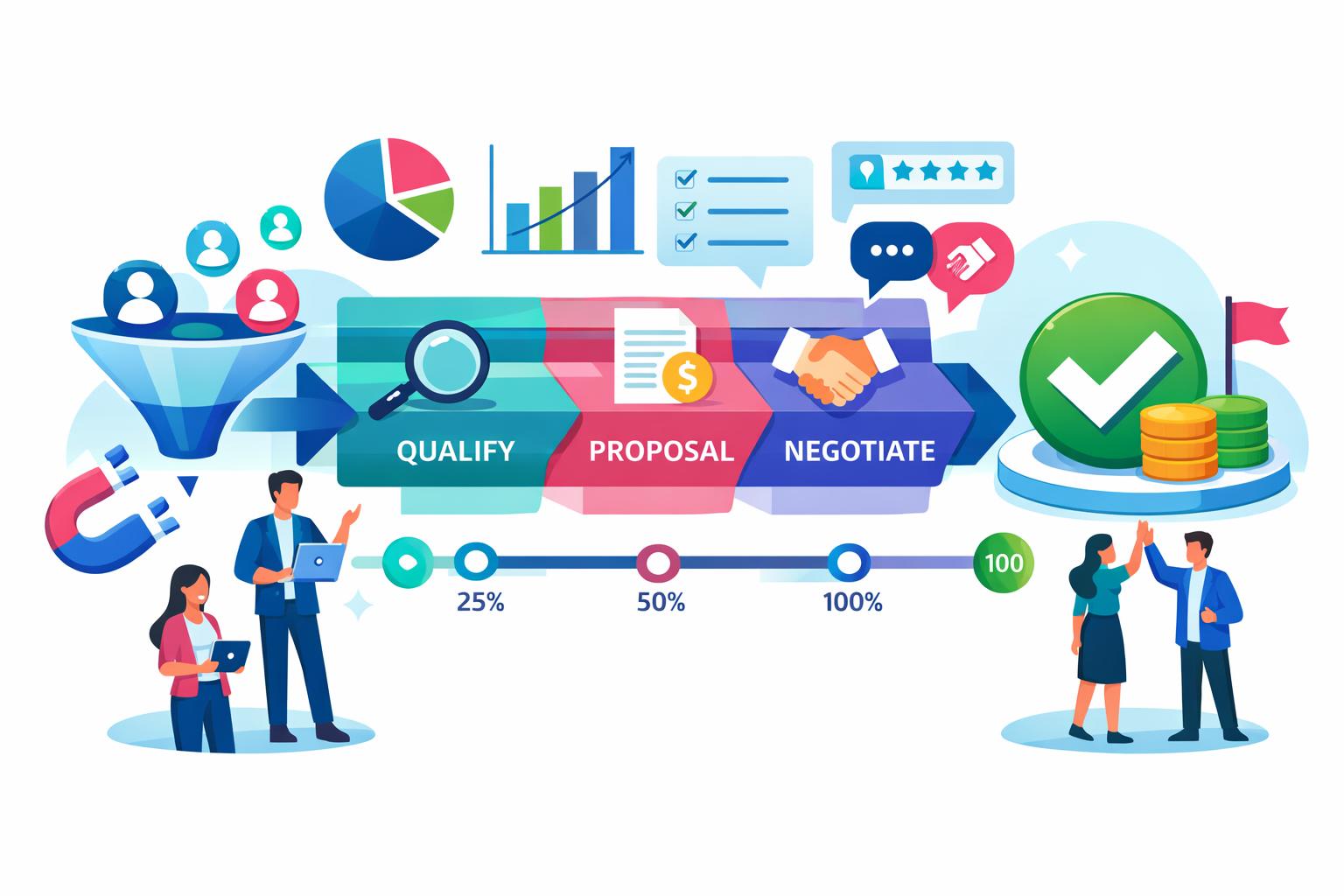
    En salgspipeline er en struktureret, ofte visuel repræsentation af dine potentielle salgsmuligheder organiseret efter fase i salgsprocessen. Den giver et fælles billede af, hvilke leads er aktive, hvad næste skridt er, og hvor tæt du er på at lukke nye aftaler. For B2B-sælgere er den forskellen mellem blot fornemmelser og reelle, dataunderstøttede beslutninger.

    Når teams begynder at arbejde systematisk med pipeline-data, ser de hurtigt klarere prioriteringer. Man opdager, hvor sager går i stå, hvilke aktiviteter skaber fremdrift, og om topvolumen matcher målsætningen. Pipelinens værdi ligger ikke blot i rapportering, men i dens rolle som et aktivt arbejdsredskab for hele salgsorganisationen.

    I SaaS-salg bliver pipelinen endnu vigtigere. Lange beslutningsforløb og mange interessenter gør det afgørende at have struktur og indsigt. Mindre forskydninger kan have stor effekt på MRR og vækst, derfor er en opdateret pipeline ikke blot nyttig, men en grundlæggende forudsætning for professionel styring af dit salg.

    “En opdateret og synlig salgspipeline skaber fælles retning og sikrer, at beslutninger træffes på data frem for mavefornemmelser.”

    Typiske faser i en B2B-salgspipeline

    Selvom ingen salgsproces er helt ens, følger de fleste pipelines et mønster af genkendelige faser, som afspejler kundens beslutningsrejse. Denne struktur giver et fælles sprog på tværs af salg, marketing og ledelse og gør det lettere at måle fremdrift og sandsynlighed for lukning.

    • Prospektering og leadgenerering via outbound, inbound eller netværk, hvor interesse opstår.
    • Indledende kontakt og kvalifikation, hvor der vurderes, om der er et reelt match.
    • Behovsafdækning og demonstration gennem dybdegående dialog og demoer.
    • Tilbud, forhandling og lukning, hvor pris og vilkår fastlægges og aftalen underskrives.

    Ved at tilføje forventet værdi, sandsynlighed og lukningsdato i hver fase får du mere præcise forecasts. Det gør det lettere at fordele ressourcer og vurdere realisme i forhold til mål. Samtidig bliver det tydeligt, hvor forbedringer skal prioriteres for at sikre konstant pipeline-flow.

    Hvorfor synlighed i salgspipelinen er afgørende for SaaS-virksomheder

    For SaaS-virksomheder er pipeline-synlighed tæt koblet til stabil vækst og kontrol over indtægter. Da omsætningen ofte er abonnementsbaseret, har kvaliteten af nye aftaler direkte effekt på både kortsigtet MRR og langsigtet ARR. Et uigennemsigtigt pipeline-flow kan føre til overvurderede forecasts og forsinkede reaktioner på faldende aktivitet.

    Synlighed gør det muligt at opdage problemer tidligt. Hvis mange deals stopper i samme fase, signalerer det et konkret issue – måske i kvalificering eller prissætning. Et løbende pipeline-overblik er dér, hvor indsigt skaber handling.

    Platforme som MainFoundry CRM kombinerer pipeline-styring, aktivitetshistorik og tydelige ejerskaber i ét samlet overblik. Her kan leads flyttes mellem stadier med få klik, og alle data holdes opdateret på tværs af teams. Det gør pipeline-synligheden praktisk og handleorienteret – et effektivt grundlag for bedre beslutninger og vækst.

    Pro Tip: Gør pipeline-synlighed til en daglig vane i dit team – ikke kun en månedlig rapportopgave. Det skaber bedre beslutninger og højere træfsikkerhed i forecasts.

    Key Takeaways

    • En struktureret salgspipeline giver datadrevet styring og bedre prioritering i salgsarbejdet.
    • Kend de centrale faser og tilføj værdi samt sandsynlighed for realistiske forecasts.
    • For SaaS-virksomheder er synlighed i pipeline en nøglefaktor for stabil vækst og bedre MRR.
    • Integrér CRM og pipelineværktøjer for at samle data, aktiviteter og indsigter ét sted.
    • Læs mere på mainfoundry.com eller tag kontakt via kontaktformularen for at optimere din nuværende pipeline.
  • Salgspipeline i CRM der giver forudsigelig B2B vækst

    Salgspipeline i CRM der giver forudsigelig B2B vækst

    En velfungerende salgspipeline er selve rygraden i enhver B2B SaaS-virksomhed. Uden en tydelig struktur risikerer du reaktivt salgsarbejde, upræcist forecasting og opfølgning, der afhænger af den enkelte sælgers systematik. Denne guide viser dig, hvordan du kan opbygge en pipeline, der skaber forudsigelig vækst gennem klare faser, systematisk opfølgning og datadrevet optimering. Du får også indblik i, hvordan MainFoundry bruger sin egen pipeline-struktur til at skabe sammenhæng mellem CRM, opgaver og måling af konverteringer.

    Definér pipeline-faser baseret på kundens beslutninger

    Et af de mest almindelige problemer i salgspipelines er faser, der beskriver interne aktiviteter frem for kundens reelle fremdrift. Betegnelser som “ringet” eller “mail sendt” fortæller ikke meget om kundens position i købsprocessen. Derfor bør dine pipeline-faser afspejle de beslutningspunkter, hvor kunden bevæger sig tættere mod et køb – ikke blot dine handlinger.

    I en B2B SaaS-kontekst navigerer kunden typisk fra første interesse til kontraktgennemførelse via en række genkendelige momenter: identificeret potentiale, kvalificering af behov, gennemført demo, vurdering af tilbud og endelig lukning. Hver overgang bør baseres på objektive kriterier, som hele teamet forstår og følger ensartet.

    • Identificeret lead med klart match til jeres ICP
    • Kvalificeret behov, hvor problem, timing og fit er bekræftet
    • Demo eller møde gennemført med dokumenteret værdi
    • Forslag accepteret til vurdering med pris og scope defineret
    • Closed won, når aftalen er indgået

    I MainFoundrys CRM opsættes faserne direkte i systemet, hvor deals flyttes visuelt gennem pipelinen. Når CRM, opgaver og aktivitetstidslinje er forbundet, bliver det tydeligt, hvorfor en deal befinder sig i en fase, og hvad der skal ske for at rykke den videre. Resultatet er en pipeline, der ikke blot rapporterer data – men aktivt styrer hele salgsprocessen.

    “En stærk pipeline begynder, når du flytter fokus fra interne processer til kundens beslutningspunkter.”

    Skab konsekvent opfølgning og målbare konverteringer

    En pipeline er først værdifuld, når den bruges aktivt. Hvert lead skal altid have en klar næste handling, så ingen deals går i stå. Konsistent opfølgning sikrer, at dine sælgere holder tempoet, og at ingen muligheder tabes af syne. Ved at koble pipeline-faser med opgaver og kommunikation bliver salgsarbejdet mere ensartet på tværs af teamet.

    Når alt logges i CRM og synliggøres i én samlet pipeline-visning, bliver det enkelt at se, hvad næste skridt er. Deals får momentum, og ledelsen kan nemt identificere, hvor processerne går i stå. Det er her et integreret CRM-system for alvor gør forskellen.

    Når strukturen fungerer, handler næste skridt om at måle. Kig ikke kun på mængden af deals, men på bevægelsen mellem faser. Konverteringsrater afslører, hvor processen halter, mens pipeline-dækning viser, om volumen matcher jeres mål. Velocity – tiden fra lead til lukket aftale – afslører hurtigt flaskehalse i salgsflowet.

    Pro Tip: Gennemgå løbende din pipeline og fokuser på spørgsmål som: Hvor falder flest leads fra? Hvilke faser tager længst tid? Og hvilke segmenter konverterer bedst?

    Med fleksible dashboards kan du tilpasse analysen til både salgsledelse og individuelle sælgere. Det skaber gennemsigtighed og motiverer teamet til at forbedre sig ud fra data i stedet for mavefornemmelser. Resultatet er en pipeline, der kontinuerligt optimeres – uden at du mister kontrollen over CRM’et.

    Det vigtigste at tage med videre

    En stærk B2B SaaS-pipeline kræver først og fremmest klarhed og disciplin. Faserne skal defineres ud fra kundens beslutninger, opfølgningen skal være konsekvent, og målingen skal fokusere på bevægelse frem for blot volumen. Når du arbejder ud fra disse principper, bliver pipelinen et strategisk aktiv, ikke bare et administrativt værktøj.

    • Definér faser ud fra kundens beslutningspunkter
    • Sørg for tydelig næste handling på alle leads
    • Mål på pipeline-bevægelse, ikke blot antal deals
    • Brug CRM aktivt som styringsværktøj, ikke kun som log

    Vil du samle pipeline, opgaver og måling i ét værktøj, kan MainFoundry være et oplagt sted at starte. Det giver dig den arbejdsgang, hvor struktur bliver til handling – og handling bliver til vækst.

  • Sales Velocity Formula Guide for SaaS CRM Teams

    Sales Velocity Formula Guide for SaaS CRM Teams

    Understanding how efficiently your sales team turns opportunities into actual revenue can make or break a SaaS company’s growth. The sales velocity formula does exactly that by combining deal quantity, size, win rate, and cycle time into a single metric that shows how fast revenue flows through your pipeline. In this post, we’ll break down what sales velocity really means for SaaS teams, how to calculate it using the right inputs, and how to use it to drive smarter forecasting and faster revenue growth.

    What Is the Sales Velocity Formula and Why It Matters

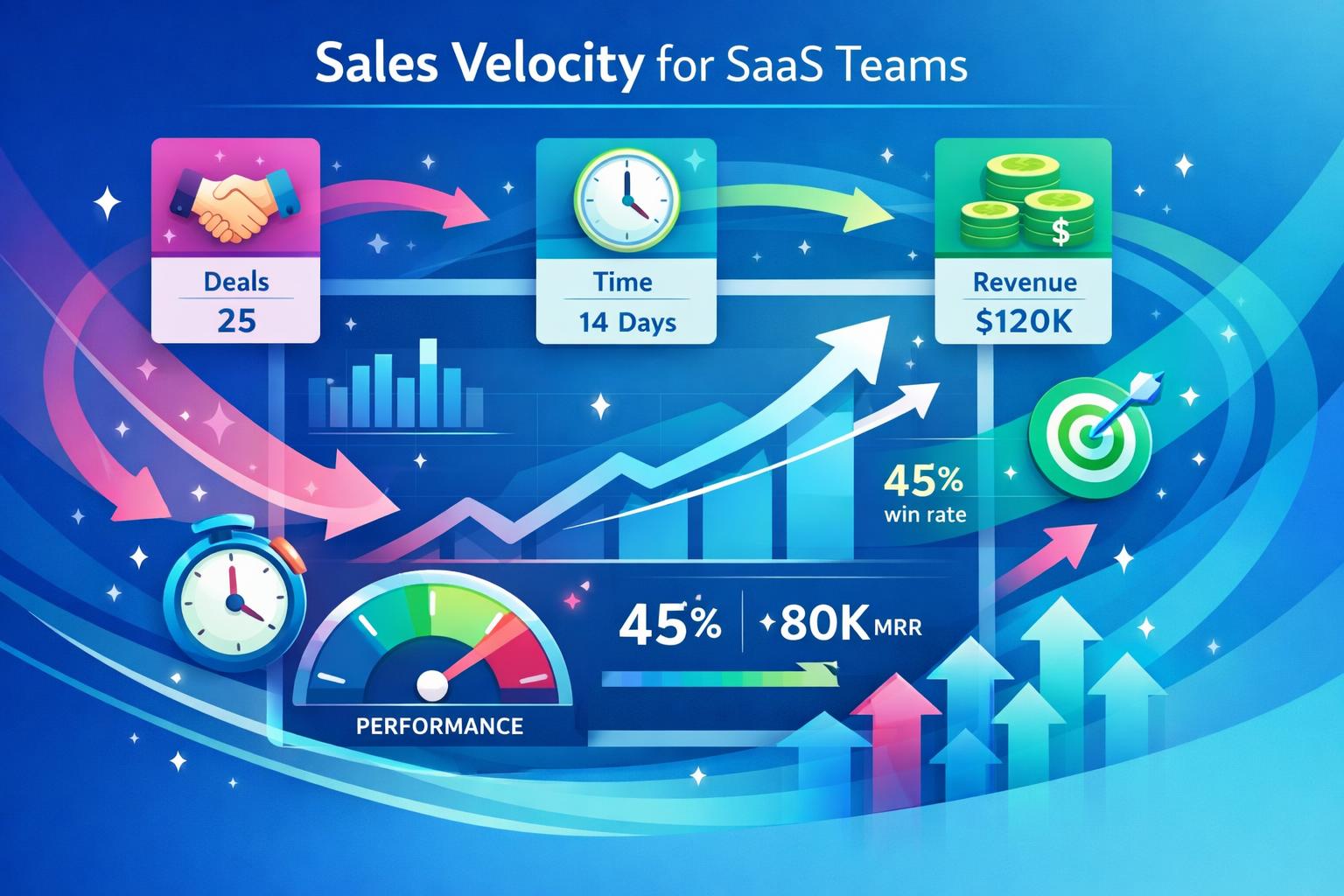
    The sales velocity formula reveals how much revenue your team generates over time, connecting the dots between opportunities, average deal size, win rate, and sales cycle length. Instead of tracking those metrics in isolation, sales velocity shows how each one impacts your overall revenue momentum.

    Simply put, sales velocity answers the question: *How quickly is our process converting pipeline into dollars?* For SaaS teams, where recurring revenue and predictable growth matter most, this metric provides clarity for forecasting and optimization. It highlights where deals slow down and helps prioritize which levers—like increasing win rates or shortening cycles—will yield the biggest payoff.

    Sales Velocity = (Number of Opportunities × Average Deal Size × Win Rate) ÷ Sales Cycle Length

    While the math is straightforward, getting value from this number requires accurate data. SaaS revenue models depend on recurring income and renewal trends, so using consistent metrics like ACV or MRR is critical. Applying the same measurement standards across your reporting ensures your velocity data remains useful for long-term decisions.

    “Sales velocity turns fragmented sales metrics into a unified measure of how efficiently your team generates revenue.”

    How to Calculate and Improve Sales Velocity in SaaS

    To calculate velocity effectively, start with qualified opportunities—deals that have genuine potential to close. Pulling this data from a structured CRM, such as the one within MainFoundry’s CRM reporting tools, ensures accuracy and consistency over time.

    Next, define average deal size using the metric that best reflects recurring value—ACV, MRR, or CLV. Consistency is more important than which metric you pick. Use the same measure across dashboards to create alignment between pipeline reviews and revenue forecasts. Your win rate should come from recent data, typically the last few dozen opportunities, to keep it relevant under changing market conditions.

    Finally, sales cycle length—the average number of days from qualification to close—is critical for velocity accuracy. Tracking this inside your CRM highlights where deals stall. For example, a SaaS company with 200 qualified opportunities at $10,000 each, a 30% win rate, and an 80-day cycle would see roughly $7,500 in daily revenue. The true insight comes from watching how that number changes over time.

  • Increase qualified opportunities by focusing reps on leads with genuine buying intent.
  • Raise average deal size through strategic upsells and refined packaging.
  • Improve win rate with better discovery calls and stronger follow‑ups.
  • Shorten the sales cycle by removing process friction and automating handoffs.

Pro Tip: Use custom workspaces and AI‑powered insights to break down sales velocity by segment, rep, or deal size to pinpoint exactly where optimization will have the fastest impact.

Key Takeaways

To see your team’s velocity in real time, unify your sales data under one platform. MainFoundry connects CRM, reporting, and automation so you can identify bottlenecks and accelerate growth. Explore more or get in touch at MainFoundry Contact.

  • Sales Activity Tracking CRM Best Practices to Cut Busywork

    Sales Activity Tracking CRM Best Practices to Cut Busywork

    Every sales leader knows tracking calls, emails, and meetings matters—but when it feels like busywork, participation plummets. The secret to effective sales activity tracking isn’t about forcing more CRM updates; it’s about capturing the right data automatically. This post explores how to build a system that tracks what matters without draining your team’s time, using real-world strategies and tools like MainFoundry’s CRM to make visibility automatic—and more valuable.

    How to Track Sales Activities Without Micromanagement

    At its core, sales activity tracking reveals effort and quality, not control. When done right, it connects conversations, follow-ups, and proposals to actual deal progress. The best systems highlight whether the right interactions are happening at the right pace and whether they result in measurable pipeline movement.

    Teams often fall into the trap of tracking everything manually. The result is inconsistent data entry—calls added days later, meetings forgotten, and vague notes that help nobody. Over time, dashboards look active while offering little insight into what’s really moving the pipeline. Instead, effective tracking relies on automation that captures activities as they occur, freeing reps to focus on selling and managers to rely on clean data.

    “Automated activity capture transforms CRMs from reporting tools into living histories of every customer interaction.”

    Modern CRMs like MainFoundry handle this through features such as automated activity timelines and two-way Outlook syncs. These automatically record calls, emails, meetings, and notes as they happen, producing a trustworthy, chronological view of every relationship. The more automation you add, the better your visibility—and the less time your team spends updating fields.

    Automating Activity Tracking With Timelines and Outlook sync

    Once you recognize manual data entry as the weak link, the next step is connecting the tools your team already uses—particularly email, calendar, and calls—to your CRM. With Outlook sync, every email or meeting attaches automatically to the right record, eliminating forgotten updates and incomplete histories. Attendees, time stamps, and threads appear without any effort from the rep.

    When that data flows into a single activity timeline, you can instantly visualize engagement for any account. Add call intelligence and the system can even generate highlights and action items directly from recorded meetings. At that point, tracking moves beyond compliance—it becomes insight for coaching and forecasting. MainFoundry’s integrated custom workspaces extend this principle across sales and operations, creating unified tracking that aligns every team.

    Effective tracking = activity capture + automation + behavioral insights.

    The biggest mistake is using this data for surveillance instead of support. Tracking should create coaching opportunities, not micromanagement. When reps see that automation reduces their workload and helps them close faster, you gain better adoption and richer data. The result is a CRM that manages itself—accurate, current, and finally worth trusting.

    Pro Tip: Review your team’s CRM usage patterns and identify where manual updates still occur. Those are prime targets for automation and efficiency gains.

    Key Takeaways

    • Track only the activities that genuinely move deals, pairing volume with outcomes like conversion and velocity.
    • Automate activity capture with CRMs that sync directly to email and calendar tools.
    • Use the data to inform coaching and prioritization—not micromanagement.
    • Choose unified platforms like MainFoundry that integrate marketing analytics, communication, and CRM data.

    To start improving how you track sales activities, audit your current data entry workflows and identify where automation can reduce friction. Then explore how MainFoundry’s unified CRM makes that automation effortless at mainfoundry.com or connect directly with their team via their contact page.