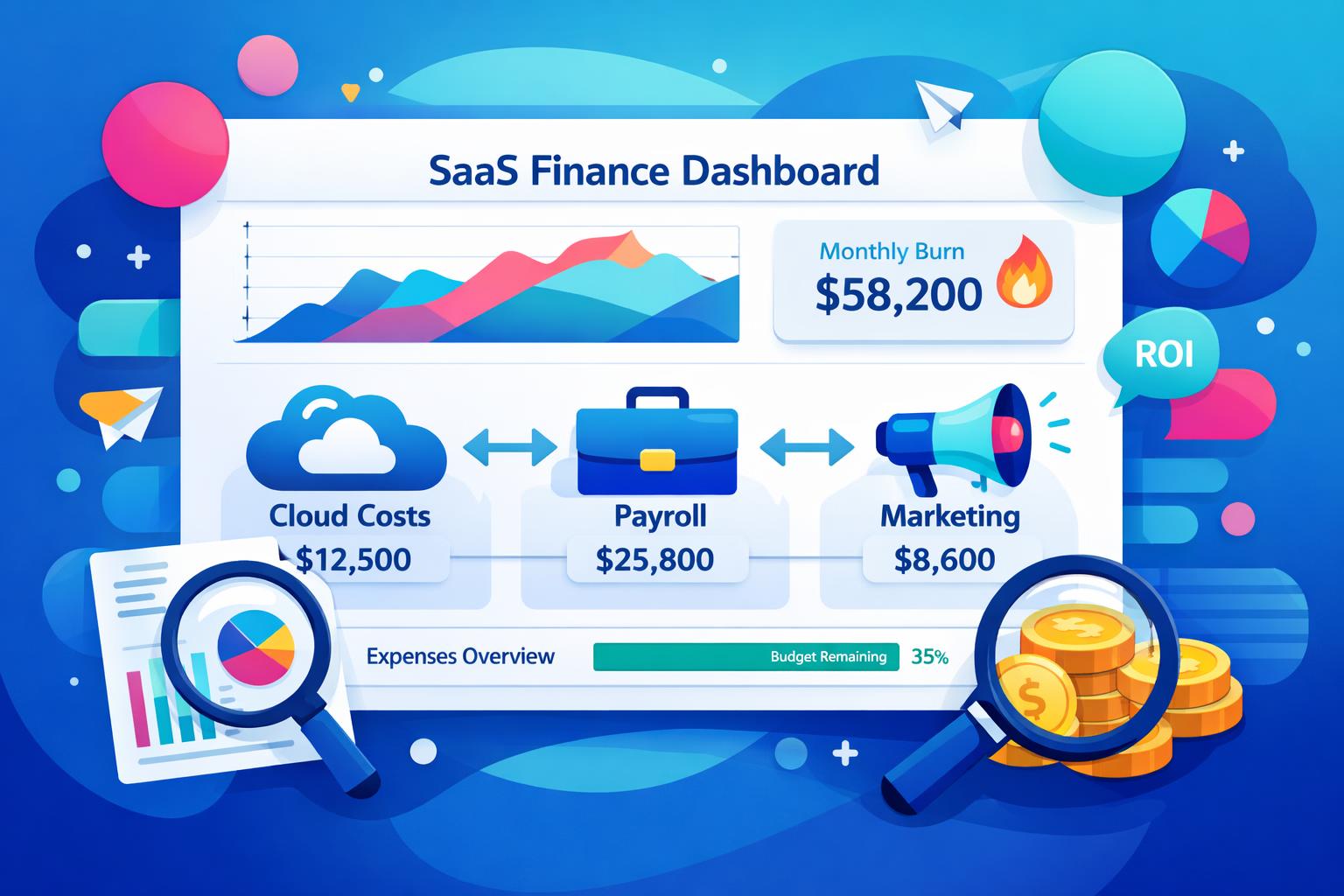
Managing cash is one of the hardest parts of building a SaaS company, especially when you’re bootstrapped or just getting started. Learning how to track expenses for SaaS startups is less about accounting theory and more about maintaining control over your burn rate, making smarter cost decisions, and being ready for investor diligence. This post covers what to track, how to categorize spend cleanly, and how to monitor burn while staying investor-ready—all without losing focus on product or customers.
How to Track and Categorize SaaS Expenses Effectively
In early-stage SaaS companies, expense tracking should emphasize coverage and clarity over precision. Every dollar leaving the company should be captured, explained, and easy to review later. This includes recurring subscriptions and the inevitable one-off charges that slip through the cracks if not centralized. Without this foundation, burn calculations become guesswork.
A solid SaaS expense system goes beyond tracking card transactions—it ties expenses to their business function. Think about core categories such as cloud infrastructure, payroll, contractor payments, sales and marketing, and general overhead. Spreadsheets and emails won’t cut it for long. Consolidating all this data in one modern finance platform helps eliminate blind spots and prepare for scrutiny later. Tools that unify finance management across billing, expenses, and revenue make this process seamless.
Start with functional groupings rather than dozens of specific accounts. For most SaaS startups, a streamlined chart of accounts—like the one below—keeps things manageable:
- Cost of Revenue — hosting, infrastructure, and customer support tools that keep your product running
- Research & Development — engineering payroll, contractors, and product development costs
- Sales & Marketing — sales compensation, paid acquisition, advertising software, and events
- General & Administrative — accounting, legal, payroll, and compliance costs
Keeping this structure simple ensures expenses align with metrics that actually matter, like margins and burn. For instance, maintaining visibility over fixed versus variable costs helps predict how growth or churn might affect runway. In MainFoundry, expenses exist alongside billing, invoices, and revenue, connecting financial decisions directly to business outcomes.
Monitoring Burn and Staying Investor-Ready
Expense tracking only adds value when reviewed regularly. Monthly burn reviews balance speed with control. They start with reconciliation—verifying your bank transactions match what’s recorded—and move to separating recurring from one-time costs. Without these steps, numbers quickly lose credibility.
Watch for creeping software and cloud costs. These often increase due to seat expansions, usage-based pricing, or forgotten tools. Reviewing invoices against actual usage each quarter can recover meaningful cash without process fatigue. Expense reports should highlight trends instead of static totals. For example, tracking whether infrastructure spend is growing faster than revenue can highlight margin pressure early.
“Clean, consistent expense data not only keeps you operationally sharp—it builds trust with investors and acquirers.”
Good expense hygiene simplifies diligence. Every expense should have documentation, clear business reasoning, and a consistent reimbursement policy. Subscription renewals and vendor relationships must be reconstructable to show obligations transparently. Modern tools, instead of spreadsheets, help turn financial records into a trustworthy system of record—especially when connected with CRM or contract data. Platforms like MainFoundry achieve this by keeping financial operations unified in one workspace.
Key Takeaways
- Track everything—both recurring and one-off transactions—and centralize data in a single system rather than spreadsheets.
- Keep categories functional so reports reflect how money supports your business rather than accounting minutiae.
- Review burn monthly, distinguishing between recurring and exceptional costs to identify spending trends early.
- Make diligence readiness ongoing by documenting every expense and connecting finance tools across all operations.
Understanding how to track expenses for SaaS startups isn’t about adding bureaucracy—it’s about creating clarity and confidence. If you’re ready to move beyond fragmented spreadsheets, explore how MainFoundry can unify expense tracking with your CRM and revenue operations in one workspace.