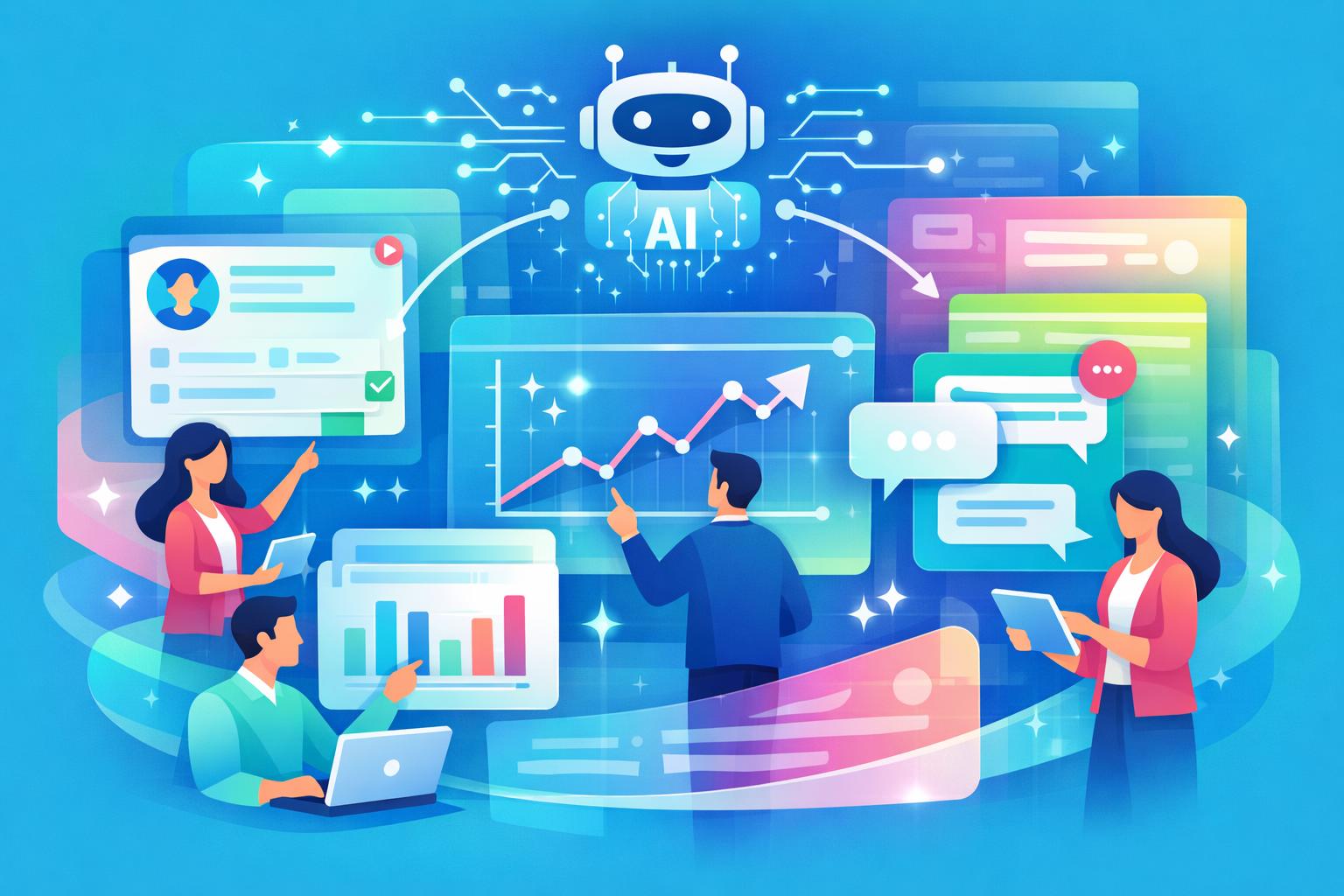
Small SaaS sales teams constantly balance growth with limited capacity, often spending more time updating systems than closing deals. The rise of AI for SaaS sales teams is changing that dynamic by removing everyday friction—from research and outreach to pipeline management. This article explores how practical AI applications help reps save time, stay focused, and sell smarter, and why embedding AI directly in your CRM and workflows delivers the greatest impact.
How AI Removes Daily Friction for SaaS Sales Teams
The biggest wins with AI don’t come from sweeping automation—they come from reducing the manual effort that slows teams down. Instead of jumping between tools, reps can rely on AI to handle repetitive tasks like research, enrichment, and follow-ups, freeing more time for meaningful conversations. For instance, automated research can combine firmographic data, industry insights, and fit indicators to help identify high-potential accounts faster.
Inside a unified CRM such as MainFoundry’s CRM and contact management system, that enrichment seamlessly connects with contacts, activity history, and other records in one view. This integrated foundation allows AI to deliver more precise insights and tailored outputs without the context gaps that standalone tools often create.
Beyond enrichment, email drafting makes a significant difference for teams managing multiple deal stages. AI can suggest personalized first drafts based on prospect role, industry, or previous engagement. Instead of rigid templates, these drafts act as intelligent starting points, helping reps maintain tone and relevance while keeping control over the final send.
“AI shines when it cuts down on the friction that keeps reps from selling—the tedious context gathering, drafting, and updating that eats up hours each week.”
After calls, features like transcription and summarization bring structure to what used to be scattered notes. AI captures key takeaways, follow-up items, and deal signals directly into the CRM. Pairing this with call intelligence or real-time recording features turns every conversation into actionable insights shared across the team—without the admin burden.
Finally, AI can analyze engagement and deal activity to guide prioritization. In busy pipelines, it highlights which opportunities deserve immediate attention and which can wait. These recommendations help reps focus their time on high-value tasks while keeping judgment in the driver’s seat.
Why Embedded AI Works Best Within CRM and Workflows
Many small SaaS teams adopt AI tools in isolation—email assistants here, enrichment extensions there—but disconnected data leads to generic output. The most effective implementations give AI access to real CRM and marketing data, allowing it to generate smarter recommendations and richer summaries. Context, in other words, is the multiplier that turns AI into genuine leverage.
Platforms like MainFoundry integrate AI-powered assistance and insights throughout CRM records, marketing touchpoints, and custom workspaces. This allows reps to request summaries or recommendations tied to real account history, instead of generic scripts. The assistant draws on connected information ranging from emails and meetings to campaign engagement—all accessible within one view.
The combination of assistant features and data enrichment ensures both speed and precision. Enrichment improves the data; assistance turns that data into useful actions. Embedding both in daily workflows eliminates the need for tool-switching and keeps employees focused on customers rather than administration. Through flexible custom workspaces, AI can adapt to how your sales team actually sells—from pipeline stages to notes and tasks—all without breaking rhythm.
Before outreach → Enrich data
During outreach → Draft contextual emails
After calls → Summarize and update context
During prioritization → Recommend next best actions
Because all of this happens inside a connected environment, insights evolve with each interaction. Marketing activity recorded through campaign and attribution analytics informs sales prioritization automatically. Call summaries and deal updates feed back into CRM timelines, keeping the entire workflow consistent and visible.
Pro Tip: Treat AI as a junior assistant that prepares your work, not an autopilot. Judgment remains essential—AI simply frees time to apply it where it matters most.
Security is another critical piece. Since AI draws on sensitive data, trust infrastructure matters. Choosing a platform built on enterprise-grade protection ensures that enriched insights and automated recommendations stay safe, enabling broader adoption across growing SaaS organizations.
Key Takeaways and Next Steps
When AI focuses on reducing repetitive tasks—enrichment, drafting, summarization, and prioritization—small SaaS sales teams multiply output without losing human insight. The real efficiency gains appear when AI is embedded in CRM systems and supported by strong data enrichment, not added as disconnected tools. Identify where your reps lose the most time today, and start integrating AI where it can relieve those bottlenecks.
- Focus AI usage on repetitive, low-value tasks first.
- Embed AI within your CRM for real contextual performance.
- Combine enrichment with assistance to boost precision and usability.
- Maintain strict data security standards to enable responsible automation.
- Start with clear workflow bottlenecks before scaling across the pipeline.
Related Reading
Explore how unified CRM architecture enhances sales efficiency in MainFoundry’s CRM and contact management system.