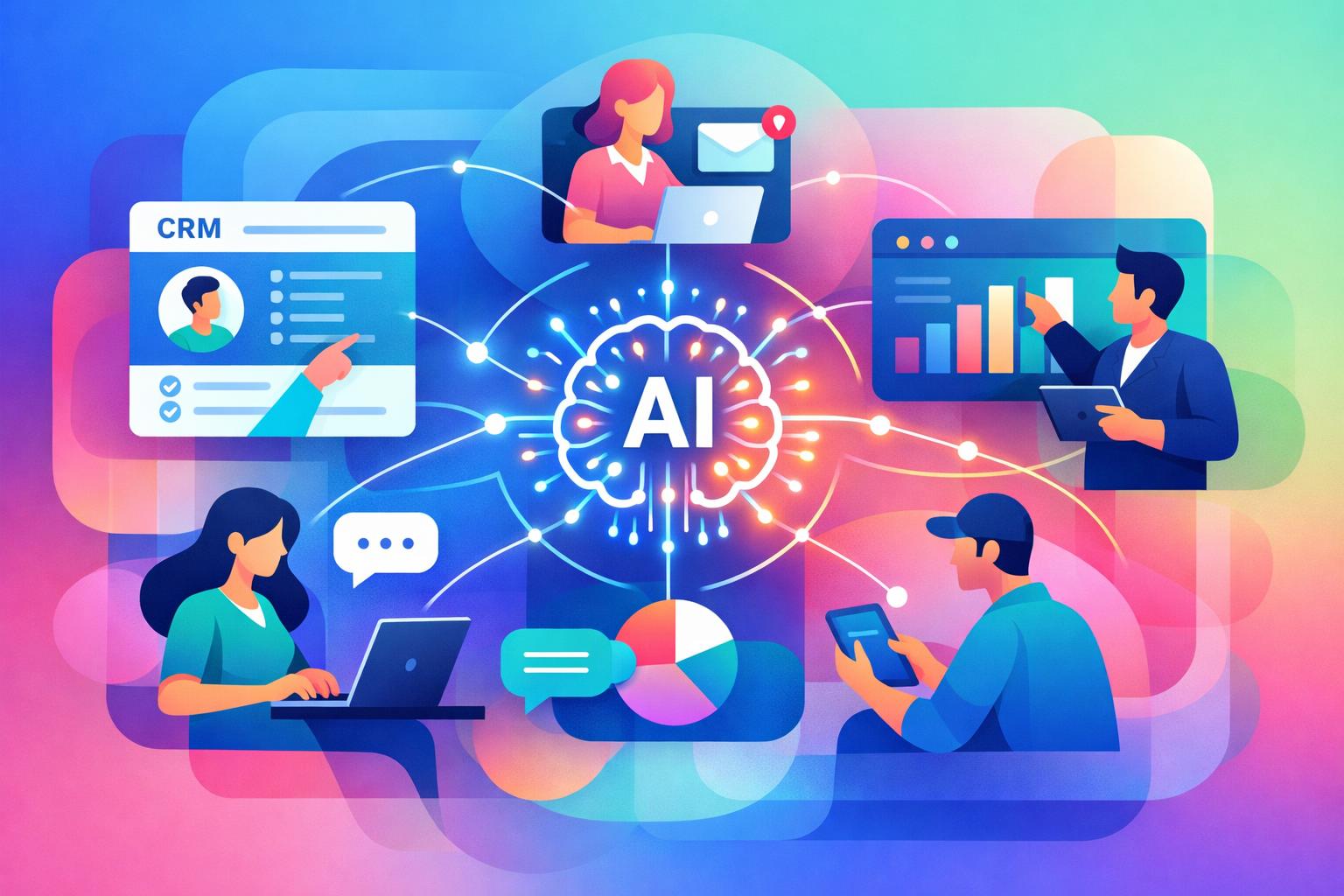
Small SaaS sales teams constantly face the challenge of doing more with less—fewer reps, smaller budgets, and increasingly complex buying cycles. As a result, AI for SaaS sales teams has evolved from an experimental trend into a powerful practical advantage. When applied strategically, AI streamlines research, outreach, deal tracking, and prioritization without adding headcount or tool clutter. This post explores how small teams are already winning with AI in four key workflows and why unified data is the foundation that makes it all work.
Why AI Works for Small SaaS Sales Teams
For most small teams, the biggest challenge isn’t ambition—it’s time and context. Sales reps balance prospecting, follow‑ups, demos, and CRM updates across scattered tools, leaving valuable insights buried in emails and call notes. Modern AI tools bring those fragments together and transform them into research summaries, message drafts, and timely recommendations.
By absorbing data from emails, meetings, and public sources, AI converts noise into meaningful context. This doesn’t just automate manual work—it creates leverage. Reps can move faster on qualified leads, improve personalization, and manage a larger pipeline without losing quality. Yet, these advantages only emerge when AI is powered by connected, high‑quality data. Standalone tools often yield generic insights, while unified systems like MainFoundry’s unified CRM platform provide the foundation AI needs to deliver truly useful outputs.
“Sales AI only drives real results when it has consistent, enriched data to work with—disconnected apps rarely deliver that edge.”
Practical AI Workflows That Save Hours
The best AI setups for SaaS teams don’t look like futuristic features—they feel like better defaults inside daily workflows. When integrated with CRM data and communication history, these automations blend seamlessly into existing sales processes. Four use cases stand out: automated research, AI‑assisted email drafts, deal summarization, and next‑best‑action prompts.
With automated research, reps open an account record and instantly see company overviews enriched with firmographics, recent funding, or hiring signals. Instead of toggling between LinkedIn, databases, and spreadsheets, AI‑powered enrichment—like that built into MainFoundry’s CRM workspace—makes research continuous and embedded, not another step to remember.
Next, AI email drafting addresses the blank‑page problem. Drafts for outbound, follow‑up, or recap messages can be generated automatically and tailored with contextual details like buyer role, product interest, and past interactions. The rep stays in control by reviewing and refining, but time‑to‑first‑send drops dramatically while personalization improves.
As deal volume grows, automated summaries become a quiet productivity boost. Instead of scrolling through transcripts or old emails, AI creates concise briefs capturing stage, stakeholders, needs, objections, and next steps. For managers, this improves pipeline visibility. For reps, it means instant recall and less manual admin, especially when notes, calls, and emails are already unified inside a single platform.
Finally, next‑best‑action recommendations close the loop. Instead of manually prioritizing their to‑do list, reps receive signals like “follow up with this stakeholder” or “check in on this quiet deal.” The difference is precision—these prompts are grounded in real engagement data, usage trends, and billing cycles drawn from connected CRM and financial systems. MainFoundry’s combined CRM and analytics layer enables this level of accuracy by joining communication and product data under one roof.
Pro Tip: Start small. Connect your CRM, email, and call tools first, then pilot one AI‑driven workflow—such as automated research plus AI email drafts—before scaling across the team.
Key Takeaways
- AI for SaaS sales teams is most impactful when embedded into existing workflows, not added as another tool.
- Automated research, contextual email drafting, and dynamic deal summaries remove manual effort while improving accuracy.
- Next‑best‑action prompts help reps prioritize intelligently, but only when CRM and communication data are unified.
- The goal isn’t replacing reps—it’s giving them context, clarity, and more time for meaningful conversations.
- Platforms like MainFoundry integrate CRM data, call intelligence, and AI into one workspace built for lean SaaS teams.
Related Reading
Explore how to maximize CRM visibility with unified AI workflows in our deeper dive on MainFoundry’s integrated platform.