Author: Jørgen Wibe

  • Annual vs Monthly Billing for SaaS Cash Flow

    Annual vs Monthly Billing for SaaS Cash Flow

    Managing the annual vs monthly billing impact on SaaS cash flow is one of those quiet but defining choices that influence everything—from growth pace and hiring plans to valuation. What seems like a simple pricing decision is actually a critical **cash‑flow lever**, **retention lever**, and **growth lever** all in one. This post explores how billing frequency changes the financial shape of a SaaS business, how annual payments create a meaningful cash advantage, and how tools like MainFoundry’s billing and analytics help teams manage these trade‑offs effectively.

    How Annual vs Monthly Billing Impacts SaaS Cash Flow

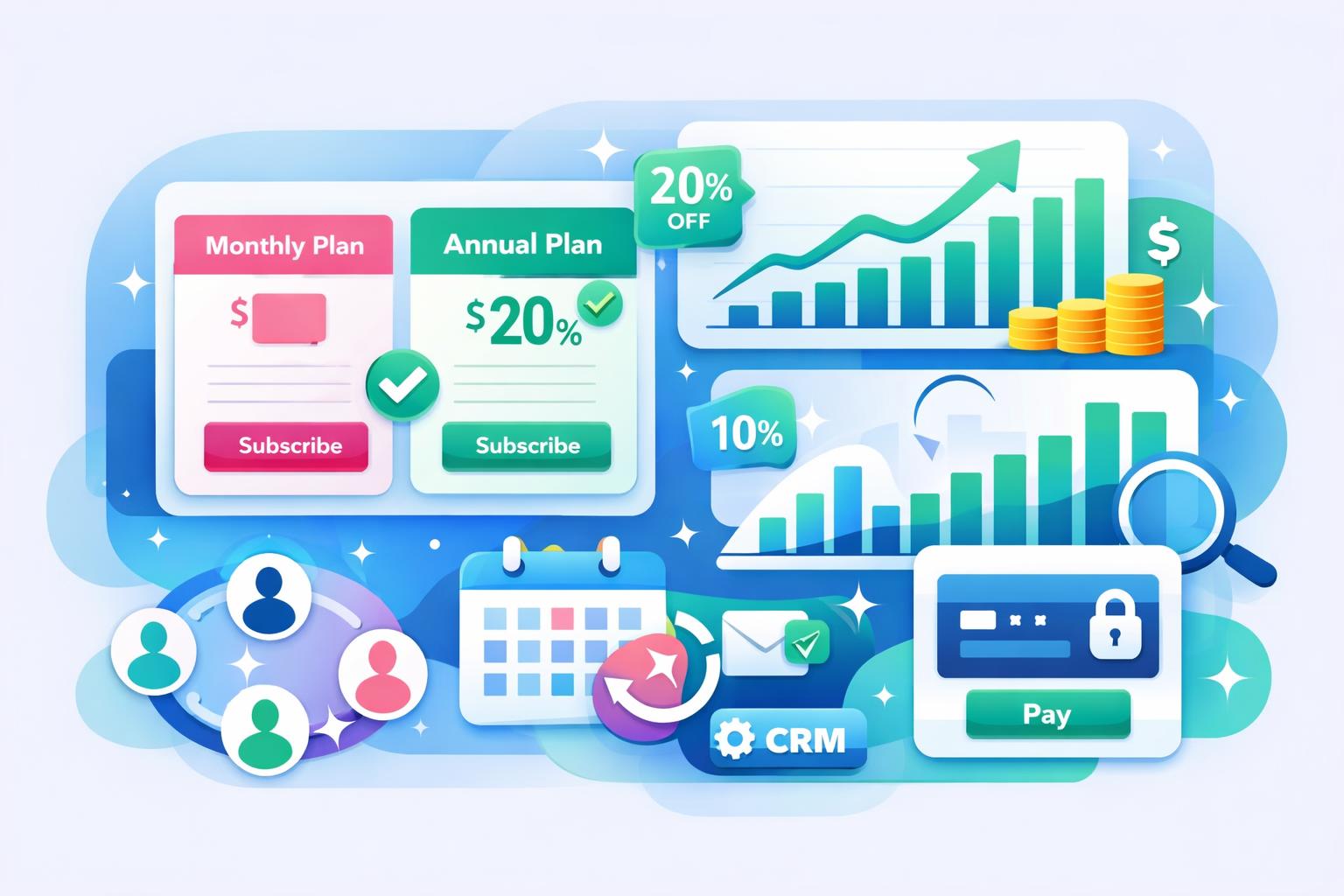
    At a basic level, monthly customers pay incrementally and can cancel easily, while annual customers pay upfront—often at a discounted effective rate. This timing difference is what drives the distinct cash‑flow patterns between the two. Monthly billing spreads cash collection evenly but frontloads expenses for marketing and support, often leading to early negative cash positions even with sound unit economics.

    With annual billing, that dynamic flips. Twelve months of revenue arrive upfront, giving teams accessible capital earlier. This can significantly extend operating runway and create flexibility without changing headcount or raising new funds. Many SaaS leaders discover that even a partial shift toward annual contracts unlocks months of additional liquidity for experimentation or product investment.

    “Annual billing transforms customer‑funded growth into a lever for longer runway and faster reinvestment.”

    Customer acquisition economics also shift meaningfully. Prepaid revenue can offset customer acquisition costs almost immediately, turning slow payback periods into near‑instant recovery. Yet monthly billing remains valuable, particularly for early‑stage or small buyers who prioritize flexibility. The real advantage comes from balance—using monthly plans to drive adoption while annual contracts sustain capital efficiency.

    To visualize these trade‑offs, finance teams rely on connected data. Platforms that unify subscription and financial metrics—like MainFoundry’s subscription management—show real‑time runway, payback, and billing composition without relying solely on spreadsheets.

    The Cash Advantage of Annual Contracts—and How to Use It Wisely

    Beyond timing, annual billing reshapes customer behavior. Annual plan holders revisit their decision less frequently, reducing churn and boosting lifetime value. Financial commitment also deepens usage and integration—customers who’ve already invested tend to engage more deeply, leading to better product adoption and stronger expansion opportunities. For investors, predictable renewal cycles create a perception of stability that translates directly into valuation.

    However, this benefit comes with operational complexity. Upgrades, downgrades, refunds, and proper revenue recognition need robust processes. Finance teams must recognize revenue gradually even as cash arrives upfront. Tools that connect subscription events to accounting—such as MainFoundry’s finance management features—help bridge this gap by aligning cash flow with recognized earnings automatically.

    Pro Tip: Frame annual savings as “one or two months free” rather than percentage discounts to make pricing intuitive while preserving value perception.

    Discount presentation matters. Displaying an annual plan in monthly terms but billed yearly helps minimize sticker shock. Timing also plays a role—offering annual upgrades after a few months of successful usage boosts conversion because customers trust the platform’s value. The most effective teams test their annual discount rates against real cash‑flow outcomes using unified analytics rather than surface‑level MRR snapshots.

    Balancing Growth Metrics With Cash Needs in a Hybrid Model

    Most sustainable SaaS businesses blend both billing types rather than choosing one exclusively. Early‑stage teams favor monthly plans for frictionless adoption and rapid feedback, while mature companies leverage annual contracts for stability. Segmenting by customer type also helps—self‑serve tiers may stay monthly, mid‑market plans mix both, and enterprise deals often commit annually or longer to match complex onboarding.

    The challenge is alignment. Growth teams track MRR and sign‑ups; finance teams watch cash balance and burn. Without shared visibility, pricing adjustments may optimize one metric while hurting another. Integrated platforms like MainFoundry Workspaces and its AI‑powered analytics assistant let teams model scenarios collaboratively, comparing cohort behavior by billing term and forecasting cash implications months into the future.

    Visibility turns billing strategy from a debate into a measurable, data‑driven decision.

    Key Takeaways

    • Annual billing accelerates cash flow and shortens CAC payback, often extending runway significantly.
    • Monthly billing supports acquisition by lowering upfront commitment and speeding early growth.
    • Retention and valuation typically improve under annual contracts due to reduced churn and predictable renewals.
    • Balanced models evolve with scale, using both billing types strategically across segments.
    • Unified analytics platforms like MainFoundry provide the clarity to test, model, and adjust billing mixes confidently.

    Related Reading

    Explore more on subscription strategy with Billing Intelligence for SaaS Companies for actionable insights.

  • SaaS Chart of Accounts Setup for Clean Metrics

    SaaS Chart of Accounts Setup for Clean Metrics

    Setting up a chart of accounts for SaaS is one of the most pivotal steps in shaping financial clarity and operational efficiency. This foundation determines how you report growth, track metrics like ARR or gross margin, and support informed strategic decisions. In this guide, you’ll learn how to structure a SaaS chart of accounts that defines revenue categories, aligns deferred revenue, accurately classifies COGS, and structures operating expenses like R&D, sales, and marketing in a way that directly supports critical SaaS insights.

    Building the Core SaaS Chart of Accounts Structure

    Most SaaS businesses follow a familiar backbone for their chart of accounts—assets, liabilities, equity, revenue, cost of goods sold, and operating expenses. But the real differentiation happens inside your revenue design. A robust system doesn’t stop at “subscription revenue.” Instead, it distinguishes between new subscriptions, expansion revenue, and even usage-based income so that you understand exactly where growth comes from.

    For example, separating recurring subscription revenue from variable or service-based income makes financial reporting much more transparent. It also ensures that deferred revenue and actual revenue align, especially when systems like e‑conomic automatically handle period recognition. Assigning parent–child accounts beneath a master “Recurring Subscriptions” category keeps statements clean for auditors and clear for internal teams.

    When it comes to COGS, precision is everything. Include only the costs directly tied to delivering your SaaS product—cloud hosting, production APIs, payment processing, and customer support tied to retention. Roles that focus on success and activation often sit above gross margin, while those tied to account growth might fall under operations. Consistency is key: decide once and document the reasoning in your policy. A misclassified cost today can distort your gross margin and confuse future analysis.

    “A SaaS chart of accounts isn’t about accounting tradition—it’s about designing for visibility and decision-making from day one.”

    R&D Capitalization and Operating Expense Design

    For SaaS companies, R&D represents the heartbeat of innovation. Structuring your chart properly means distinguishing between day-to-day research expenses and capitalized development costs. The latter should live in a dedicated asset account, with matching amortization accounts to separate new investment from prior period costs. This clarity makes financial reporting smoother and investor conversations more straightforward.

    In the same way, sales and marketing tracking benefits from functional subdivision. Break out compensation from variable expenses such as commissions, advertising, and tools. If you want insight into customer acquisition cost (CAC) or payback periods, your accounts should reflect how money is spent—whether on paid ads, events, or performance commissions. Using consistent naming and numbering also lets platforms like MainFoundry maintain clean mappings across your finance stack, preventing reclassification during close.

    Consistency across departments also creates better insight. When sales, marketing, R&D, and G&A share similar number ranges for payroll, software, or vendor costs, reporting becomes effortless. It also enables you to connect departmental spend to outcomes—how each euro or dollar maps to growth or retention.

    Pro Tip: Use consistent parent–child structures and numbering conventions across revenue, cost, and departmental categories—this keeps integrations with systems like e‑conomic smooth as your SaaS business scales.

    • Separate recurring subscription and usage-based revenue streams clearly.
    • Pair deferred and recognized revenue with dedicated liability accounts.
    • Distinguish R&D expense from capitalization and amortization accounts.
    • Track sales and marketing by people vs. non-people costs for accurate CAC insights.
    • Align expense categorization tools like MainFoundry with your general ledger setup.

    Key Takeaways

    A well-designed SaaS chart of accounts sets the stage for finance to act as a strategic partner rather than a reporting function. By defining revenue categories, maintaining structured COGS, and properly capitalizing R&D, you’ll have financials that answer real questions about growth and efficiency—without endless reconciliations at close. Start small, design for clarity, and maintain consistency across systems and departments. For seamless category management and integration into platforms like e‑conomic, explore how MainFoundry supports SaaS finance operations through unified expense categorization and workflow automation.

    Related Reading

    Discover more ways to connect SaaS metrics to finance operations in our SaaS metrics framework guide.

  • Cash Flow Management SaaS to Protect Runway

    Cash Flow Management SaaS to Protect Runway

    Fast-growing SaaS companies can show strong margins, rising revenue, and even profitability—yet still find themselves short on cash. This paradox often surprises founders who thought “profitable” meant “safe.” The reason lies in timing: how revenue is recognized, how customers are billed, and when expenses hit. This article explores why profitable SaaS companies face liquidity pressure, how billing cadence shapes cash flow, and which practical strategies improve visibility and stability. We’ll also look at how a unified finance dashboard, like MainFoundry’s solution, turns financial complexity into actionable insights.

    Why Profitable SaaS Companies Still Struggle with Cash Flow

    In SaaS, profit and cash measure different realities. Profit shows long-term viability, while cash determines near-term survival. Many SaaS businesses look profitable on a P&L statement yet feel pressure by mid-quarter because costs and collections move on different timelines. That’s why fast growth can worsen cash strain before margins catch up.

    Timing is the root cause. Under accrual accounting, revenue recognition stretches over the life of a contract, but the associated costs—sales commissions, marketing, infrastructure—hit instantly. On paper, the company appears healthy; in reality, it’s funneling cash forward. Each new cohort of customers is often cash‑negative upfront, and aggressive expansion only amplifies the shortfall.

    Deferred revenue illustrates this challenge. When customers prepay, that money is a liability until the service is delivered. It can give an illusion of security—until rising expenses or renewal gaps reveal the fragility of that cushion. Enterprise contracts add further complexity through extended payment terms and delayed invoices.

    “SaaS businesses don’t fail because the model is flawed—they stumble when timing gaps outpace visibility.”

    That’s where integrated financial tools come in. Platform views that connect billing schedules, expenses, and forecasts—like MainFoundry’s subscription management dashboard—help finance teams see how profitability and liquidity diverge, and make smarter, faster decisions to align the two.

    How Billing Cadence Shapes Cash Flow Health

    Billing frequency is one of the quietest yet most powerful levers in SaaS liquidity. Annual billing pulls cash ahead, funding growth without dilution and covering acquisition costs faster. Monthly billing, by contrast, spreads inflows evenly but slows cash recovery. The right mix depends on maturity, market, and risk tolerance.

    Annual prepay smooths scaling phases but brings risk. Each upfront payment locks the company into months of service obligation. If spending rises in response to early cash surges, later quarters can feel tight. Renewal concentration amplifies this volatility—one slow renewal season can compress liquidity even if growth averages look stable.

    Monthly billing, while predictable, demands patience. It reveals churn faster and supports flexible conversions, making it ideal for SMB SaaS. But because expenses hit upfront, negative cash gaps widen when churn outpaces payback periods. Mature businesses usually balance both—offering discounts for annual prepay customers while maintaining monthly options for accessibility.

    Pro Tip: Use unified dashboards that display MRR, ARR, and billing schedules alongside bank balances. This reveals the real impact of contract mix on future liquidity instead of depending on lagging revenue reports.

    Practical Ways to Strengthen SaaS Cash Position

    Improving cash flow isn’t about a single fix. It’s about syncing payment timing, expense pacing, and revenue recognition so they work in concert. That starts with visibility: a short-term cash forecast integrated with billing and expenses clarifies when major outflows hit and where assumptions hide. Tools like MainFoundry’s finance workspace streamline that foresight by pulling data into one model.

    Next, accelerate inflows. Incentivize annual prepayments, charge for implementation or premium onboarding, and automate invoice collection to reduce delays. These tactics don’t alter revenue—they simply correct timing. At the same time, scrutinize outflows: negotiate vendor terms, align payment cycles with customer collections, and base hiring decisions on cash runway rather than optimistic growth projections.

    • Maintain a multi-month cash buffer to handle churn spikes or delays.
    • Avoid large upfront commitments unless matched by prepaid client contracts.
    • Regularly test cash scenarios so your forecasts stay ahead of growth.

    The advantage of integrating cash forecasting and billing in one workspace is situational awareness. You can instantly model how changes—like hiring pauses or conversion rate shifts—affect runway months in advance. That’s insight most spreadsheets can’t provide.

    Key Takeaways

    • Cash and profit operate on different clocks—understanding both prevents surprises.
    • Billing cadence shapes liquidity as much as pricing or churn strategy.
    • Growth is often cash‑negative before it becomes self‑sustaining.
    • Small timing improvements in collections or costs can unlock significant runway.
    • Unified dashboards like MainFoundry transform abstract SaaS metrics into cash-driven decisions.

    Related Reading

    Discover how subscription metrics connect with liquidity in SaaS Revenue Recognition Simplified.

  • Automatiseret bogføring i e-conomic for SaaS uden fejl

    Automatiseret bogføring i e-conomic for SaaS uden fejl

    At automatisere bogføring i e-conomic er blandt de mest effektive strategier for SaaS-virksomheder, der ønsker at reducere manuelt arbejde, minimere fejl og gøre månedsluk hurtigere. Ved at lade fakturering, betalinger og bilag flyde automatisk fra dit billing-system til regnskabet kan bogholderiet fokusere på kontrol og overblik, frem for tastearbejde. Denne guide viser, hvordan du trin for trin sætter en automatiseret arbejdsgang med MainFoundry op, så fakturasync, betalingsafstemning og månedsluk hænger sammen i én stabil proces.

    Automatiseret fakturasync og betalingsafstemning i e-conomic

    En solid automatisering begynder med beslutningen om, hvor dine data “lever”. For de fleste SaaS-virksomheder fungerer billing-systemet som source of truth for kunder, abonnementer, priser, moms og fakturanumre. Det er centralt, da e-conomic ikke tillader dublerede fakturanumre, og konflikter kan stoppe hele synkroniseringen. Når denne arkitektur er defineret, bliver integrationen langt mere robust.

    I praksis kobles MainFoundry til e-conomic, hvor felter som kundeoplysninger, CVR, valuta og fakturalinjer mappes. Her vælger mange at starte med at lade fakturaer oprettes som kladder for at bevare kontrol, og først senere bogføre automatisk, når flowet er gennemtestet. Start med en begrænset test — én kunde, et abonnement og en refundering — så du kan sikre korrekt moms, status og mapping, før du går i fuld drift.

    “Når fakturasyncen kører stabilt, bliver regnskabet en naturlig del af den daglige drift i stedet for et separat spor.”

    Næste skridt er betalingsafstemning. Med e-conomics bankintegration importeres posteringer automatisk, så indbetalinger fra kunder matches direkte mod åbne fakturaer. Det forhindrer manuelle CSV-uploads og gør processen enklere — særligt for SaaS-virksomheder med mange ensartede betalinger. Standardfunktioner håndterer hele og delvise betalinger, mens gebyrer og tilbageførsler bogføres separat.

    Her kommer workflows ind i billedet. Gentagne mønstre som gebyrer fra samme udbyder kan konteres automatisk, så bogholderen primært kontrollerer afvigelser. Kombinationen af automatiske forslag, bankintegration og manuel godkendelse giver en stærk balance mellem effektivitet og kontrol. MainFoundry sørger samtidig for, at fakturastatus og betalinger i dit CRM er opdateret, hvilket gør regnskabet til en forlængelse af den daglige drift. Læs mere om MainFoundrys abonnementsstyring som naturlig bro til e-conomic.

    Månedsafslutning uden manuelt kaos

    Den største gevinst ved automatisering opleves ved månedsluk. Når bilag, fakturaer og betalinger allerede er synkroniseret, kan bogholderen fokusere på undtagelser som ubetalte fakturaer eller refunderinger frem for at gennemgå alt. e-conomics Smart Inbox samler leverandørbilag digitalt, aflæser data og foreslår bogføring, hvilket sikrer komplet dokumentation og mindre manuel opsporing.

    Ved selve afslutningen handler arbejdet om afvigelser — ikke standardtransaktioner. Bankposteringer importeres og matches mod åbne fakturaer, hvilket gør bankafstemningen hurtigere. Fordi e-conomic arbejder med forslag frem for fuldautomatisk bogføring, bevares den menneskelige kontrol. For SaaS med mange små transaktioner er det optimalt: du får overblik uden at miste indsigt.

    Pro Tip: Brug e-conomics forslagssystem som en ekstra kontrolmekanisme – du automatiserer processer men bevarer det kritiske overblik.

    Når MainFoundry konsoliderer data på tværs af CRM, billing og økonomi, får både finans og ledelse et retvisende billede i realtid. Det gør månedsluk til et naturligt checkpoint frem for en stressende proces. Over tid skaber dette ensartede arbejdsrutiner, højere datakvalitet og bedre beslutningsgrundlag.

    Vigtige pointer at tage med videre

    • Automatiseret bogføring i e-conomic fungerer bedst, når dit SaaS-system er tydelig source of truth for faktura- og abonnementsdata.
    • En stabil integration via MainFoundry sikrer korrekt fakturasync og reducerer manuelle rettelser.
    • Bankintegration og workflows reducerer tidsforbruget betydeligt ved betalingsafstemning.
    • Månedsafslutning bliver hurtigere, fordi fokus flyttes fra alle posteringer til reelle undtagelser.
    • Læs mere om, hvordan MainFoundry fungerer som bindeled mellem dit SaaS-setup og e-conomic – for et bogholderi, der følger tempoet i din forretning.
  • e-conomic bogføring for SaaS med kontoplan og moms

    e-conomic bogføring for SaaS med kontoplan og moms

    For SaaS-virksomheder er e-conomic bogføringMainFoundry kan reducere fejl og manuelle processer betydeligt.

    kontoplan i e-conomic: Fundamentet for SaaS-bogføring

    En velstruktureret kontoplan er afgørende for korrekt SaaS-bogføring. I stedet for at indtægtsføre alt på fakturadato bør forudbetalte abonnementer midlertidigt stå som passiver. En særskilt balancekonto, eksempelvis “Forudfakturerede abonnementer”, gør det muligt at flytte indtægten løbende til resultatopgørelsen i takt med leveringen af ydelsen.

    I resultatopgørelsen giver det desuden mening at opdele abonnementsindtægter efter kundetype og momsbehandling. For eksempel kan du have én konto til danske kunder, en anden til EU B2B under omvendt betalingspligt og en tredje til kunder uden for EU. Denne struktur sikrer hurtige afstemninger og nøjagtige momsangivelser. Jo mere international forretningen er, desto mere værdi har en detaljeret opsætning.

    Mange SaaS-virksomheder supplerer med særskilte konti til rabatter, engangsgebyrer og refunds – alt sammen for at lette ARR- og churn-analyser. Når bogføringen automatiseres via integrationer, såsom den fra MainFoundry, bliver en god kontoplan fundamentet for stabil drift. Hver transaktionstype bør nemt kunne mappes til den rigtige konto for at minimere fejl i datatransmission.

    “En klar kontoplan gør forskellen mellem et regnskab, der bare opfylder lovkrav – og et, der faktisk giver beslutningsdygtig indsigt.”

    Moms og periodisering af abonnementer i e-conomic

    Momsbehandling er ofte den største faldgrube for SaaS-bogføring. Fordi abonnementer kategoriseres som ydelser, afhænger momsreglerne af kundens lokation og type. Danske kunder faktureres med 25 % moms, mens EU B2B-fakturering uden dansk moms kræver korrekt momskodeopsætning for at lande i de rigtige rubrikker ved rapportering. Kunder uden for EU skal håndteres efter virksomhedens OSS-model eller tilsvarende regelgrundlag.

    Periodisering sikrer, at indtægter vises i den periode, de reelt er tjent. I e-conomic kan du aktivere periodiseringsmodulet for automatisk fordeling af indtægter over tid. SaaS-virksomheder kan fx koble varegrupper til periodiseringskonti og angive start- og slutdato på fakturalinjer, så systemet selv flytter beløbet fra balancekonto til indtægtskonto måned for måned.

    Pro Tip: Hvis du allerede har en platform som MainFoundry til abonnementsstyring, kan du lade integrationen overføre start- og slutdatoer automatisk til e-conomic. Det sparer tid og sikrer ensartet periodisering.

    De bedste praksisser, som de fleste SaaS-virksomheder ender med at følge, omfatter:

    • Dedikeret balancekonto til forudbetalte abonnementsindtægter.
    • Separate indtægtskonti efter momszone og kundetype.
    • Korrekt opsatte momskoder til ydelser og aktiveret periodisering med tydelig datoperiode.

    Key Takeaways

    En velbygget e-conomic-opsætning gør bogføringen til et strategisk aktiv for din SaaS-forretning. Sørg for at tænke kontoplan, momsopsætning og periodisering sammen fra starten – ikke som separate opgaver. Når du automatiserer abonnementsstyring og økonomidata med integrationer, får du færre fejl, hurtigere afstemning og mere præcise rapporter.

    • Skab en tydelig kontoplan som fundament for din SaaS-regnskabsstruktur.
    • Tilpas momsoplysninger korrekt efter kundetype og geografisk placering.
    • Automatisér periodisering for et realistisk MRR-billede og færre manuelle fejl.
    • Brug platforme som MainFoundry for at samle abonnements- og faktureringsstyring ét sted.

    Related Reading

    Læs også Integrationer til økonomisystemer for praktiske eksempler på opsætning og automatisering i e-conomic.

  • Avoid Accounting Mistakes SaaS Startups Make

    Avoid Accounting Mistakes SaaS Startups Make

    SaaS startups rarely fail because their products don’t work—they fail because silent accounting mistakes erode credibility. Misapplied revenue recognition, messy deferred revenue schedules, and expense misclassifications distort growth metrics and cripple fundraising. In this post, we’ll unpack the most common accounting mistakes SaaS startups make, why they matter, and how modern tools like MainFoundry help founders build structure into their finances from day one. You’ll discover how structure—not just software—keeps your metrics accurate, your reporting clean, and your investors confident.

    The Core Accounting Mistakes SaaS Startups Make Early On

    One of the biggest early pitfalls is mishandling deferred revenue. Many SaaS companies receive upfront cash for annual or multi-year contracts but book it all as revenue immediately. GAAP requires recognizing revenue as services are delivered, not when cash arrives. This error inflates early revenue and confuses later financials, making growth trends hard to explain. A correct deferred revenue schedule—with opening balances, additions, and releases—keeps revenue recognition aligned with performance.

    Another common misstep involves ASC 606 compliance. SaaS revenue is time-based, yet many teams still operate with a cash mindset. Setup fees, discounts, upgrades, and commissions often get treated inconsistently. These mistakes make margins volatile and financial statements unreliable. Proper modeling of contracts and obligations ensures consistent recognition across the business.

    “When metrics and accounting diverge, investor trust vanishes faster than revenue can catch up.”

    Equally problematic is weak expense categorization. Prepaid tools or insurance may be expensed upfront instead of amortized, while engineering and marketing spend often blur together. Without SaaS-oriented expense categories, metrics like gross margin or burn rate lose meaning. Investors view misclassification as a red flag for deeper structural issues.

    Finally, founders frequently confuse SaaS metrics with GAAP reporting. ARR and MRR reflect contracted future value; GAAP revenue shows what’s earned today. Linking them incorrectly—like pulling “ARR from the P&L”—creates misleading narratives. Without reconciliation between ARR, GAAP, and cash, boardroom trust deteriorates. The longer teams rely on cash-basis accounting and spreadsheets, the harder it becomes to clean up later.

    Why Structure Matters More Than Tools Alone

    The root cause of these missteps isn’t lack of effort—it’s lack of structure. When contracts, invoices, and expenses aren’t modeled explicitly, every downstream report becomes fragile. Adjusting numbers in spreadsheets won’t solve the fundamental modeling gap. The smarter move is to build reliable structure from the start, using a unified system that mirrors how SaaS revenue actually flows.

    Platforms like MainFoundry enforce that structure automatically. Contracts define terms and start dates, subscriptions drive billing, and deferred revenue adjusts in real time. Expenses follow SaaS-specific logic for prepaids and amortization, ensuring the general ledger matches operational reality. Founders using its finance capabilities don’t have to rebuild clarity before every raise—it’s built in.

    This same logic applies to metrics. MainFoundry maintains separate but reconciled views: one for GAAP compliance, one for operational metrics like ARR or churn. Since both pull from the same contract and customer data, you can easily trace any metric from top-line revenue to underlying contracts. As you scale pricing models or add international entities, that consistency keeps your systems—and your story—intact.

    Pro Tip: Treat your financial data as if you’re always preparing for due diligence. It’s not about perfect accounting—it’s about trustworthy accounting that investors can rely on instantly.

    Key Takeaways

    • Deferred revenue and ASC 606 compliance shape investor perceptions from your first annual contract.
    • Misclassified expenses distort your gross margin, burn, and runway metrics.
    • Keep ARR, MRR, and GAAP revenue separate but reconcilable from one unified data model.
    • Avoid long-term reliance on spreadsheets or cash-basis accounting—they’re expensive to unwind.
    • Adopt structured platforms like MainFoundry that align CRM, billing, and finance for accurate, real-time reporting.

    Related Reading

    Explore how to structure financial data for SaaS scale for more strategies on building sustainable, audit-ready systems.

  • SaaS Month-End Close Checklist for Faster Reporting

    SaaS Month-End Close Checklist for Faster Reporting

    Managing a month-end close for a SaaS business isn’t just about balancing ledgers — it’s about synchronizing subscription changes, deferred revenue, and dynamic billing systems into a fast, accurate financial picture. Unlike traditional companies, SaaS organizations face unique timing challenges across subscriptions, payments, and accruals, making the end-of-month process complex. This guide breaks down how to conduct a month-end close for SaaS teams with confidence, from reconciling subscriptions and revenue to reviewing expenses and posting journals efficiently in systems like MainFoundry and e-conomic.

    How to Do Month-End Close for SaaS Without Chaos

    A successful month-end close begins before the month actually ends. The most efficient SaaS finance teams treat close as a process, not an event. Preparation includes locking down subscription changes, finalizing invoices, and ensuring that bank feeds, payroll, and vendor bills are fully updated in your accounting system. This transforms close from a frantic cleanup into a smooth verification exercise.

    Platforms such as MainFoundry streamline this work by unifying subscription, invoice, and customer data, so finance teams aren’t chasing updates across systems. Meanwhile, e-conomic consolidates accounting activity with real-time visibility into payables, tax entries, and payroll journals. When your operational and accounting systems are aligned, every subsequent reconciliation moves faster and with fewer surprises.

    Once the period ends, SaaS-specific reconciliations take priority. Finance teams verify subscription completeness by ensuring billing frequency, pricing adjustments, credits, and contract dates are accurate. Invoice totals from your billing system should match those reported in your general ledger. If discrepancies arise, they often stem from missed syncs or manually posted invoices—catching these early keeps your close clean and auditable.

    “The clarity of your inputs determines the speed and confidence of your close.”

    Revenue recognition is one of the defining differences in SaaS finance. Because revenue accrues over time, teams must link billings to deferred revenue and recognized revenue. Automated schedules within MainFoundry help eliminate spreadsheet-based calculations by producing monthly revenue and deferred revenue journals that post straight into e-conomic. This automation builds a traceable bridge between subscription commitments and audited revenue figures.

    Following revenue posting, reconciliation ensures everything agrees across systems. Deferred revenue balances and monthly recognized totals should reflect subscription changes precisely. Any discrepancies here commonly point to contract updates or rounding differences – catching them protects your audit trail and ensures future consistency.

    Cash reconciliation follows. SaaS billing and collections rarely match in timing, so finance must reconcile payment processors, bank accounts, and AR ledgers carefully. In e-conomic, deposits should align with customer payments, while MainFoundry’s visibility into failed or partial payments speeds understanding of AR movement. Reviewing aging and unapplied cash before books close prevents inaccuracies later in reporting.

    Expense management often introduces delays, so the best teams proactively accrue known costs like contractor services, campaigns, and recurring SaaS tools. Equally important are prepaid amortizations – breaking annual software, insurance, or support contracts into monthly expense recognition ensures reliability in operational metrics such as gross margin and run rate.

    A Practical SaaS Month-End Close Checklist

    Modern SaaS finance teams rely on structured checklists to keep month-end predictable and auditable. These lists combine operational data with accounting control, allowing faster closure and fewer post-close adjustments.

    • Pre-close readiness: Publish the close calendar, ensure systems are current, and clear unresolved issues from the prior period.
    • Subscriptions and billing: Finalize subscription data and reconcile invoices between the billing system and the general ledger.
    • Revenue recognition: Generate monthly schedules, post journals accurately, and ensure deferred revenue matches system balances.
    • Cash and receivables: Reconcile payment accounts, review AR aging, and resolve failed or unapplied payments before close.
    • Expenses and payroll: Accrue missing vendor costs, update prepaid schedules, and verify payroll completeness.
    • Reporting and control: Validate ledger reconciliations and produce financial statements for management review and sign-off.

    Following such a checklist ensures smooth, repeatable results even as subscription volume and complexity grow.

    Key Takeaways

    A strong month-end close for SaaS teams starts with clear subscription data and automated revenue recognition. Aligning operational data in MainFoundry with accounting precision in e-conomic bridges your business reality with GAAP requirements. Maintaining AR accuracy, accruing month-end expenses, and reconciling payroll yields financials that leadership can trust. Most importantly, documenting the process creates repeatable discipline that replaces chaos with control.

    Pro Tip: Integrate your subscription and accounting platforms early in the month. Consistent data synchronization will save days when closing the books.

    Related Reading

    Explore How to Automate Financial Close Processes for deeper insights into eliminating manual workflows.

  • Automate SaaS Accounting in e-conomic with MainFoundry

    Automate SaaS Accounting in e-conomic with MainFoundry

    Automating SaaS accounting with e-conomic has become a necessity for fast-growing subscription businesses that demand clean, audit-ready books. Instead of dealing with spreadsheets and manual reconciliation, automation connects your billing, payments, and accounting workflows seamlessly. This post explores how to implement a reliable automated setup using the MainFoundry integration, covering chart of accounts strategy, invoice automation, payment reconciliation, and month-end close optimization. By the end, you’ll understand how automation not only saves time but also transforms your finance operations into a data-driven advantage.

    Building the foundation for SaaS accounting automation

    Successful automation begins with architectural clarity. In this setup, e-conomic continues as the source of truth for statutory accounting and reporting, while your SaaS platform, powered by MainFoundry, manages subscriptions, billing, and payments. The integration synchronizes data between both systems so invoices, credit notes, and payments arrive in e-conomic with the correct mappings from day one. This separation lets each system excel at what it does best—compliance and reporting on one side, operational agility on the other.

    Designing a chart of accounts tailored to a subscription model is critical. Recurring revenue deserves its own accounts distinct from usage fees or professional services, giving your team visibility into Monthly Recurring Revenue (MRR) and expansion trends. Deferred revenue tracking keeps recognition accurate for annual or upfront subscriptions, moving amounts from balance sheet to profit and loss automatically. Using MainFoundry’s billing management, each plan can map directly to revenue and deferred revenue accounts within e-conomic, ensuring invoices post correctly from the start.

    “Automation works best when every system plays to its strengths—billing in MainFoundry, compliance in e-conomic, and data harmony between them.”

    Invoice automation and payment reconciliation that scale

    Invoice automation bridges the gap between billing logic and audit-ready compliance. Through the e-conomic API’s draft-and-book process, MainFoundry posts invoices created from subscriptions directly into e-conomic, automatically applying the right debtor, VAT code, and revenue account. For mid-cycle upgrades or credits, booked invoices are corrected using automated credit notes rather than manual edits, keeping your ledgers compliant and traceable.

    Automating payment reconciliation removes the tedium of matching statement lines manually. Instead, every charge, refund, or dispute flows from MainFoundry into e-conomic as linked payment entries. When connected with e-conomic’s bank feeds, matching rules clear most transactions automatically, leaving minimal exceptions. This connected view of invoices and payments means finance can focus on anomalies, not data entry.

    Pro Tip: Use clearing accounts for each payment gateway so aggregated deposits reconcile seamlessly with batch payouts in e-conomic.

    Once automation runs smoothly, month-end close becomes a matter of review rather than production. Revenue recognition schedules maintained in MainFoundry post recurring journal entries, moving balances from deferred to recognized revenue automatically. With invoices, payments, and VAT already aligned, your close process simplifies to reconciling exceptions and final adjustments. For deeper integration setups, explore custom workspaces that adapt to your finance workflows.

    Key Takeaways

    • Start with a SaaS-oriented chart of accounts that distinguishes recurring, usage-based, and deferred revenue streams.
    • Apply clear invoice posting rules and automate credit notes to maintain compliance for booked transactions.
    • Connect payment events, clearing accounts, and bank feeds to make reconciliations effortless.
    • Shift month-end close to review by automating recognition and VAT processes.
    • Use MainFoundry’s native integration to bring billing, payments, and accounting into one consistent data ecosystem.

    Related Reading

    Explore how billing management connects to accounting automation for a deeper look at SaaS financial operations.

  • Deferred Revenue SaaS Best Practices for Annual Prepayments

    Deferred Revenue SaaS Best Practices for Annual Prepayments

    When a SaaS customer pays for an annual plan upfront, it’s tempting to see that payment as revenue in the bank. But in accounting terms, it’s not that simple. The concept of deferred revenue—money collected before it’s earned—sits at the heart of how subscription businesses build accurate, trustworthy financials. This post explains what deferred revenue means for SaaS, why annual prepayments create a liability, and how syncing billing with accounting ensures your numbers always reflect reality.

    Understanding Deferred Revenue in SaaS

    In a SaaS business, deferred revenue represents payments you’ve received for services not yet delivered. Under accrual accounting, revenue is earned when service is provided, not when cash arrives in the bank. So if a customer prepays for twelve months of access on January 1, you can’t treat the full payment as earned. Instead, it sits on your balance sheet as a liability, gradually shifting to revenue as each month of service is delivered.

    This distinction is critical under GAAP and IFRS 15, which require revenue to be recognized as performance occurs. For most SaaS companies, that means spreading recognition evenly across the contract term. Each month’s service delivery moves a portion of deferred revenue from the balance sheet to the income statement, ensuring your financials reflect actual business activity.

    “Deferred revenue exists because billing, cash collection, and revenue recognition almost never happen at the same time in SaaS.”

    Understanding this timing helps prevent misreporting. It also highlights why many finance teams rely on solutions like MainFoundry’s billing and accounting sync, which automate the correct recognition process and keep liabilities aligned with real obligations.

    Why Annual Prepayments Become Liabilities

    When a customer pays upfront for a year of service, your business immediately gains cash—but also takes on an obligation. That obligation to deliver the next twelve months of access is why the prepayment sits as a current liability called deferred revenue. Each period, you earn part of that amount, reducing the liability while recognizing an equal share as revenue. For example, a $12,000 annual payment translates into $1,000 of recognized revenue per month until the contract ends.

    This process keeps your financials accurate and ensures compliance with accounting standards. It also makes your metrics more credible when investors, auditors, or potential buyers review the books. Far from being a warning sign, a growing deferred revenue balance often indicates healthy prepaid sales and future revenue visibility—provided it’s calculated and tracked properly.

    Pro Tip: Avoid recognizing revenue based on invoices or payments. Recognition should align strictly with your service delivery schedule to keep ARR and MRR metrics reliable.

    Yet for many growing SaaS teams, keeping contract changes, billing events, and accounting entries in sync is complex. Upgrades, downgrades, or cancellations all affect recognition schedules and deferred balances. Automating this process with integrated billing platforms like MainFoundry helps ensure that every contract update instantly reflects in the general ledger without tedious manual adjustments.

    Key Takeaways

    • Deferred revenue represents prepaid amounts for services not yet earned, recorded as a liability until fulfillment.
    • Annual prepayments don’t equal immediate revenue—they’re earned gradually as service is provided.
    • Recognizing revenue too early or failing to adjust for contract changes distorts key financial metrics.
    • Automating billing and accounting sync ensures accurate, audit-ready deferred revenue tracking.
    • Platforms like MainFoundry streamline revenue recognition by linking contracts, invoices, and schedules directly within one system.

    Related Reading

    Explore how accurate billing-to-accounting synchronization enhances financial reporting and builds investor trust in SaaS metrics.

  • SaaS Accounting Basics for Accrual, Deferred Revenue, COGS

    SaaS Accounting Basics for Accrual, Deferred Revenue, COGS

    Getting SaaS accounting right means understanding how recurring subscriptions behave over time. If customers pay upfront while you deliver value gradually, using simple cash accounting can distort your view of profitability. This post explores the core SaaS accounting basics—including accrual versus cash accounting, how deferred revenue shapes subscription recognition, and how COGS applies to software businesses. You’ll also discover how platforms like MainFoundry and accounting systems such as e‑conomic help automate this alignment for cleaner financial reporting.

    Cash vs. Accrual Accounting in SaaS

    At the heart of SaaS accounting is the difference between cash accounting and accrual accounting. Cash accounting records transactions when money moves, but this can mislead subscription businesses with annual prepayments. Accrual accounting recognizes revenue as it’s earned—when customers actually receive service—and expenses when incurred. The key supporting accounts include accounts receivable, accounts payable, prepaid expenses, and deferred revenue.

    For example, if a customer pays $12,000 for a one-year subscription in December, cash accounting books all $12,000 that month. Accrual accounting spreads it evenly—$1,000 per month—and lists $11,000 as deferred revenue. This approach smooths performance over time and shows the true service pattern. Investors and auditors rely on this method to assess metrics like MRR, ARR, and churn with accuracy.

    “Accrual accounting tells the operational story of SaaS businesses far better than cash-based reporting ever can.”

    Modern platforms like MainFoundry’s integrations directory connect subscription billing directly to accounting workflows, ensuring deferred revenue schedules flow automatically into systems such as e‑conomic. This eliminates manual revenue smoothing and keeps books synchronized with delivery timing.

    Deferred Revenue, Recognition, and SaaS COGS

    Deferred revenue represents cash collected for undelivered service. It sits on the balance sheet as a liability, transitioning into recognized revenue as you fulfill the subscription. This treatment keeps your statements honest: revenue appears only when obligations are met, not merely when cash arrives. For SaaS teams, this clarity improves forecasting and demonstrates sustainable subscription health.

    Most SaaS products provide continuous access, so recognition occurs evenly over the subscription period. Some blended contracts may require separate treatment for components such as implementation or data migration. By capturing contract details—like start and end dates, billing frequency, and rules—tools like MainFoundry’s billing workflows can generate automatic revenue entries and sync data directly to your accounting system.

    Understanding COGS—often called cost of revenue—is the final piece of the puzzle. Unlike manufacturers, SaaS companies include direct product delivery costs such as hosting infrastructure, integrated third-party services, payment processor fees, and support operations within COGS. This classification allows precise calculation of gross margin and avoids skewed unit economics that misinform pricing and growth strategies.

    Pro Tip: Tag cost data accurately before syncing to your accounting platform. With structured data, you can analyze gross margin and revenue together without rebuilding reports each month.

    Key Takeaways

    • Accrual accounting ensures subscription revenue matches service delivery instead of payment timing.
    • Deferred revenue represents owed service and stabilizes your profit trends across billing cycles.
    • Subscription recognition rules must handle multi-element contracts with precision to remain compliant.
    • SaaS COGS includes only direct delivery costs—cloud services, embedded tools, and support resources.

    Related Reading

    Explore how unified finance integrations in MainFoundry simplify deferred revenue tracking and improve SaaS financial visibility.

    If your organization still treats subscriptions like one-off sales, it may be time to evolve your finance stack. Visit MainFoundry’s contact page to learn how unified workflows can eliminate manual accrual tasks and bring accuracy to SaaS revenue reporting.