Category: How-to-guides

  • Marketing ROI for SaaS der giver klare beslutninger

    Marketing ROI for SaaS der giver klare beslutninger

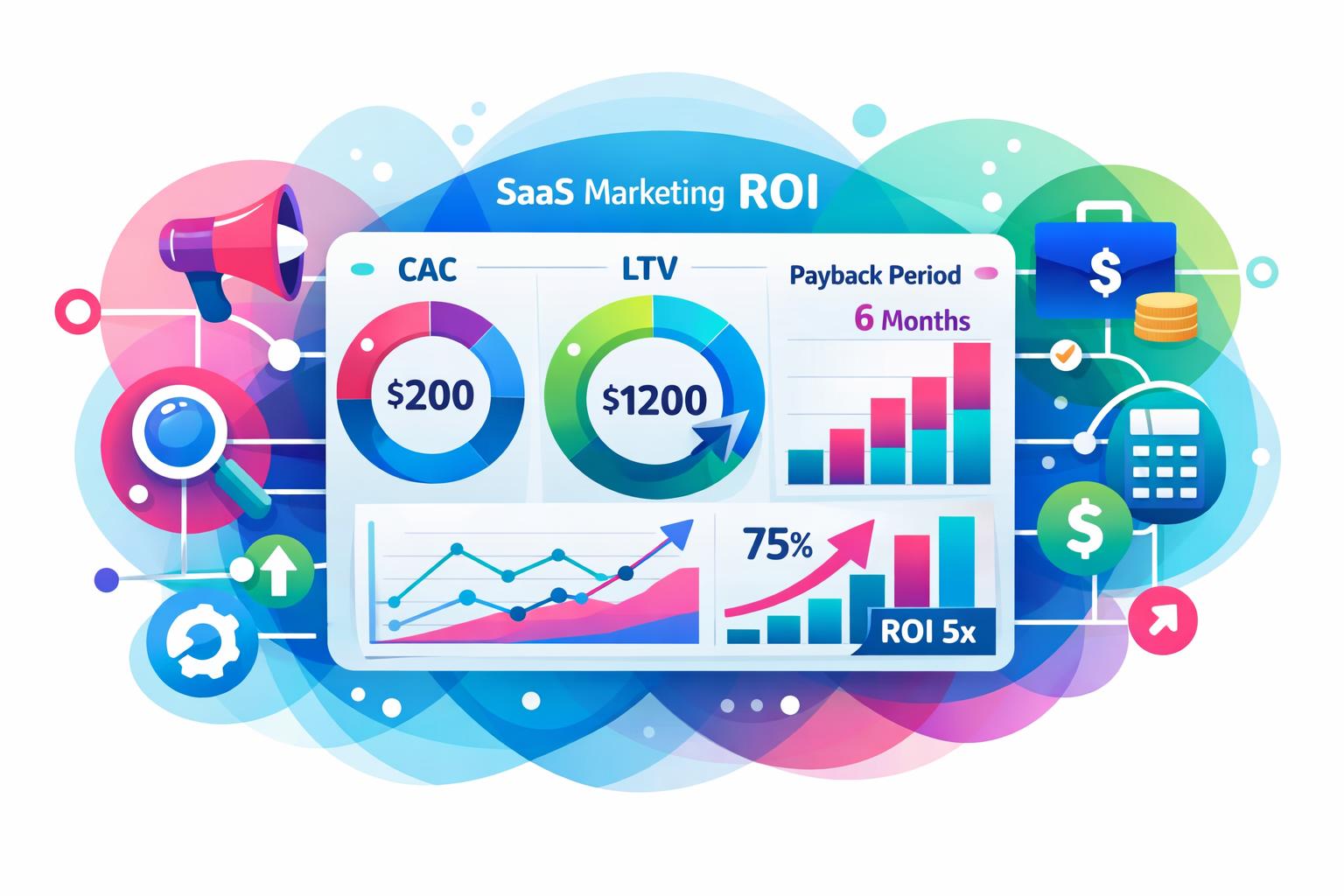
    Hvordan måler du reelt afkast af dine marketingindsatser i en SaaS-virksomhed? Mange teams kan opgøre antallet af leads, men få ved præcist, hvordan indsatsen påvirker omsætning, pipeline og vækst. I takt med stigende konkurrence og højere omkostninger bliver marketing ROI mere relevant end nogensinde. Denne guide viser, hvordan du måler og forbedrer ROI gennem datadrevet kampagnesporing, omsætningsattribution og SaaS-specifikke nøgletal som CAC, LTV og payback-periode.

    Hvad marketing ROI betyder i en SaaS-kontekst

    I sin kerne handler marketing ROI om forholdet mellem investering og skabt værdi. For SaaS-virksomheder er det dog mere komplekst end en simpel omsætningsmåling. Abonnementer, churn og upsell gør, at værdien af en kunde ofte viser sig over måneder eller år. Derfor bør ROI i SaaS betragtes som et sæt sammenhængende målinger snarere end ét tal.

    Et solidt setup kombinerer klassiske økonomiske beregninger med kommercielle signaler. For eksempel vurderes Customer Acquisition Cost (CAC) op mod Lifetime Value (LTV), hvor forholdet 3:1 ofte bruges som pejlemærke. Samtidig er CAC-payback-perioden afgørende for at forstå, hvor hurtigt indtjeningen matcher investeringen. Når disse tal kombineres med pipeline ROI – altså, hvor meget pipeline der skabes per investeret krone – får du et mere nuanceret billede af din marketingeffektivitet.

    “Marketing ROI i SaaS er et system af sammenhængende målinger – ikke et enkelt nøgletal.”

    For at tallene giver mening, kræver det fælles datagrundlag på tværs af marketing, salg og økonomi. Når data bor i separate systemer, bliver ROI hurtigt et gæt. Platforme med integrerede CRM- og marketing analytics-moduler – som MainFoundry – reducerer friktionen og skaber én fælles sandhed om data.

    Sådan måler du marketing ROI trin for trin

    Effektiv måling starter længe før første rapport. Det handler om at definere succes på forhånd. For SaaS-teams bør du analysere de seneste 60–90 dage for at finde din baseline: pipeline-volumen, gennemsnitlig deal-størrelse og konverteringsrater. Uden dette udgangspunkt er det umuligt at vide, om en kampagne forbedrer pipeline-kvaliteten eller blot øger volumen.

    Herefter kommer kampagnesporing. Det handler om mere end trafik – det handler om at forbinde kampagner til handlinger som demo-bookinger, trials og kvalificerede møder. Gode målinger fokuserer på kvalitet frem for klik. Det betyder, at du bør vurdere, hvilke kanaler der tiltrækker den ideelle kundeprofil, og hvordan disse kontakter bevæger sig gennem tragten.

    I MainFoundrys marketingmodul kan du koble kampagner direkte til kontakter og konverteringer for løbende at følge, hvilke aktiviteter der driver reel pipeline. Dette giver et datadrevet overblik over performance i stedet for blot aktivitet.

    Pro Tip: Drop jagten på den perfekte attribution-model. Vælg én metode, brug den konsekvent, og fokuser på forbedring af ROI gennem løbende iteration.

    Attribution bliver hurtigt komplekst i B2B, hvor flere touchpoints spiller ind. Derfor bør fokus være på pipeline-kvalitet frem for at finde det ene korrekte svar. Hvis bestemte kampagner konsekvent skaber deals med højere win-rate eller større kontraktværdi, er det i praksis et stærkt ROI-signal.

    Når dataopsamlingen fungerer, kan du beregne SaaS-nøgletal som pipeline ROI, CAC, LTV:CAC-forhold og payback-tid. Disse målinger afslører både effektivitet, vækstpotentiale og likviditetsstyrke. Ved at følge udviklingen måned for måned kan du identificere ændringer i pipeline-ydeevne, retention eller konverteringsrater tidligt.

    Det vigtigste at tage med videre

    • Et effektivt SaaS-marketingteam måler business outcomes – ikke aktivitet.
    • ROI kræver fælles datagrundlag mellem salg, marketing og økonomi.
    • Fokusér på én flaskehals ad gangen – systematisk forbedring giver største effekt.
    • Et marketing analytics- og attribution-setup med CRM-integration giver et stabilt beslutningsgrundlag.
    • Start med én kampagne – definer klare mål, og byg ROI-indsigten op derfra.

    Relateret læsning

    Læs mere om, hvordan marketing analytics og attribution kan understøtte arbejdet med at måle og optimere ROI i jeres SaaS-forretning.
  • SaaS Content Marketing Funnel That Drives Revenue

    SaaS Content Marketing Funnel That Drives Revenue

    Most B2B SaaS teams publish plenty of content, yet few can clearly explain how that content moves buyers from awareness to conversion. Blog traffic may rise, webinars feel busy, and demos trickle in—but leadership still asks: *Is our content actually driving revenue?* This article explains **how to build a SaaS content marketing funnel** that aligns with buyer intent at every stage and connects content to measurable business outcomes. You’ll learn how to map content to the SaaS buyer journey, track it across stages, and optimize it to deliver real revenue impact using modern analytics platforms such as MainFoundry.

    Mapping Content to the SaaS Buying Journey

    A strong **SaaS content marketing funnel** mirrors how buyers make decisions—from exploring problems, to comparing approaches, to validating final choices. It begins with a clear understanding of your ideal customer profile, including company size, roles involved, and shared pain points. This clarity ensures your content touches real decision-makers rather than generic audiences.

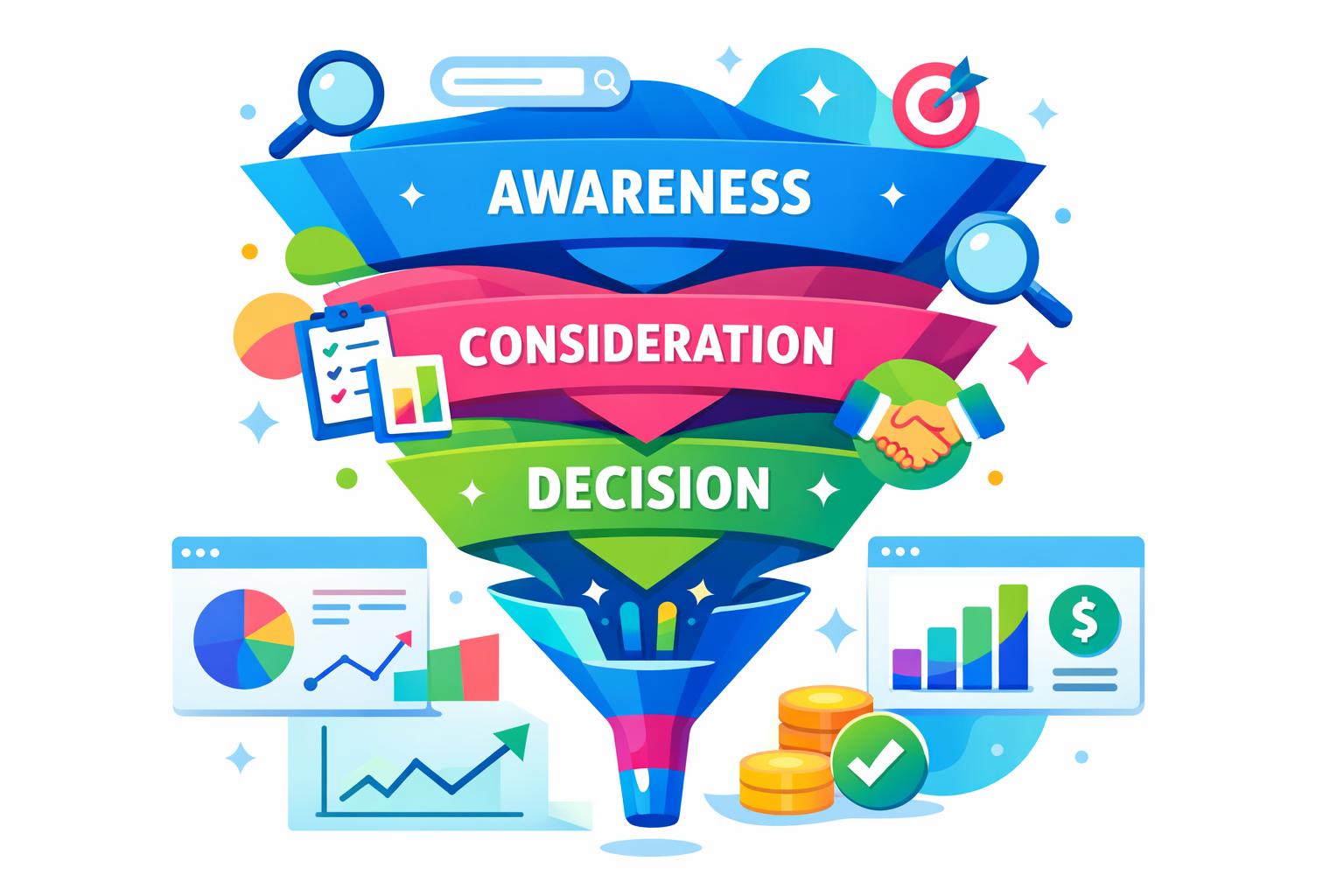
    Most SaaS funnels align around three stages: awareness, consideration, and decision. Awareness content focuses on education and discovery—for example, SEO articles and industry explainers that introduce your brand as a credible voice. Consideration assets go deeper, helping prospects compare different solutions through guides, webinars, and early-stage case studies. Decision content should remove final friction with product demos, detailed testimonials, and proof of ROI.

    In reality, buyers rarely move linearly through these stages. A prospect might revisit beginner content before booking a demo, which makes a balanced funnel critical. Platforms like MainFoundry simplify mapping by connecting marketing activity with sales engagement in one CRM view. When you can see how content interacts with real contacts across time, the funnel becomes measurable and adaptable.

    “A well-mapped funnel doesn’t just attract attention—it clarifies how each piece of content supports revenue generation.”

    Tracking and Optimizing Funnel Performance

    Measurement separates effective content strategies from content guessing games. Tracking begins with stage-appropriate metrics: awareness should focus on qualified organic visitors and repeat engagement; consideration should examine time spent and depth of interaction; decision metrics look at conversion signals such as demos or trial sign-ups. Understanding intent behind numbers prevents misleading conclusions based on raw traffic alone.

    Closed-loop analytics simplify this process. For example, MainFoundry’s marketing attribution connects content interactions directly to deals and pipeline. This multi-touch visibility reveals which assets appear early in conversion journeys and which accelerate close rates later. Instead of attributing success to the last click, you see full influence across the funnel—a critical step for strategic investment and alignment between marketing and sales.

    Pro Tip: Start with simple attribution models—first touch, last touch, and assisted conversions. Consistency across teams matters more than complexity when evaluating how content drives pipeline growth.

    Optimization comes from analyzing friction points. For instance, strong awareness traffic but weak mid-funnel engagement may indicate poor progression cues, while slow decision conversions can signal lack of product proof. Iterative adjustments—like refining calls to action or enhancing top-performing guides—often outperform full overhauls. Over time, these insights directly translate into more efficient revenue generation.

    Key Takeaways

    • Map content to buyer intent across awareness, consideration, and decision stages—not random topics.
    • Track content effectiveness using stage-specific metrics and multi-touch attribution.
    • Connect marketing and sales data with unified analytics platforms like MainFoundry to understand real revenue influence.
    • Continuously refine funnel performance by identifying friction points and scaling what works.
    • Integrate analytics, CRM data, and optimization into one strategy to turn insights into sustainable growth.

    Related Reading

    Explore how to develop a SaaS lead nurture strategy for deeper insights into progressing leads through your funnel effectively.

  • Track the B2B Customer Journey End to End in CRM

    Track the B2B Customer Journey End to End in CRM

    Understanding how to track the B2B customer journey is now a core skill for growth teams. Buyers research independently, move across channels without warning, and involve multiple decision-makers long before sales gets involved. If your data only covers leads and deals, you miss how revenue actually happens. This post breaks down the full end‑to‑end journey—from the first anonymous visit through conversion, onboarding, and retention—and explains how platforms like MainFoundry unify these signals for clearer insight and better collaboration.

    Tracking the B2B Customer Journey from First Touch to Revenue

    Effective journey tracking begins with accepting that the B2B buying path isn’t linear. Prospects circle back, involve colleagues, and re‑engage through new channels—so tracking has to focus on real behavior over rigid funnels. The first website visit, ad click, or blog read often happens months before identification. With privacy‑first analytics and consistent campaign tracking, teams can capture these early signals and eventually connect them to company‑level records automatically rather than losing them in disconnected tools.

    As prospects move through consideration, the volume of engagement grows—email opens, webinar attendance, and demo requests all signal intent. The challenge is tying these events together. When CRM, automation, and event data live separately, insight disappears. A unified CRM such as MainFoundry consolidates these signals into one timeline, giving teams a complete picture of how interest builds. Explore the platform’s CRM capabilities to see this continuity in action.

    When deals reach the decision stage, visibility typically drops again. Sales calls, proposal reviews, and internal deliberations rarely surface in attribution models. Yet these are decisive moments. Logging activities and connecting call insights to the same system that stores marketing engagement ensures sales context isn’t lost. Once a deal is closed, the journey continues through onboarding, adoption, and renewal. Integrating CRM, support, and billing data lets teams correlate promises made early on with long‑term revenue impact. MainFoundry’s billing management tools help link these lifecycle stages seamlessly.

    “Continuity across marketing, sales, and finance reveals the real story of how revenue grows over time.”

    Mapping Touchpoints, Attribution, and Visualization

    To make journey data actionable, teams need clarity about who they are tracking. In B2B, one “customer” often includes several participants with distinct priorities. Tracking at the company level while maintaining individual engagement records reveals collective intent and shows how various stakeholders progress. CRM systems that automatically enrich company profiles provide crucial visibility here.

    Touchpoint tracking should be comprehensive—covering web visits, campaigns, meetings, and support conversations. However, the goal isn’t to record every click but to identify signals that indicate interest or friction. Last‑click attribution rarely captures this complexity. In contrast, multi‑channel attribution distributes credit across meaningful interactions to show what drives conversion. Integrated analytics tools such as MainFoundry’s marketing analytics tie campaign data directly to CRM outcomes, enabling transparent performance assessment.

    Journey visualization translates data into context. Dynamic timelines, account dashboards, and stage‑based views allow teams to spot engagement peaks or handoff gaps instantly. Instead of static diagrams, live journey maps update in real time. Custom setups can be built through MainFoundry’s custom workspaces, enabling tailored dashboards that reflect specific workflows.

    Pro Tip: Use AI‑driven pattern recognition to predict churn or identify inactive accounts before they drop. MainFoundry’s AI platform makes these insights accessible without complex reporting.

    Key Takeaways

    • Journey tracking reveals how marketing, sales, and post‑sale engagement truly contribute to revenue growth.
    • Continuity across data sources is more powerful than adding new tools that fragment insight.
    • Regular review and iteration ensure journey maps evolve with changing buyer behavior.
    • Unified platforms like MainFoundry connect CRM, marketing, billing, and AI insights into one end‑to‑end system.

    Related Reading

    Discover how MainFoundry integrates CRM, marketing analytics, and AI insights seamlessly at mainfoundry.com or connect directly via contact page to explore your use case.

  • SaaS Conversion Tracking Setup for CRM Pipeline

    SaaS Conversion Tracking Setup for CRM Pipeline

    Knowing how to set up conversion tracking is one of the biggest growth levers for any SaaS business. When data is fragmented across platforms or defined inconsistently, every marketing and sales decision becomes guesswork. Effective conversion tracking eliminates that uncertainty by showing exactly how visitors move from clicks to customers. This guide walks through a practical process for building reliable SaaS conversion tracking—from defining meaningful conversion events to connecting them with your CRM and analyzing funnel performance. By the end, you’ll understand how to use unified tracking to improve pipeline accuracy, campaign ROI, and team alignment.

    Define and Capture SaaS Conversions

    Before turning on any tracking tools, start by mapping what truly counts as a conversion for your business. In SaaS, these typically fall into the categories of acquisition, activation, or monetization. For example, a “Start free trial” or “Request demo” action represents far more value than a simple blog view. Each event should clearly answer the question: what does this action tell us about readiness to buy?

    Once defined, the goal is to capture those conversion events consistently across the website and product. MainFoundry’s marketing analytics and conversion tracking tools support both direct tracking and server-side integrations, ensuring actions inside a dynamic app or landing page are logged the same way. Every conversion should include contextual data such as campaign source and timestamp, which allows for accurate attribution when that data flows into the CRM or analytics system.

    “Effective SaaS conversion tracking starts with intentional design—define what matters before you start measuring everything.”

    As conversions accumulate, syncing them with identifiable users unlocks even more value. In MainFoundry’s unified CRM, conversion events automatically attach to contacts and companies, populating their activity timeline. This means when a lead books a demo or starts a trial, sales can instantly see the context that led them there—saving time and improving follow-up relevance. The same data can trigger automated workflows or deal creation, bridging the gap between marketing activity and sales action.

    Analyze Funnel Performance and Align Teams

    After conversion tracking is in place, the next step is understanding what the data reveals. Funnel analysis should evaluate how users move from website visit to subscription, identifying where the biggest drop-offs occur. Because MainFoundry connects marketing analytics, CRM pipelines, and billing data, teams can easily view conversion metrics alongside deal stages to pinpoint leaks and growth opportunities.

    AI-driven analysis adds another dimension by surfacing hidden trends. Using MainFoundry’s AI capabilities, teams can ask natural-language questions like “Which channels deliver the highest trial-to-paid rate?” or “Where do enterprise leads typically drop off?” This creates a proactive environment where insights lead to quicker campaign adjustments, onboarding improvements, and better revenue forecasting across departments.

    Pro Tip: Align your conversion definitions across marketing, sales, and finance so every team interprets success metrics the same way. This shared understanding ensures better forecasting and accountability.

    Ultimately, the most valuable output of a unified conversion tracking system is organizational clarity. Marketing understands which campaigns actually drive qualified opportunities, sales can prioritize based on real intent signals, and finance gains confidence in recurring revenue predictions. That alignment transforms conversion data from static numbers into a shared language for decision-making.

    Key Takeaways

    • Define conversion events around real business intent, not vanity metrics.
    • Connect marketing analytics directly to CRM pipelines to make funnel metrics operational.
    • Use AI insights to detect performance patterns and optimize before momentum slows.
    • Unify teams around consistent data definitions to improve forecasting and accountability.
    • Explore integrated tracking and CRM solutions like MainFoundry’s conversion tracking tools to scale your SaaS revenue intelligence.

    Related Reading

    Check out How to Optimize Your SaaS Sales Funnel for more strategies to increase trial-to-paid conversions.

  • Marketing ROI for SaaS How to Measure Real Revenue

    Marketing ROI for SaaS How to Measure Real Revenue

    Measuring marketing ROI for SaaS might seem simple on paper, but in practice, it requires more than spreadsheets and click-through rates. Long sales cycles, recurring revenue, and multiple touchpoints make it easy to end up with reporting that looks good but lacks strategic clarity. This post walks you through how SaaS companies can calculate marketing ROI that truly reflects growth contribution. You’ll learn how to align revenue attribution with buyer journeys, account for long decision timelines, and cut through vanity metrics, supported by examples from unified platforms like MainFoundry.

    How to Measure Marketing ROI for SaaS the Right Way

    At its core, ROI answers one question: did your marketing spend actually generate meaningful revenue? While ROI commonly compares influenced revenue to total cost, SaaS businesses face the challenge of defining what “revenue” should include. Because SaaS monetizes through subscription growth, measuring short-term deals alone can underestimate marketing impact. Incorporating customer lifetime value (LTV) provides a more accurate reflection of real returns over time.

    Attribution also shapes how ROI is understood. SaaS buyers rarely make decisions after a single ad or email. They interact with several assets—blog content, webinars, product demos—before converting. Relying solely on last-click attribution narrows insight into how campaigns influence deals across the journey. Using multi-touch attribution models assigns proportional credit to each stage, revealing which channels sustain momentum through pipeline and closures.

    Finally, understanding true ROI means factoring in all associated costs. Beyond ad spend, marketing investments include content production, technology subscriptions, event support, and team salaries. Platforms like MainFoundry’s marketing analytics and attribution consolidate these data sources, linking cost and performance into one integrated dashboard for transparent benchmarking.

    “Real SaaS ROI emerges when lifetime value and attribution accuracy replace surface-level metrics like clicks and impressions.”

    Accounting for Long Sales Cycles and Avoiding Vanity Metrics

    Complex buying processes often delay clear ROI visibility. For SaaS marketers, waiting until deals close can hinder agility in campaign adjustment. Tracking pipeline ROI alongside revenue ROI provides earlier indicators of performance by assessing the proportion of qualified pipeline influenced by marketing spend. Over time, comparing these values ensures marketing results align with longer-term revenue growth.

    However, not all metrics deserve equal attention. Impressions or clicks may look promising but often fail to correlate with business outcomes. A campaign yielding fewer but higher-quality leads often surpasses broader traffic initiatives. To remain grounded, focus on relational metrics like lead-to-opportunity conversion, win rates, and customer acquisition cost (CAC) by channel. Connecting these with lifetime value and retention trends paints a fuller picture of marketing effectiveness.

    When data flows directly into your CRM, analysis becomes seamless. Solutions like MainFoundry’s unified CRM and marketing system link campaign data to contacts and revenue, reducing manual attribution errors and enabling continuous optimization.

    • Select a reporting window aligned with your sales cycle—quarterly often works best for SaaS.
    • Aggregate all marketing costs, including technology and personnel.
    • Use multi-touch models that map to the full buying journey for fair revenue attribution.
    • Compare ROI by channel and campaign, and monitor churn, expansion, and renewals to validate sustained value.

    Because subscriptions evolve over time, ROI measurement cannot remain static. By integrating finance and billing data with marketing and CRM through tools like MainFoundry’s billing management, you can refresh ROI models dynamically as accounts expand or churn.

    Pro Tip: Reassess ROI quarterly using LTV insights—this reveals retention-driven growth that short-term metrics overlook.

    Key Takeaways

    • Base ROI calculations on lifetime value, not just the first transaction.
    • Use multi-touch attribution to credit influences across the buyer journey.
    • Avoid vanity metrics—quality pipeline and conversion rates matter more than traffic volume.
    • Simplify measurement by connecting CRM, marketing, and financial data within one system.

    Related Reading

    Explore how data-driven attribution enhances SaaS growth in Marketing Analytics and Attribution or connect with experts at MainFoundry Contact.

  • Salgspipeline i CRM der giver forudsigelig B2B vækst

    Salgspipeline i CRM der giver forudsigelig B2B vækst

    En velfungerende salgspipeline er selve rygraden i enhver B2B SaaS-virksomhed. Uden en tydelig struktur risikerer du reaktivt salgsarbejde, upræcist forecasting og opfølgning, der afhænger af den enkelte sælgers systematik. Denne guide viser dig, hvordan du kan opbygge en pipeline, der skaber forudsigelig vækst gennem klare faser, systematisk opfølgning og datadrevet optimering. Du får også indblik i, hvordan MainFoundry bruger sin egen pipeline-struktur til at skabe sammenhæng mellem CRM, opgaver og måling af konverteringer.

    Definér pipeline-faser baseret på kundens beslutninger

    Et af de mest almindelige problemer i salgspipelines er faser, der beskriver interne aktiviteter frem for kundens reelle fremdrift. Betegnelser som “ringet” eller “mail sendt” fortæller ikke meget om kundens position i købsprocessen. Derfor bør dine pipeline-faser afspejle de beslutningspunkter, hvor kunden bevæger sig tættere mod et køb – ikke blot dine handlinger.

    I en B2B SaaS-kontekst navigerer kunden typisk fra første interesse til kontraktgennemførelse via en række genkendelige momenter: identificeret potentiale, kvalificering af behov, gennemført demo, vurdering af tilbud og endelig lukning. Hver overgang bør baseres på objektive kriterier, som hele teamet forstår og følger ensartet.

    • Identificeret lead med klart match til jeres ICP
    • Kvalificeret behov, hvor problem, timing og fit er bekræftet
    • Demo eller møde gennemført med dokumenteret værdi
    • Forslag accepteret til vurdering med pris og scope defineret
    • Closed won, når aftalen er indgået

    I MainFoundrys CRM opsættes faserne direkte i systemet, hvor deals flyttes visuelt gennem pipelinen. Når CRM, opgaver og aktivitetstidslinje er forbundet, bliver det tydeligt, hvorfor en deal befinder sig i en fase, og hvad der skal ske for at rykke den videre. Resultatet er en pipeline, der ikke blot rapporterer data – men aktivt styrer hele salgsprocessen.

    “En stærk pipeline begynder, når du flytter fokus fra interne processer til kundens beslutningspunkter.”

    Skab konsekvent opfølgning og målbare konverteringer

    En pipeline er først værdifuld, når den bruges aktivt. Hvert lead skal altid have en klar næste handling, så ingen deals går i stå. Konsistent opfølgning sikrer, at dine sælgere holder tempoet, og at ingen muligheder tabes af syne. Ved at koble pipeline-faser med opgaver og kommunikation bliver salgsarbejdet mere ensartet på tværs af teamet.

    Når alt logges i CRM og synliggøres i én samlet pipeline-visning, bliver det enkelt at se, hvad næste skridt er. Deals får momentum, og ledelsen kan nemt identificere, hvor processerne går i stå. Det er her et integreret CRM-system for alvor gør forskellen.

    Når strukturen fungerer, handler næste skridt om at måle. Kig ikke kun på mængden af deals, men på bevægelsen mellem faser. Konverteringsrater afslører, hvor processen halter, mens pipeline-dækning viser, om volumen matcher jeres mål. Velocity – tiden fra lead til lukket aftale – afslører hurtigt flaskehalse i salgsflowet.

    Pro Tip: Gennemgå løbende din pipeline og fokuser på spørgsmål som: Hvor falder flest leads fra? Hvilke faser tager længst tid? Og hvilke segmenter konverterer bedst?

    Med fleksible dashboards kan du tilpasse analysen til både salgsledelse og individuelle sælgere. Det skaber gennemsigtighed og motiverer teamet til at forbedre sig ud fra data i stedet for mavefornemmelser. Resultatet er en pipeline, der kontinuerligt optimeres – uden at du mister kontrollen over CRM’et.

    Det vigtigste at tage med videre

    En stærk B2B SaaS-pipeline kræver først og fremmest klarhed og disciplin. Faserne skal defineres ud fra kundens beslutninger, opfølgningen skal være konsekvent, og målingen skal fokusere på bevægelse frem for blot volumen. Når du arbejder ud fra disse principper, bliver pipelinen et strategisk aktiv, ikke bare et administrativt værktøj.

    • Definér faser ud fra kundens beslutningspunkter
    • Sørg for tydelig næste handling på alle leads
    • Mål på pipeline-bevægelse, ikke blot antal deals
    • Brug CRM aktivt som styringsværktøj, ikke kun som log

    Vil du samle pipeline, opgaver og måling i ét værktøj, kan MainFoundry være et oplagt sted at starte. Det giver dig den arbejdsgang, hvor struktur bliver til handling – og handling bliver til vækst.

  • Sales Activity Tracking CRM Best Practices to Cut Busywork

    Sales Activity Tracking CRM Best Practices to Cut Busywork

    Every sales leader knows tracking calls, emails, and meetings matters—but when it feels like busywork, participation plummets. The secret to effective sales activity tracking isn’t about forcing more CRM updates; it’s about capturing the right data automatically. This post explores how to build a system that tracks what matters without draining your team’s time, using real-world strategies and tools like MainFoundry’s CRM to make visibility automatic—and more valuable.

    How to Track Sales Activities Without Micromanagement

    At its core, sales activity tracking reveals effort and quality, not control. When done right, it connects conversations, follow-ups, and proposals to actual deal progress. The best systems highlight whether the right interactions are happening at the right pace and whether they result in measurable pipeline movement.

    Teams often fall into the trap of tracking everything manually. The result is inconsistent data entry—calls added days later, meetings forgotten, and vague notes that help nobody. Over time, dashboards look active while offering little insight into what’s really moving the pipeline. Instead, effective tracking relies on automation that captures activities as they occur, freeing reps to focus on selling and managers to rely on clean data.

    “Automated activity capture transforms CRMs from reporting tools into living histories of every customer interaction.”

    Modern CRMs like MainFoundry handle this through features such as automated activity timelines and two-way Outlook syncs. These automatically record calls, emails, meetings, and notes as they happen, producing a trustworthy, chronological view of every relationship. The more automation you add, the better your visibility—and the less time your team spends updating fields.

    Automating Activity Tracking With Timelines and Outlook sync

    Once you recognize manual data entry as the weak link, the next step is connecting the tools your team already uses—particularly email, calendar, and calls—to your CRM. With Outlook sync, every email or meeting attaches automatically to the right record, eliminating forgotten updates and incomplete histories. Attendees, time stamps, and threads appear without any effort from the rep.

    When that data flows into a single activity timeline, you can instantly visualize engagement for any account. Add call intelligence and the system can even generate highlights and action items directly from recorded meetings. At that point, tracking moves beyond compliance—it becomes insight for coaching and forecasting. MainFoundry’s integrated custom workspaces extend this principle across sales and operations, creating unified tracking that aligns every team.

    Effective tracking = activity capture + automation + behavioral insights.

    The biggest mistake is using this data for surveillance instead of support. Tracking should create coaching opportunities, not micromanagement. When reps see that automation reduces their workload and helps them close faster, you gain better adoption and richer data. The result is a CRM that manages itself—accurate, current, and finally worth trusting.

    Pro Tip: Review your team’s CRM usage patterns and identify where manual updates still occur. Those are prime targets for automation and efficiency gains.

    Key Takeaways

    • Track only the activities that genuinely move deals, pairing volume with outcomes like conversion and velocity.
    • Automate activity capture with CRMs that sync directly to email and calendar tools.
    • Use the data to inform coaching and prioritization—not micromanagement.
    • Choose unified platforms like MainFoundry that integrate marketing analytics, communication, and CRM data.

    To start improving how you track sales activities, audit your current data entry workflows and identify where automation can reduce friction. Then explore how MainFoundry’s unified CRM makes that automation effortless at mainfoundry.com or connect directly with their team via their contact page.

  • How to Clean CRM Data With Simple Hygiene Rules

    How to Clean CRM Data With Simple Hygiene Rules

    If your CRM feels disorganized, your reports don’t match reality, or your sales team complains about bad leads, you’re facing a clear case of dirty data. Learning how to clean CRM data goes beyond a quick fix—it’s about creating consistent habits and systems that keep your information trustworthy. In this guide, we’ll walk through practical steps for cleaning CRM data methodically, from spotting duplicates to enriching and maintaining high-quality records, while keeping your team’s productivity intact.

    How to Clean CRM Data Step by Step

    A structured process for cleaning CRM data prevents confusion and ensures accuracy. The first step is removing duplicate records which often appear through form submissions, imports, or hurried manual entries. Duplicate contacts distort pipeline metrics and cause overlapping outreach. Automated tools can flag possible matches using email addresses, domains, or similar names, allowing you to merge secondary records into one primary version after review. This careful merge minimizes lost information and creates reliable data foundations.

    Once duplicates are resolved, focus shifts to standardizing fields. Inconsistent inputs—like “USA,” “United States,” and blanks—can disrupt reporting and segmentation. Establish field validation rules for critical contact information and restrict categorical fields, such as industry or account type, to predefined options. Platforms that support flexible structures, such as MainFoundry’s unified CRM and contact management, make it easy to balance customization with consistency.

    After standardization, tackle data enrichment. Even tidy records lose value if fields like job title, company size, or domain remain empty. Before enriching, assess which gaps matter most to your sales and marketing goals. Smart AI tools can automatically update contact details, complete missing fields, and highlight outdated information. MainFoundry’s AI Assistant enriches company and contact data in real time, reducing manual workload while improving accuracy.

    Next comes archiving stale records. Inactive leads or deals can inflate numbers and distract teams. Create a practice of reviewing records for inactivity and archiving those that no longer show engagement. Modern CRMs make this easy through filtering and timeline views, turning a daunting cleanup into a routine process. This step not only clarifies pipeline visibility but keeps your team focused on active opportunities.

    “Data hygiene isn’t just housekeeping—it’s a long-term enabler of accurate forecasting, faster sales cycles, and meaningful customer engagement.”

    Finally, implement data quality rules to prevent recurring issues. Restrict editing access for core fields, require key properties at certain workflow stages, and set automated checks to maintain accuracy. Tracking indicators like completion rates or bounce rates helps your team see how cleaner data improves actual performance. When outcomes are visible, adoption and consistency follow naturally.

    Turning CRM Data Hygiene Into a Continuous System

    Treating CRM cleaning as a one-time project sets teams up for failure. Data starts decaying immediately, so the key is creating a habit of ongoing maintenance. Assign someone accountable for data quality, establish review schedules, and conduct smaller cleanups regularly. This ongoing rhythm saves time compared to large, yearly overhauls that stall pipelines.

    Integrate automation to handle repetitive standards like field validation or required entry checks. With solutions such as MainFoundry’s AI-powered workflows and custom workspaces, teams can design clean data processes that work seamlessly in daily routines. Automation quietly maintains structure without slowing performance or creativity.

    The human element matters too. Train your team on why data hygiene benefits them—accurate contact info leads to better follow-ups and forecasts. Tools that visualize customer interactions, such as timelines and engagement history, connect data quality directly to real-world results, reinforcing motivation and shared ownership.

    Don’t overlook integration hygiene. Unchecked connections with other tools can push inconsistent or incomplete data into your CRM. Regularly review and map integrations, turning off unused syncs where possible. MainFoundry’s secure integrations framework ensures inbound and outbound data stays synchronized, making your CRM a true source of truth across systems.

    When CRM, marketing, and workflows operate in one unified system, data stays cleaner, faster, and more reliable for every team involved.

    Key Takeaways

    • Follow a clear sequence—deduplicate, standardize, enrich, archive, and enforce data quality rules.
    • Consistent field formats and validation allow for reliable segmentation and reporting.
    • AI-driven enrichment and automation sustain accuracy while reducing manual corrections.
    • Archiving stale data enhances focus without harming historical analytics.
    • Unified platforms like MainFoundry simplify ongoing data hygiene through connected CRM and marketing operations.

    Related Reading

    Explore How to Clean CRM Data: A Practical Data Hygiene Guide for more actionable insights on keeping your CRM data accurate and useful.

  • SaaS Revenue Forecasting Guide for Accurate Planning

    SaaS Revenue Forecasting Guide for Accurate Planning

    Accurately forecasting SaaS revenue can mean the difference between predictable growth and constant uncertainty. For fast-scaling companies, this isn’t just a finance exercise—it shapes hiring plans, marketing investments, and product decisions. Yet many teams still rely on spreadsheets or guesswork that collapse under the pressure of changing sales cycles and retention trends. This guide breaks down practical forecasting approaches—including weighted pipeline, historical conversion, and cohort-based analysis—to build projections your leadership team can trust and use confidently.

    Core SaaS Revenue Forecasting Methods

    Most SaaS businesses rely on a mix of bottom-up and top-down models, depending on their growth stage and data maturity. Understanding what each method reveals—and what it hides—creates stronger, more trustworthy forecasts. Among the most widely used are weighted pipeline forecasting, historical conversion forecasting, and cohort-based forecasting.

    Weighted pipeline forecasting applies probabilities to active deals to estimate expected revenue within a specific time frame. It connects forecasts directly to sales activity, making trends visible almost immediately. However, its accuracy depends on clean, standardized CRM data. Tools like MainFoundry’s CRM and pipeline management help teams tighten pipeline structures and link deal probabilities to historical performance instead of intuition.

    In contrast, historical conversion forecasting projects future revenue using past funnel conversion rates—such as lead-to-customer or demo-to-paid. It’s ideal when your funnel has been consistent over time and you have enough data to smooth fluctuations. For companies tracking marketing performance actively, pairing conversion forecasts with integrated marketing analytics dashboards ensures assumptions remain tuned to reality as campaigns or markets evolve.

    Cohort-based forecasting takes a different angle by grouping customers based on acquisition period or segment and tracking churn, expansion, and renewals over time. This model highlights how retention and growth dynamics vary between groups. Mature SaaS companies often rely on this to predict recurring revenue more precisely. Clean subscription data powered by MainFoundry’s billing and finance management tools makes cohort trends easier to analyze across MRR and ARR measurements.

    “The most reliable SaaS forecasts blend multiple methods—anchoring on recurring revenue models while layering in pipeline and cohort insights for a realistic picture of growth.”

    Improving Forecast Accuracy

    Knowing forecasting models isn’t enough—execution determines success. Many forecasts falter because of inconsistent data, neglected churn metrics, or overreliance on a single method. The most effective SaaS teams maintain disciplined processes anchored by clean data and regular reviews. They separate new revenue streams from expansion and churn to reveal what truly drives growth.

    • Define short- and mid-term forecasting horizons to keep assumptions relevant.
    • Standardize pipeline probabilities based on actual win rates to prevent bias.
    • Segment forecasts by deal size or segment for more precise insight.
    • Document forecasting assumptions and revisit them every month.

    Integrating live dashboards shortens review cycles and reduces manual reconciliation between sales and finance. With MainFoundry’s finance dashboards, teams can watch MRR, ARR, and churn metrics update in real time, quickly spotting discrepancies between forecasted and actual performance before they grow problematic.

    Pro Tip: Align your CRM pipeline directly with finance dashboards for daily visibility into conversion accuracy and deal timing. Platforms like MainFoundry’s all-in-one business system unify these views for dependable forecasting.

    Key Takeaways

    • Combine multiple forecasting methods—pipeline, conversion, and cohort models—for a resilient view of revenue.
    • Maintain clean, consistent data to ensure forecasts reflect reality more than optimism.
    • Track churn and expansion equally alongside new bookings for comprehensive performance insight.
    • Unify visibility across teams using integrated tools and dashboards to align sales and finance perspectives.

    Related Reading

    Explore the guide to CRM and pipeline management to learn how integrated data sets strengthen your forecasting accuracy.

  • B2B Sales Process Best Practices for SaaS Founders

    B2B Sales Process Best Practices for SaaS Founders

    Building your first B2B sales process as a SaaS founder can feel like trying to juggle strategy and survival at once. You’re refining the product, talking with early adopters, and figuring out how to close deals without a clear blueprint. The key isn’t adding bureaucracy—it’s creating clarity. In this guide, you’ll learn how to define structured stages, create purposeful follow-up cadences, and measure conversion rates to transform founder-led selling into a predictable, scalable system.

    Defining a B2B Sales Process with Clear Stages and exit criteria

    At its core, a B2B sales process is a shared understanding of how a deal moves from first contact to a closed customer. For most early-stage SaaS teams, this involves six to seven realistic stages that mirror buyer behavior. The biggest mistake founders make is naming stages without defining what qualifies a deal to advance. That leads to bloated pipelines and unreliable forecasts.

    Each stage should answer one simple question: *What must happen before this deal earns the right to move forward?* When you define clear exit criteria, your pipeline becomes a living to-do list rather than a wishful scenario. For instance, a deal shouldn’t leave prospecting because you sent an email—it should move forward only when there’s a meaningful response, like a booked meeting or a request for more details.

    “Define the rules of progress early—your pipeline should reflect buyer action, not seller optimism.”

    During qualification, exit criteria should confirm fit—evidence of a real problem, budget alignment, and access to a decision-maker. Without these, advancing to a demo creates false momentum. This is where using a unified CRM pipeline makes a major difference. In tools like MainFoundry’s CRM pipeline and activity tracking, every deal lives with its related emails, meetings, and tasks in a chronological view. Custom fields can enforce your qualification rules, keeping your data truthful as volume grows.

    Pro Tip: Document exit criteria directly inside your CRM so new sales hires instantly understand what qualifies a deal to move forward.

    Clearly defined criteria not only create better visibility—it also simplifies delegation. When you eventually bring in sales support, you’re no longer asking someone to “sell like you.” You’re giving them a structured playbook showing what good looks like at each stage of the journey.

    Making Sales Predictable Through Follow-Up Cadences and conversion metrics

    Once you define your sales stages, consistency becomes the next challenge. Deals rarely fall apart from disinterest—they fade due to vague follow-up. “Checking back in” is not a system. Strong follow-up cadences define when and how to re-engage at each stage, ensuring your outreach adds value rather than noise.

    Effective cadences tie directly to pipeline activity. After an initial outreach, schedule a follow-up within a few days if there’s no response, ideally providing helpful context or new insight. Following a demo, structure touchpoints around next steps such as summarizing findings, confirming pricing, or reviewing a trial’s progress. When every email, call, or meeting automatically triggers a task, your pipeline no longer depends on memory—it operates on process. Platforms like MainFoundry’s custom workspaces make these workflows easy to model for trials, pilots, or proofs of concept.

    Predictability emerges when follow-ups are scheduled, not remembered.

    Once your activities are consistent, conversion metrics reveal your process health. Tracking how many deals move from stage to stage exposes where momentum stalls. For instance, if prospects often reach demos but few request pricing, your discovery messaging may need refinement. If trials rarely convert, focus on the onboarding experience or time-to-value. Dashboards like those in MainFoundry’s marketing and sales analytics can reveal where deals advance or drop off by linking source data, activities, and outcomes.

    Over time, these metrics enable early revenue forecasting. Even if initial numbers fluctuate, they provide more accuracy than guesswork and improve as your process matures. What begins as founder-led selling can become a reliable system for steady growth.

    Key Takeaways

    • Define pipeline stages based on buyer actions and set strict exit criteria before advancing deals.
    • Systemize follow-up cadences to maintain consistency and prevent opportunities from going cold.
    • Use conversion metrics between stages to diagnose bottlenecks and prioritize improvements.
    • Centralize pipeline visibility, activities, and analytics in one platform like MainFoundry for unified tracking.
    • Iterate regularly—your first version of the process is the foundation for scalable, predictable growth.

    Related Reading

    Learn more about building predictable SaaS growth systems in MainFoundry CRM and activity tracking.