Category: How-to-guides

  • Sådan opsætter du abonnementsfakturering i SaaS

    Sådan opsætter du abonnementsfakturering i SaaS

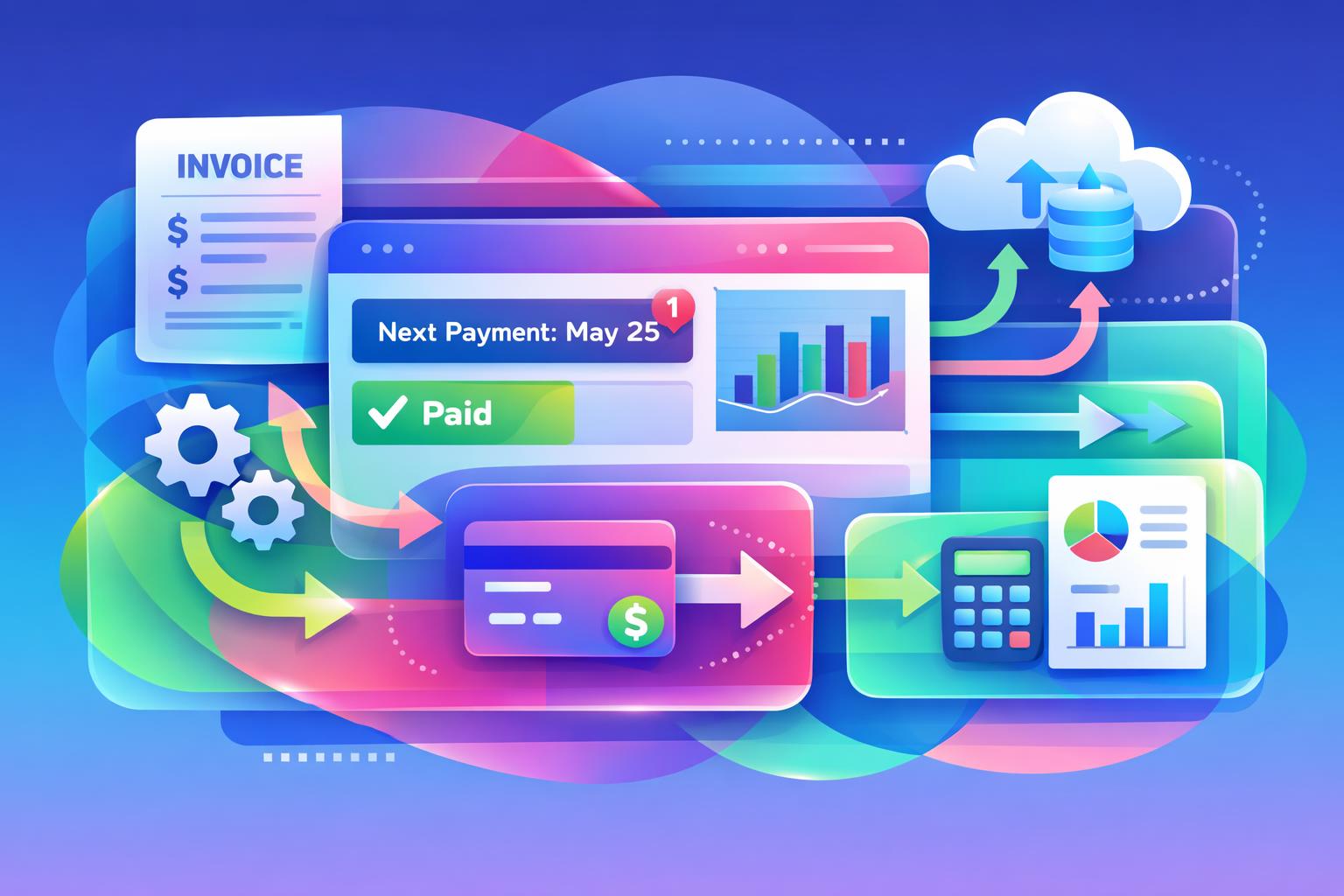
    Automatisk abonnementsfakturering er fundamentet i enhver SaaS-virksomhed. Når fakturering, påmindelser og regnskabsintegrationer er gennemtænkt, bliver din økonomi rolig og skalerbar. Denne guide viser dig sådan opsætter du abonnementsfakturering trin for trin, så du kan undgå manuelle arbejdsgange og minimere churn. Vi gennemgår nøgleområder som faktureringsperioder, betalingspåmindelser og integration med systemer som e-conomic samt, hvordan en samlet løsning – eksempelvis MainFoundrys modul – kan gøre hele processen mere robust og effektiv.

    Hvad kræver en solid opsætning af abonnementsfakturering?

    En stærk faktureringsopsætning skal kunne håndtere hele kundens livscyklus – fra prøveperiode til opsigelse. Det handler ikke blot om at sende fakturaer, men om at skabe en automatiseret proces, der understøtter skalerbarhed. De fleste SaaS-virksomheder arbejder både med månedlige og årlige abonnementer, og her gør faktureringsperioder en stor forskel for cash flow og rapportering. Klare regler for perioder er første skridt i en fungerende struktur.

    Betalingspåmindelser er næste afgørende element. En automatisk påmindelse før forfald skaber tryghed og opleves som service, mens forsinkede rykkere kan skade tilliden. Når påmindelser og rykkerflow er veldefineret, bliver indbetalingsraten mere stabil. Endelig skal opsætningen inkludere korrekt integration med regnskabssystemet – eksempelvis MainFoundrys faktureringsmodul eller e-conomic – for at sikre, at data flyder automatisk videre til bogføring og moms.

    “En gennemtænkt faktureringsstruktur forvandler økonomistyring fra et administrativt behov til en strategisk fordel.”

    Trin-for-trin: Sådan opsætter du automatisk abonnementsfakturering

    De fleste SaaS-virksomheder følger en gentagelig proces, når de etablerer automatiseret fakturering. Fra fastlæggelse af faktureringsmodeller til integration med økonomisystemer handler det om at skabe et flow, der ikke kræver konstant manuel opmærksomhed. I praksis er der syv centrale trin, som sikrer en stabil og fejlfri drift.

    • Definér dine abonnementsmodeller med klare priser, perioder og rabatter – fundamentet for fakturering og rapportering.
    • Fastlæg faktureringsperioder og startdatoer, inklusiv hvordan midt-i-måneds-tilmeldinger håndteres med pro rata-beregning.
    • Opsæt automatiske fakturaer med korrekt nummerering, momsberegning og PDF-generering for at reducere manuelle fejl.
    • Etabler påmindelser og rykkerflow med fleksibel timing og nuance i kommunikationen for maksimal kundetilfredshed.
    • Integrér med regnskabssystemer som e-conomic for at automatisere bogføring og rapportering uden dobbeltarbejde.

    Når disse trin samles i en platform, som MainFoundry gør det i sit modul til abonnements- og faktureringsstyring, bliver fakturering og kundeopfølgning en samlet proces. Du kan læse mere om platformens økonomifunktioner under abonnements- og faktureringsstyring.

    Faktureringsperioder, påmindelser og e-conomic i praksis

    Når opsætningen er på plads, ligger gevinsten i den daglige drift. Ensartede faktureringsperioder gør rapportering og MRR-beregninger langt nemmere, mens automatiske betalingspåmindelser gør dine processer mere proaktive. I moderne SaaS-setup sendes påmindelser, oprettelse af opgaver og betalingsovervågning automatisk, så økonomi bliver en del af kundeoplevelsen frem for en eftertanke.

    Integration med e-conomic har stor betydning for danske virksomheder, da korrekt momsafstemning og bogføring er kritisk. Når fakturadata flyder direkte mellem systemerne, sparer økonomiteamet tid, og fejl minimeres. I MainFoundry er sammenhængen tydelig – fakturering, CRM og regnskab er forbundet, så betalingsstatus kan ses direkte på kundens tidslinje.

    Pro Tip: Sørg for, at dit faktureringssystem understøtter automatiske ændringer ved opgraderinger og nedgraderinger – det sparer tid og bevarer data kvaliteten.

    Vigtigste pointer

    • Klare faktureringsperioder skaber ro og ensartet rapportering.
    • Automatiske betalingspåmindelser øger likviditet og forbedrer kundeoplevelsen.
    • Integration med e-conomic eliminerer dobbeltarbejde og bogføringsfejl.
    • Brug af en samlet platform som MainFoundry gør skalerbarheden langt lettere.
    • Overvej din nuværende opsætning og om den kan vokse med din forretning.

    Related Reading

    Læs mere om abonnements- og faktureringsstyring for at se, hvordan MainFoundry automatiserer hele din faktureringsproces.

  • SaaS Pricing Strategy That Scales With Growth

    SaaS Pricing Strategy That Scales With Growth

    Figuring out how to price a SaaS product can define your company’s trajectory. A well-chosen pricing strategy shapes not just revenue but customer sentiment and product direction. Too often, SaaS teams rely on competitor comparisons or intuition to set prices—and miss out on smarter, data-backed opportunities. This guide outlines a repeatable framework for modern SaaS pricing. You’ll learn how to align price with customer value, benchmark competitors effectively, design conversion-friendly pricing pages, and steer clear of the mistakes that silently restrict growth. Whether you’re launching or refining a SaaS business, these insights will help you price with clarity and confidence.

    SaaS pricing strategy starts with value, not math

    Most pricing missteps begin with faulty foundations. Teams often start from internal costs or competitor price tags instead of asking what outcomes customers truly value. That backward approach can keep prices within market norms but rarely maximizes long-term growth. Value-based pricing flips the logic by putting customer impact first. Instead of focusing on feature lists, it asks: what progress does your product enable? A CRM might reduce missed deals, while a finance platform can improve forecasting accuracy—these are real results customers will pay for.

    To execute value-based pricing, gather insights from sales calls, onboarding experiences, and ongoing feedback. Over time, you’ll spot which features drive premium willingness-to-pay and which segments value specific outcomes. From there, align your packaging: ensure core features highlight core value, and premium tiers naturally extend it. When packaging and price reinforce the same story, customers choose confidently and upgrade organically.

    Competitor benchmarking still matters but should serve as guardrails, not anchors. If your product delivers more meaningful outcomes, don’t hesitate to price accordingly—even higher than peers. Market context helps avoid extremes but mustn’t override unique customer value. For more context on developing SaaS growth positioning, read Product-Led Pricing Strategy: How Value Drives Conversions.

    “In SaaS, customers don’t buy features—they buy progress. Your pricing should reflect the outcomes they achieve, not the effort it took to build them.”

    Most successful SaaS companies use tiered pricing to balance simplicity and flexibility. A clear good–better–best model visualizes value progression and provides an upgrade path. When usage or impact scales with adoption, usage-based or per-seat pricing aligns naturally. Freemium models can accelerate acquisition, but only if the transition to paid value is frictionless. What truly matters is ensuring your pricing scales alongside customer success. Misalignment—where expansion doesn’t trigger increased revenue—signals it’s time to rework your model.

    Pro Tip: Use connected tools like MainFoundry to link pricing data with real customer usage and analytics. When insights drive adjustments, pricing evolves as your product does.

    Pricing pages, testing, and the mistakes that stall growth

    Even sharp strategy fails without clear presentation. Your pricing page is a decision tool, not a feature catalog. Clarity beats cleverness. Display plans in structured comparison tables and highlight differences that matter—from outcomes to usage limits. Anchoring also plays a psychological role: showing your top tier first can make middle plans feel more accessible and encourage upgrades. Adding a “most popular” badge helps guide faster decisions without creating confusion.

    Testing doesn’t have to be drastic. Small iterations—such as rearranging features, adjusting limit wording, or introducing experimental tiers—offer valuable signals. The purpose of testing is learning, not instant optimization. Connected analytics make those learnings actionable by tying pricing data to acquisition, expansion, and churn. Without integration, changes feel like guesswork. With integration, they become a system of continuous improvement.

    Common pricing mistakes repeat across industries: forcing one-size-fits-all plans, overcomplicating tiers, or neglecting updates as products evolve. What once felt premium can soon become standard, meaning static pricing quietly constrains revenue potential. Additionally, many teams resist testing because it feels risky—but not testing is riskier. Competitors shift, customer expectations change, and the only constant is evolution. Pricing that adapts consistently keeps you ahead of expectations and market trends.

    Key Takeaways

    • Value drives SaaS pricing—start from customer outcomes, not production cost or competitor averages.
    • Tiered pricing works best when each level delivers clearly increasing impact, making upgrades feel natural.
    • Treat your pricing page as a guided decision surface—clarity and comparison outperform feature overload.
    • Continuous testing and analytics integration turn pricing into an adaptive system instead of a static guess.
    • MainFoundry enables this evolution by linking pricing structures to real customer behavior and revenue insights.

    Related Reading

    Explore Essential SaaS Growth Metrics to understand how pricing decisions connect to long-term performance.

  • Subscription Billing Best Practices for Upgrades and Downgrades

    Subscription Billing Best Practices for Upgrades and Downgrades

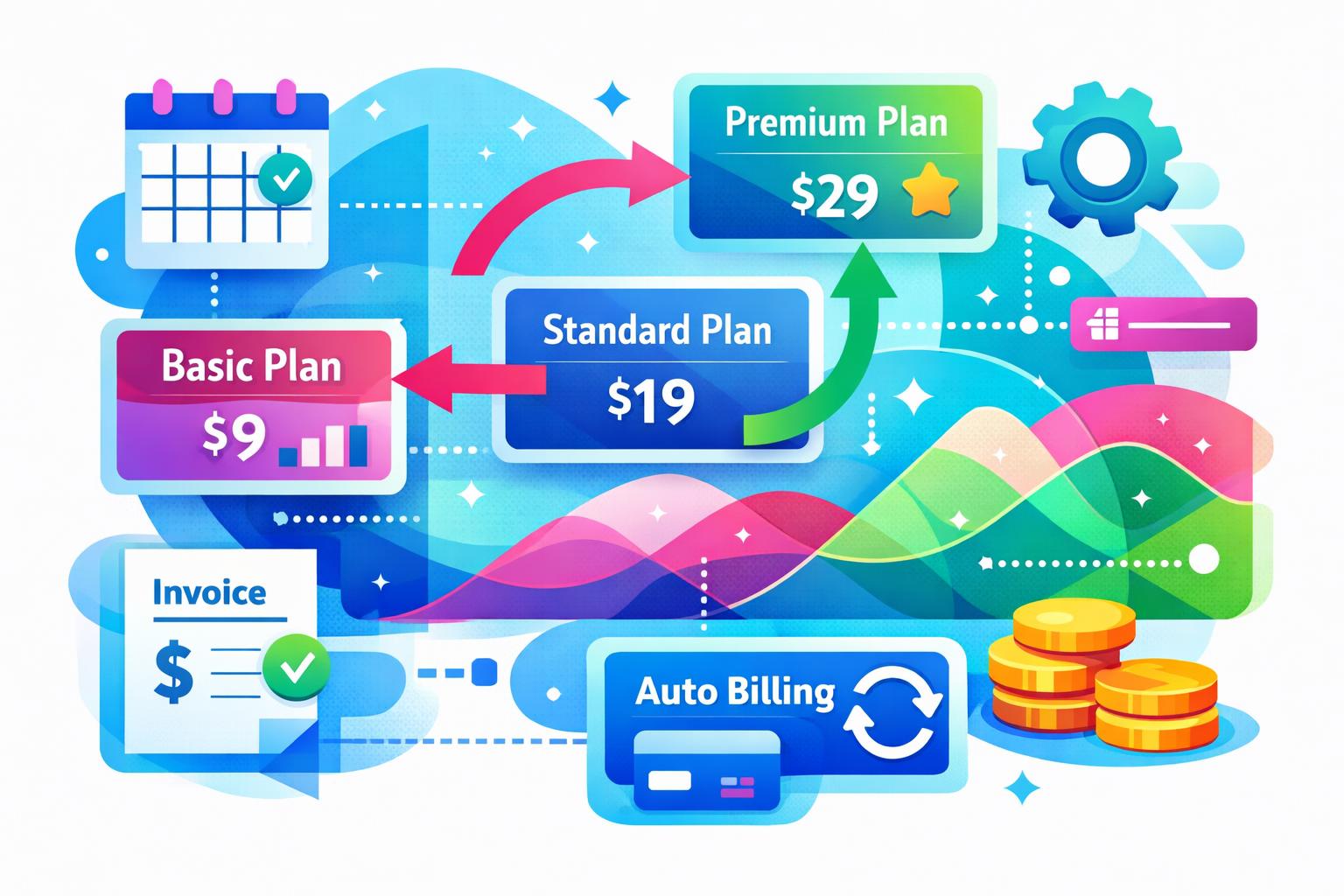
    Managing recurring revenue isn’t just about signing up new customers—it’s about maintaining trust during plan changes. Understanding how to handle subscription upgrades and downgrades smoothly prevents billing confusion and improves customer satisfaction. In this post, you’ll learn practical ways to manage mid-cycle changes, how proration actually works, and when to apply immediate versus end-of-cycle updates. You’ll also explore how integrated tools like MainFoundry’s billing and subscription management can automate this process for accuracy and transparency.

    Managing Mid-Cycle Upgrades and Downgrades

    Most subscription changes fall into three categories: upgrades, downgrades, or lateral plan modifications. The complexity often comes from timing—customers rarely wait for renewal dates to make changes. When upgrading, clients expect instant access to new features, which means efficient billing adjustments are essential. A fair system applies partial credits for unused portions of the current plan and bills only for the difference across the remaining period.

    Downgrades, meanwhile, benefit from a softer approach. While technical systems can process immediate access reductions, many companies delay these changes until the current billing period ends. This maintains customer goodwill by letting users retain paid access while smoothly transitioning to a lower plan at renewal. Companies that apply this strategy often reduce churn and maintain higher trust among long-term customers.

    “Proration aligns revenue with value delivered, making mid-cycle changes fair for both business and customer.”

    Proration ensures accurate billing during these transitions. Instead of manual refunds, systems convert unused time into account credits automatically applied to future invoices. Advanced platforms with built-in subscription and billing management, like those offered by MainFoundry, automate invoice updates and renewal schedules instantly. This eliminates spreadsheets, keeps accounting clean, and preserves transparency for your team.

    Timing, Communication, and Integration

    Deciding when changes take effect is crucial. Immediate upgrades work well when users gain new features right away, while delayed downgrades show fairness when customers give something up. Regardless of timing, clear communication is key. Customers rarely object to changes they understand—but unexpected charges or lost features without notice can damage trust quickly.

    Integrated billing and CRM systems ensure every update is synchronized and visible across departments. For example, in MainFoundry’s CRM-connected environment, each plan change triggers an automated email confirmation and logs directly in the customer record. This level of visibility helps support teams explain changes clearly, while finance maintains precise billing data—all without manual effort.

    Pro Tip: Use APIs or automated workflows to preview prorated charges before applying them. This transparency boosts credibility and prevents billing disputes during mid-cycle changes.

    Automation also helps maintain accuracy across metrics like MRR and renewal forecasts. When subscription data syncs in real time, your dashboards, financial reports, and customer notes always match. It’s a seamless way to keep finance, customer success, and sales moving together without manual intervention or confusion.

    Key Takeaways

    • Fair proration ensures customers are charged only for what they use, whether changing up or down mid-cycle.
    • Immediate upgrades delight customers, while end-of-cycle downgrades safeguard loyalty.
    • Consistent, transparent communication reduces confusion and prevents billing disputes.
    • Automated billing and CRM integration keep teams aligned and operations efficient.

    Mastering how to handle subscription upgrades and downgrades is about building consistency, fairness, and automation into your recurring revenue systems. To see how unified billing and customer data can simplify these workflows, explore MainFoundry’s solutions or connect directly at MainFoundry’s contact page.

  • Reduce Involuntary Churn From Failed Payments

    Reduce Involuntary Churn From Failed Payments

    When a customer leaves, it can sting—especially when they didn’t intend to. involuntary churn happens when payments fail due to expired cards, declined transactions, or unnoticed invoices, not because the user wants to cancel. For subscription businesses, it quietly chips away at recurring revenue while distorting churn metrics. This post explores how to reduce involuntary churn effectively using dunning sequences, card retry logic, and grace periods, all without eroding customer trust. You’ll learn how automation and integrated billing systems like MainFoundry make payment recovery scalable and smooth.

    Why Involuntary Churn Happens—and Why It’s Fixable

    Most customers who experience failed payments still intend to continue their service. Churn stemming from expired cards, temporary bank blocks, or insufficient funds reflects operational friction, not dissatisfaction. Many businesses treat these events as cancellations instead of recoverable issues—and that’s where revenue slips through the cracks.

    Once payment failures are reframed as recoverable moments, organizations can design workflows that reclaim lost revenue while maintaining trust. By focusing on timely retries, helpful communications, and frictionless payment updates, recovery rates rise naturally without adopting aggressive or customer-unfriendly tactics.

    “Involuntary churn is not customer rejection—it’s a solvable payment workflow problem.”

    How to Reduce Involuntary Churn with Payment Recovery Systems

    Reducing involuntary churn depends on coordinated communication and intelligent payment recovery logic. Start with dunning email sequences that treat customers with respect and provide clarity. Early reminders—sent before a card expires—prevent many issues entirely. When a failure occurs, initial emails should sound informational and reassuring rather than alarming, emphasizing that service continues during the resolution window.

    As time passes, follow-ups can increase urgency while keeping tone professional. Each message should offer direct access to payment updates. Reference actual plans or invoices for context—personalized messaging drives higher engagement than generic notices. With an integrated system such as MainFoundry’s subscription and billing management tools, this process can happen automatically without manual tracking.

    Pro Tip: Design dunning sequences that balance urgency and empathy. The tone should shift gradually, helping customers fix issues before access is lost.

    Equally vital is implementing smart card retry logic. Instead of retrying payments too frequently or too slowly, optimize timing based on failure types—insufficient fund errors often clear in a few days, while bank declines may require business-day spacing. Intelligent retry schedules quietly recover payments without bothering the customer. Automation ensures retries, reminders, and billing updates work in sync, preventing errors caused by manual spreadsheets.

    Beyond retries, make payment method updates frictionless. Many failures occur simply because an expired card isn’t replaced. Send proactive prompts before expiration, and include direct, secure links to update payment details—no extra navigation or support contact needed. When these reminders are segmented by reason (expired card vs. declined transaction), customers perceive them as helpful nudges rather than generic notices.

    Finally, grace periods play a crucial role. A buffer period of one to four weeks lets retries and dunning sequences run their course before suspension. Communicate clearly how long customers have to resolve issues and what will happen afterward. These windows maintain goodwill, prevent abrupt disruptions, and support post-suspension reactivation when needed.

    Automation transforms payment recovery from reactive firefighting into a repeatable revenue protection process.

    Turning Strategy into Systems

    Knowing how to reduce involuntary churn is easier than sustaining those improvements at scale. Manual processes fail fast—teams lose track of who’s overdue, orders retries incorrectly, and miss recovery windows. Systems that centralize invoices, payments, and customer records create visibility and predictability.

    With MainFoundry’s finance management tools, failed payments trigger automated retries, reminders, and account updates within structured rulesets. Teams can monitor where each subscriber sits in the recovery process directly within the platform. Integration with CRM means account managers have context for each communication, reducing duplication and confusion across departments.

    For larger teams, connecting billing with workspace tools is especially valuable. For instance, repeated failures on high-value accounts can auto-generate tasks for personalized outreach—a practical way to merge automation with human response. MainFoundry’s custom workspaces make it easy to align billing follow-ups with how your organization operates day to day.

    Key Takeaways

    • Treat failed payments as recoverable operational events, not customer departures.
    • Combine structured dunning sequences with smart retry schedules for the best results.
    • Offer frictionless payment updates and clear grace periods to preserve trust.
    • Automate billing workflows and centralize data to scale recovery efficiently.
    • Use integrated solutions like MainFoundry to move from reactive fixes to proactive protection.

    Next Steps

    Explore how MainFoundry’s automated payment tracking and invoicing can help your business recover failed payments while strengthening customer relationships.

  • Subscription Billing Setup Guide for SaaS Founders

    Subscription Billing Setup Guide for SaaS Founders

    Setting up subscription billing is one of those milestones every SaaS founder encounters faster than expected—but few realize how complex it can become. Pricing tiers sound simple until upgrades and downgrades appear mid-cycle. Billing feels straightforward until customers demand hybrids like annual plans with monthly add-ons. This guide outlines how to configure subscription billing from scratch with clarity and automation, using MainFoundry’s Finance & Billing module as the practical example. You’ll learn to design pricing tiers, set billing cycles, handle proration, and automate invoices so your system scales smoothly and cash flow stays predictable.

    Design pricing and billing with growth in mind

    The most effective subscription setups start from the product level. Before you touch any billing tool, map out how your pricing tiers reflect actual customer value. Successful SaaS companies rarely offer dozens of options; instead, they focus on two to four clear tiers that scale through features or usage. In MainFoundry’s Products & Pricing area, you define these tiers directly—each can be recurring, one-time, or bundled, ensuring downstream consistency in invoices and reporting.

    Many founders make the mistake of defining rigid pricing too early. Instead, keep room for expansion through optional add-ons or usage upgrades. The flexibility built into MainFoundry’s product catalog means your team can easily handle customer-specific variations without workarounds later. When tied to your CRM, this alignment prevents costly mismatches between what was sold and what’s billed — one reason integrating CRM and billing inside the same platform has become a best practice for SaaS teams.

    “Your pricing tiers define the foundation of your billing logic—the more aligned they are with real usage, the smoother your revenue operations will scale.”

    Set billing cycles, manage proration, and automate invoices

    Billing cycles are the heartbeat of your cash flow. Monthly plans encourage fast adoption, while annual cycles boost retained revenue and minimize churn. In MainFoundry, you can configure renewal rhythm—monthly, quarterly, annually, or custom—right inside each subscription. These schedules dictate invoice timing, renewal dates, and metrics like MRR and ARR on your Finance Dashboard.

    When customers upgrade mid-cycle, your system must handle proration accurately. Manual adjustments lead to errors and frustrated clients. MainFoundry removes this friction by calculating proration automatically whenever a plan changes, adjusting only for the remaining time within a cycle. These changes push directly into the next invoice—no spreadsheets required—preserving trust and clarity in your billing experience.

    After cycles and proration are configured, invoice automation completes the loop. In MainFoundry, recurring invoices are generated from active subscriptions, reflecting the precise pricing tier, period, taxes, and discounts. It connects seamlessly with payment gateways, instantly recording payments and syncing financial data to CRM records. Founders who automate this workflow gain hours back every month and achieve predictable, scalable revenue without manual overhead.

    Pro Tip: Define billing logic directly within subscriptions. When renewals, changes, and cancellations follow consistent platform rules, accuracy and trust scale naturally alongside your customer base.

    Key Takeaways for SaaS founders

    Setting up subscription billing successfully requires intentional design rather than a patchwork of tools. The path begins with strong pricing tiers, continues through clear billing cycles and proration rules, and ends with invoice automation that runs itself. Treat billing as a unified system connected to your CRM, not as a back-office task. Doing so improves customer trust, reduces manual work, and makes revenue growth sustainable.

    • Build flexible pricing tiers reflecting customer value, not internal convenience.
    • Define billing cycles and proration early to prevent chaos during scaling.
    • Automate invoicing to eliminate manual intervention and improve predictability.
    • Unify CRM and billing systems for seamless data accuracy and customer insight.

    Related Reading

    Explore how unified billing and CRM systems can streamline SaaS operations in MainFoundry’s integrated Finance & Billing guide.

  • CRM og AI driver salgsstrategien 2026

    CRM og AI driver salgsstrategien 2026

    Fremtidens salgsstrategi i 2026 handler ikke kun om at sælge – men om at opbygge varige relationer gennem data, indsigt og personaliserede oplevelser. Den bedste strategi for salg kombinerer branding, omnichannel-tilstedeværelse og kunstig intelligens på måder, der gør interaktionen relevant på tværs af alle kontaktpunkter. I denne artikel ser vi nærmere på de centrale principper bag en moderne salgsstrategi og viser, hvordan platformen MainFoundry hjælper virksomheder med at implementere og optimere denne tilgang i praksis.

    Fra topfunnel-branding til AI-understøttet eksekvering

    En stærk salgsstrategi starter med klar positionering og et brand, der vækker tillid. Ved at kombinere storytelling, thought leadership og målrettede kampagner skaber virksomheder opmærksomhed længe før første salgsdialog. Sociale platforme som LinkedIn, Meta og YouTube er effektive kanaler til topfunnel-synlighed — men kræver konsekvent brug af data for at måle kendskab, engagement og effekt.

    Med værktøjer som MainFoundry Marketing kan teams analysere kampagnedata på tværs af kanaler, optimere indhold ud fra kunderejser og få klar indsigt i, hvad der driver konverteringer. Det giver en realistisk forståelse af, hvordan kunder interagerer med brandet – og hvor potentialet ligger for forbedring.

    “I 2026 handler salg om at forstå kunden bedre, hurtigere og mere personligt end nogensinde før.”

    Omnichannel er næste skridt – hvor salgsorganisationen forbinder webshops, kampagner, sociale medier og B2B-partnere for at skabe ét samlet flow. MainFoundry CRM samler kontaktdata, virksomhedsinformation og salgsaktiviteter i én platform, så alle teams arbejder på baggrund af det samme opdaterede datagrundlag. Det gør det lettere at følge kundens rejse – fra første klik til gensalg – uden tab af momentum.

    Derudover er AI blevet en vigtig del af salgsarbejdet. Med MainFoundrys AI Assistent kan salgsledere identificere mønstre i pipeline, forudsige sandsynligheden for lukning og få anbefalinger til næste handling. Det betyder, at medarbejdere kan fokusere på relationer – mens maskinen klarer det tunge analysearbejde.

    Implementering og data som drivkraft

    At udvikle en levedygtig strategi i dag kræver, at du bruger data som ledestjerne for beslutninger. Det handler ikke længere kun om et godt produkt – men om at forstå markedsdynamikker, prioritere leads rigtigt og forbinde marketingindsigt med salgsinitiativer. Når data fra CRM, kampagner og økonomi er spredt ud i forskellige systemer, mister du helheden. MainFoundry løser dette ved at samle alle dimensioner i ét integreret økosystem.

    Platformen giver mulighed for at følge MRR, pipelineindtægter og kundeadfærd i realtid. Det giver ledere et faktabaseret grundlag for beslutninger – og gør det nemt at identificere, hvor salgsindsatsen faktisk skaber værdi. Brugerdefinerede workspaces gør det desuden muligt at tilpasse processer efter virksomhedens behov – eksempelvis ved at opbygge egne leadscores eller automatiserede demo-bookinger direkte i systemet.

    Pro Tip: Start med én samlet datamodel, før du skalerer dine kampagner. Ét datasæt – én sandhed – skaber bedre beslutninger på tværs af teams.

    Opsummering og næste skridt

    • Byg et autentisk brand med stærk storytelling og data-drevet synlighed.
    • Forbind alle kanaler og skab én integreret kundeoplevelse via CRM og marketing automation.
    • Udnyt AI og realtidsdata til at forbedre beslutninger og personalisere salgsindsatsen.
    • Skalér strategien gennem datadrevne processer og fleksible workspaces i MainFoundry.

    Salgsstrategien i 2026 er ikke længere lineær, men dynamisk og datadrevet. Vil du se, hvordan en integreret platform kan transformere din salgs- og marketingindsats? Udforsk MainFoundry og oplev, hvordan du kan forene data, mennesker og strategi i én samlet løsning.

  • Effektiv opgavestyring der styrker teamets fokus

    Effektiv opgavestyring der styrker teamets fokus

    At administrere opgaver effektivt er nøglen til både produktivitet og ro i arbejdsdagen. Mange teams kæmper ikke med for mange opgaver, men med manglen på klar struktur og prioritering. Denne artikel guider dig gennem praktiske metoder som Kanban, MoSCoW og Eisenhower-matrixen – samt hvordan digitale værktøjer som MainFoundrys Opgavestyring kan automatisere og optimere din proces. Du lærer, hvordan prioritering skaber fokus, og hvordan implementering i praksis forvandler teori til eksekverbar handling.

    Hvordan prioriteringsteknikker skaber struktur og fokus

    Det er sjældent mængden af opgaver, der skaber kaos, men manglen på tydelig prioritet. Når alt føles vigtigt, mister teamet fokus. Her fungerer teknikker som Kanban-tavler, MoSCoW og Eisenhower-matrixen som navigationssystemer, der hjælper dig med at bevare overblik og fremdrift. Kanban gør arbejdet visuelt ved at flytte opgaver fra “At gøre” til “I gang” og “Færdig”, hvilket effektivt synliggør flaskehalse og begrænser overarbejde.

    Digitale løsninger som MainFoundrys Brugerdefinerede Workspaces gør det muligt at skabe sådan et visuelt flow, hvor opgaver kobles direkte til kontakter, projekter og fakturaer. Denne kobling minimerer informationssiloer og giver teams tværfunktionelt overblik. Samtidig sikrer det, at alle arbejder ud fra samme data og processer.

    Med MoSCoW-metoden får du et klart skel mellem hvad der skal, bør og kan ske. Det hjælper især ved sprintplanlægning, hvor du balancerer mellem nødvendige leverancer og ønskværdige forbedringer. Eisenhower-matrixen derimod fokuserer på tid: hvad er vigtigt og hvad er presserende? Når den kombineres med ABCDE-metoden – der prioriterer opgaver fra A til E – bliver daglig planlægning både enkel og resultatorienteret.

    “Klar prioritering er forskellen mellem konstant travlhed og målrettet fremdrift.”

    For teams med mange projekter kan GTD (Getting Things Done) eller den såkaldte 4D-tilgang – udfør, udskyd, uddeleger eller slet – være nyttige strukturer. De gør det lettere at tage hurtige beslutninger, så opgaver ikke hober sig op. Med MainFoundrys Opgavestyring kan du implementere disse principper digitalt og lade platformen automatisere tildeling, opfølgning og påmindelser.

    Som supplement fungerer timeboxing fremragende. Ved at reservere kortere blokke til dybt arbejde kan du håndtere komplekse opgaver med maksimal koncentration. Det bygger på Pareto-princippet – 20 procent af indsatsen skaber 80 procent af resultaterne – og minder dig om at fokusere på det, der virkelig skaber værdi.

    Fra teori til praksis: Sådan implementerer du struktureret opgavestyring i dit team

    Det er én ting at kende teorien – noget helt andet er at få den til at fungere hver dag. For at skabe varige resultater skal du samle alle opgaver ét sted. Det sikrer, at intet falder mellem stolene, uanset om det kommer fra e-mails, møder eller chattråde. Herefter skal der fastlægges tydeligt ejerskab: hvem gør hvad, hvornår, og hvorfor. Her kan du med fordel bruge MainFoundry som centralt workspace, hvor opgaver forbindes med projekter og kunder for fuld kontekst.

    Planlæg derefter faste tidsblokke i kalenderen. Når du “spiser frøen først”, altså tager den mest krævende opgave tidligt på dagen, opnår du momentum fra start. Det reducerer beslutningstræthed og gør resten af dagen lettere at styre. Kombinér det med ugentlig gennemgang af dine tavler i Kanban eller MoSCoW for at bevare kursen mod de overordnede mål.

    Pro Tip: Opsæt automatiske workflows i MainFoundry så nye opgaver oprettes, når bestemte handlinger sker i CRM – det minimerer manuelle trin og holder data synkroniseret.

    Med den rette struktur på plads kan automatisering tage din opgavestyring til næste niveau. MainFoundrys AI Assistent kan foreslå næste trin, generere møderesuméer via Call Intelligence og automatisere oprettelse af opgaver. Det skaber et flydende samarbejde, hvor mennesker og teknologi arbejder i samspil – effektivt, men stadig menneskeligt.

    Key Takeaways

    • Saml alle opgaver ét sted for fuldt overblik og klar ansvarfordeling
    • Prioritér ud fra effekt – ikke blot hastighed eller travlhed
    • Brug visuelle metoder som Kanban og MoSCoW til at skabe teamfokus
    • Planlæg faste fokusblokke og undgå multitasking for øget ro
    • Evaluer jævnligt prioriteringer og brug AI til at automatisere gentagne opgaver

    Relateret læsning

    Læs mere om, hvordan du kan bruge MainFoundrys Workspaces til at styrke teamets samarbejde og workflow.

  • Effective Team Task Management for Better Workflows

    Effective Team Task Management for Better Workflows

    Managing team tasks effectively is the backbone of productive collaboration. Without a clear structure, even the most capable teams can lose time to miscommunication and confusion. This guide explores proven strategies for organizing workflows, prioritizing tasks, and maintaining transparency across projects — all while reducing unnecessary administrative work. You’ll also learn how platforms like MainFoundry’s custom workspaces streamline management by centralizing every task, document, and update in one place.

    Simplifying Task Management for Teams

    The foundation of effective team task management lies in structure and visibility. Teams that apply systematic prioritization and tracking can reduce coordination overhead dramatically — from nearly 40% of their workweek to just 10%. The key is to turn big goals into smaller, actionable deliverables that clarify ownership and accountability.

    Each task should have a clear owner, measurable outcome, and realistic deadline. Approaches like the SMART framework (Specific, Measurable, Achievable, Relevant, and Time-bound) help define success, while the Pareto Principle ensures focus stays on the 20% of work that delivers 80% of impact. This structured approach transforms abstract objectives into tangible, trackable results.

    Visual organization plays a huge role. Many teams rely on Kanban boards to monitor progress and spot roadblocks quickly. Others use techniques such as time-blocking or the “Eat the Frog” method to focus on high-priority items first, maintaining momentum throughout the day. The goal is always clarity — everyone should know what’s moving, what’s stalled, and who’s responsible.

    “Effective teams build momentum through clarity — not endless meetings or constant status updates.”

    Delegation also plays a vital part in efficient workflows. Assign work based on each member’s skill set and availability to prevent overload. Each task should have one primary owner, as shared responsibility often leads to blurred accountability. When delegation is consistent, you create a workplace culture of trust and empowerment rather than micromanagement.

    Technology accelerates these methods. For instance, MainFoundry’s task management tools integrate Kanban boards, milestones, and communication threads into a single workspace. This means every comment, file, and update stays connected to the task at hand — eliminating scattered context across apps.

    Building Transparent and Adaptive Workflows

    Transparency keeps a team coordinated without over-communication. Shared boards and real-time updates make progress visible, so bottlenecks can be spotted before they slow momentum. If, for example, a task is only 60% complete with 90% of its time used, managers can reassign work or refine priorities instead of reacting too late.

    Modern collaboration platforms make communication frictionless. Features like comments, @mentions, and document attachments inside each task minimize disruptions and prevent information loss. Tools integrated within MainFoundry’s all-in-one CRM and workspace keep conversations tied to their context, saving hours spent switching between apps.

    Tip: Measure task velocity weekly to catch workflow inefficiencies early.

    Automation further supports adaptability. MainFoundry’s AI Assistant can create follow-up tasks automatically from meeting notes or project updates, turning discussions into structured action plans. Combined with recurring templates and smart rules, this enables teams to respond faster to shifting priorities while maintaining consistent delivery.

    “When workflows are transparent and adaptive, change becomes opportunity, not disruption.”

    Key Takeaways

    • Define clear, measurable outcomes for every task using frameworks like SMART.
    • Visualize work with Kanban boards or dashboards to make progress transparent.
    • Delegate based on skills and actual capacity to balance workloads effectively.
    • Track metrics in real time and adjust priorities before issues escalate.
    • Use connected platforms like MainFoundry to unify CRM, tasks, and team data for full workflow visibility.
  • Master Campaign Conversion Tracking for Better ROI

    Master Campaign Conversion Tracking for Better ROI

    Knowing how to track conversions is the backbone of data-driven marketing. Without it, you’re running campaigns in the dark—spending on ads, guessing what’s working, and hoping for results. With solid conversion tracking, you can see exactly which actions drive outcomes, from demo bookings to purchases, and optimize accordingly. This guide breaks down how to set up tracking that actually works, why it’s more meaningful than clicks or impressions, and how platforms like MainFoundry’s marketing analytics tools help unify marketing and revenue data for deeper insight.

    Why Conversion Tracking Matters for Real Marketing ROI

    Many marketers measure leads and impressions, but **conversions** reveal what truly impacts your bottom line. Whether it’s a form submission or a completed purchase, tracking conversions ties your ad spend directly to tangible business outcomes. With accurate tracking, you gain the power to spot your highest-performing campaigns, reduce wasted spend, and refine messaging based on actual user behavior.

    Enhanced tracking methods—like **Enhanced Conversions**—use first-party data to improve cross-device attribution while honoring privacy standards. This means you can still track accurately even as browsers and regulations tighten privacy rules. Platforms that integrate this approach with customer records, such as the MainFoundry CRM, provide a full picture from ad click to closed sale, enabling smarter allocation of marketing budgets.

    “You can’t optimize what you can’t measure—conversion tracking turns guesswork into a measurable growth strategy.”

    How to Set Up Conversion Tracking That Actually Works

    Most advertising platforms, such as Google Ads, use a two-step method: define a **conversion action**, then embed tracking code on your website. Start by identifying meaningful actions—like purchases or newsletter signups—and assign values to them to calculate ROI later. Use data-driven attribution models for the most accurate performance insights.

    Next, install your tracking tag. You can manually place the global site tag (gtag.js) on all pages and an event snippet on thank-you pages, or use Google Tag Manager (GTM) for simplified tag management. Add a Conversion Linker tag across your site, test it, and publish only once the setup confirms accurate tracking.

    Pro Tip: Consider switching to a **server-side setup** for stronger tracking accuracy and data compliance. It prevents ad blockers from cutting off crucial event data and ensures full control over privacy configurations.

    Inside MainFoundry’s marketing analytics workspace, much of this process is automated. The system logs demos, purchases, and other conversions via API or manual setup and maps them directly to your CRM contacts. It eliminates guesswork between dashboards—showing whether your spend results in verified revenue, not just engagement metrics.

    Validated conversion data reduces wasted ad spend and enables smarter, ROI-driven optimization across every channel.

    Troubleshooting and Long-Term Optimization

    Conversion tracking is not a one-time setup—it requires ongoing validation. If your reports show unusual drops, recheck your thank-you pages, triggers, and tag firing conditions. Tools such as Tag Assistant can help verify accurate tag activation. Once your data flows correctly, monitor your *conversion rate* to gauge campaign quality and refine bids, creative assets, or landing pages accordingly.

    To connect digital and offline results, import phone calls, consultations, or in-person sales into your CRM or ad platform. MainFoundry’s billing suite can then match these conversions to recurring revenue, giving you full visibility from click to cash flow. This unified view empowers continuous optimization grounded in revenue impact, not just surface-level engagement data.

    Key Takeaways

    • Set **conversion actions** that align with business goals instead of vanity metrics.
    • Leverage **GTM** or server-side tracking for flexible, reliable data collection.
    • Always validate your tags and test before making strategic decisions.
    • Integrate **first-party CRM data** for privacy-compliant, context-rich attribution.
    • Use unified platforms like MainFoundry to link marketing, sales, and revenue results effortlessly.

    When you understand how to track conversions effectively, marketing shifts from guesswork to strategic scalability. With integrated systems capturing every meaningful action, you’ll have a reliable foundation for smarter campaigns and measurable business growth. To see how a unified analytics suite can simplify your tracking process, get in touch with MainFoundry today.

  • Master Conversion Tracking for Smarter Marketing

    Master Conversion Tracking for Smarter Marketing

    Tracking conversions is the heartbeat of data-driven marketing. When you know which campaigns actually drive sign-ups, purchases, or demo requests, your entire marketing strategy transforms from guesswork into precision. This guide dives into how to track conversions effectively, set up tracking across popular platforms like Google Ads, and how centralized systems such as MainFoundry’s marketing analytics tools can make conversion data clear and actionable. You’ll learn why conversion tracking matters, how to configure it, and how to use those insights to improve ROI.

    Why Conversion Tracking Matters

    Conversion tracking measures when users complete critical actions after engaging with your marketing campaigns—such as purchasing a product, signing up for a trial, or requesting a demo. This data connects clicks to business value, allowing marketers to see beyond vanity metrics like impressions or clicks. Every conversion captured offers insights into audience behavior and campaign effectiveness.

    By tracking conversions accurately, you can quantify success through clear conversion rates, optimize advertising spend, uncover valuable audience insights, and demonstrate ROI to stakeholders. This process transforms abstract marketing activity into measurable growth.

    “When you understand how conversions connect each campaign to revenue, marketing decisions stop being guesswork and start driving measurable outcomes.”

    Marketers typically track website conversions like purchases or lead form submissions. However, modern campaigns often include calls, app installs, downloads, and even offline transactions across multiple channels. Tools like MainFoundry’s campaign management system consolidate these diverse signals into one unified dashboard, capturing conversions across all touchpoints. This eliminates reliance on scattered tags and spreadsheets while enabling clear visibility from initial click to final revenue.

    How to Set Up and Optimize Conversion Tracking

    Setting up conversion tracking typically involves creating a conversion action, installing tracking tags, testing accuracy, and using insights for optimization. Platforms like Google Ads provide ready-made frameworks that make this process straightforward and consistent.

    • Create Conversion Actions: Define the types of conversions you want to track—such as purchases or lead form submissions—and assign a value to each. Set counting rules to measure either all purchases or unique actions only.
    • Install Tracking Tags: Add your conversion snippet to a specific page or deploy it through Google Tag Manager for flexible control over triggers and placement. Enable enhanced conversions for more accurate data while maintaining user privacy.
    • Test and Validate: Always run a test conversion using tools like Tag Assistant to confirm data is registering correctly. Delays of up to 24 hours are typical, but consistent errors may indicate misconfigured tags or triggers.

    For enhanced optimization, integrations between Google Ads, Analytics, and CRM systems create a complete view of the customer journey. MainFoundry’s AI Assistant helps detect funnel inefficiencies—such as high checkout abandonment or weak calls-to-action—so teams can refine landing pages and creative messaging based on real data.

    Pro Tip: Once conversion tracking is reliable, leverage automation tools like Smart Bidding in Google Ads to optimize budgets dynamically based on conversion likelihood and customer value.

    MainFoundry makes ongoing optimization easier by pulling campaign, CRM, and ad performance into one workspace. Teams can experiment with creative variations, analyze budget impact, and manage tasks without switching contexts. This seamless workflow encourages iterative testing and continuous improvement in campaign strategy.

    Key Takeaways

    When you master how to track conversions, every marketing decision gains clarity and focus. Define conversion goals specific to your business, ensure tags are properly installed and tested, and use analytics-driven insights to guide ad spend and creative decisions. Integrating conversion tracking systems with platforms like MainFoundry’s all-in-one solution allows marketing and sales data to remain seamlessly connected, turning metrics into measurable growth opportunities.

    Conversion tracking isn’t just technical—it’s strategic clarity that powers growth through data-backed decisions.

    Related Reading

    Explore how to align marketing analytics further in streamlining multi-channel reporting with unified attribution tools.