Category: Integrations

  • Improve CRM Efficiency with Outlook Sync

    Improve CRM Efficiency with Outlook Sync

    Keeping your inbox synchronized across all devices is more than just convenient—it’s fundamental to efficient work. With two-way email synchronization in Microsoft Outlook, users can experience seamless consistency whether working from a laptop, smartphone, or integrated system like a CRM. This post explains how Outlook sync works, how it integrates with CRM platforms, and why MainFoundry uses it to unify customer communications.

    How Two-Way Email Synchronization Works in Outlook

    In Outlook, two-way synchronization means that every action—from deleting messages to marking them as read—is mirrored instantly across all connected devices. This ensures that your inbox remains identical whether you check it on your desktop, web-based Outlook, or mobile app.

    Exchange accounts rely on Cached Exchange Mode, which stores a local mailbox copy while constantly syncing with the server. For IMAP users, Outlook keeps all mail data on a remote server, making updates visible from any client. Setting up synchronization is simple from the Account Settings menu, after which Outlook maintains active folder, attachment, and message synchronization without the need for manual refreshes.

    However, modern synchronization extends beyond Outlook itself. Many organizations merge this sync functionality with their CRM systems so that every email conversation connects directly to customer and deal records. Within MainFoundry’s CRM, messages related to contacts or companies appear automatically, creating full activity timelines without manual imports or duplication.

    This end-to-end synchronization saves teams hours they’d otherwise spend forwarding or archiving emails. It’s not just about syncing messages—it’s about syncing context across connected systems.

    “Smart synchronization creates a unified customer communication experience that’s effortless, accurate, and accessible from anywhere.”

    Why Outlook Sync Strengthens Business Communication

    When Outlook integrates directly with your CRM, it becomes a single source of truth for email records. All sent, received, and forwarded messages are securely reflected across both systems, reducing misplaced threads and ensuring consistency across departments.

    Every message sent from Outlook appears automatically in the CRM with accurate timestamps, while incoming replies are matched to contact records via sender domains. For instance, MainFoundry’s AI Assistant enhances this integration by summarizing threads or generating responses based on recent CRM updates, turning email into actionable business intelligence.

    Teams benefit from a holistic view of client activity—emails, calls, insights, and meetings consolidated on a single screen. Managers can track communication frequency, sentiment, and responsiveness, promoting precision in customer interactions. To maintain stability, ensure Outlook isn’t in Offline Mode and that network connectivity remains steady. Occasional manual refreshes through the Send/Receive tab usually resolve temporary sync stalls.

    Pro Tip: Restart Outlook periodically and verify account credentials to maintain consistent synchronization cycles across devices and systems.

    Key Takeaways

    • Two-way Outlook synchronization keeps all changes unified across devices and integrated systems.
    • Integrated CRMs like MainFoundry automatically log emails tied to deals and contacts in real time.
    • Combining Outlook sync with MainFoundry’s Workspaces and AI Assistant enhances collaboration and insight-driven communication.
    • For reliability, check connectivity and disable offline mode to prevent synchronization delays.

    Related Reading

    Learn more about integrating email and CRM workflows by visiting MainFoundry’s Outlook integration guide.

  • Boost Productivity with Microsoft CRM Integration

    Boost Productivity with Microsoft CRM Integration

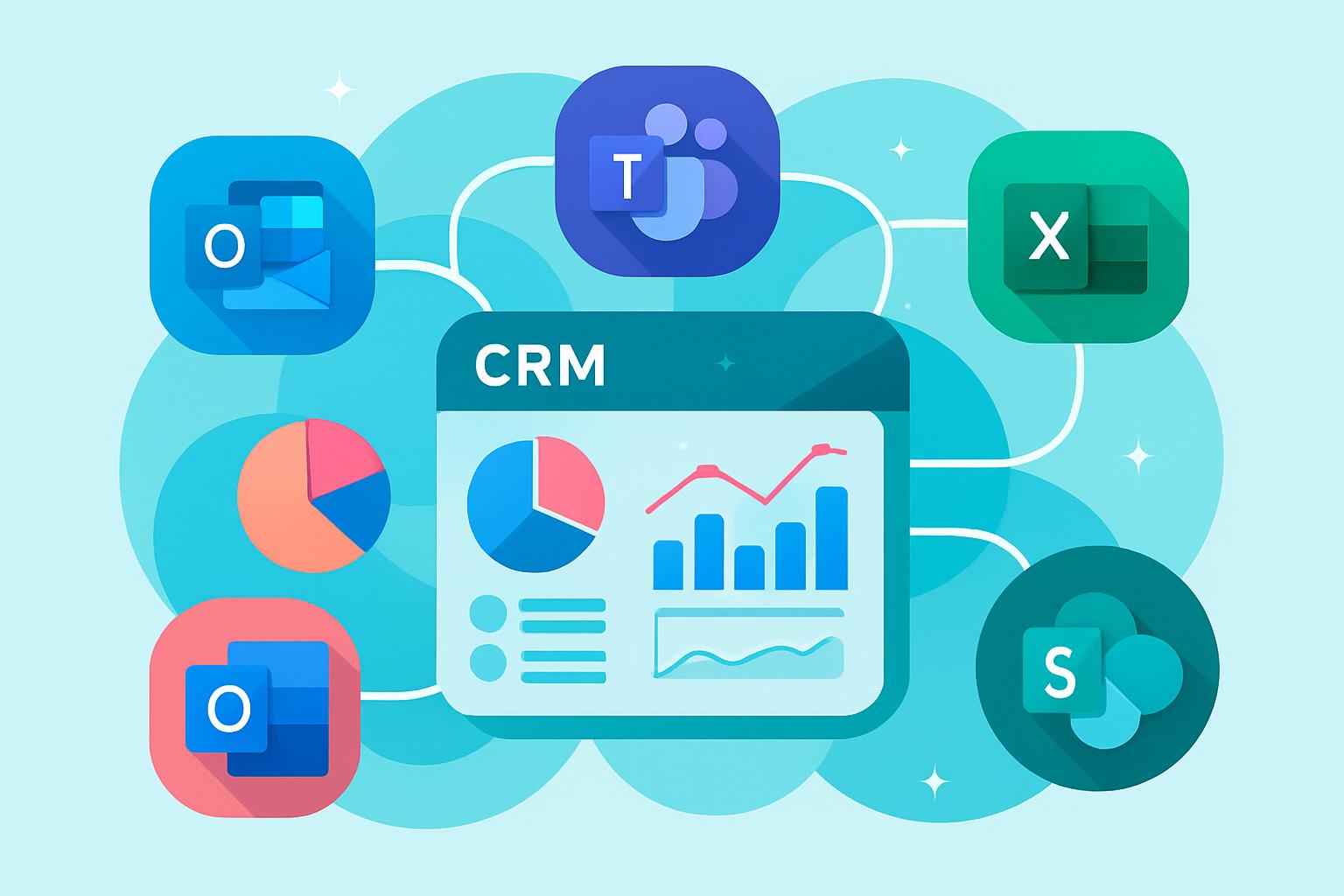
    Modern businesses run on interconnected tools, but productivity often gets lost when those systems don’t communicate effectively. Integrating your CRM with Microsoft 365 bridges that gap, turning scattered data into synchronized workflows. This post explores how connecting Microsoft apps like Outlook, Teams, and Excel with your CRM can transform daily tasks, support data-driven collaboration, and simplify decision-making across departments. You’ll discover practical integration benefits, key tools to enable seamless syncing, and why platforms like MainFoundry make unified work environments easier than ever.

    Integrating CRM with Microsoft 365 for Seamless Productivity

    When your CRM connects directly to Microsoft 365 tools, your team gains unified access to Outlook, Teams, SharePoint, and Excel. The integration eliminates redundant manual tasks and brings every communication, document, and meeting together into a single, data-rich environment. Beyond convenience, this connection builds an ecosystem where collaboration, analytics, and decisions happen faster and more intelligently.

    Platforms like MainFoundry make this process simple. By combining a unified CRM workspace with native Microsoft integration, your data automatically syncs between customer records, marketing campaigns, and financial dashboards. The result is consistent visibility across your organization and faster insight into business performance.

    “When every email, meeting, and spreadsheet is connected through your CRM, productivity scales naturally.”

    How Microsoft 365 Integration Improves CRM Efficiency

    With a CRM tightly integrated into Microsoft 365, your teams gain a single point of truth across sales, marketing, and finance. Instead of toggling between multiple apps, users can manage opportunities, campaigns, or invoices directly from Outlook or Teams. Microsoft’s single sign-on (SSO) ensures fast, secure access to connected tools without repeated logins, preserving both security and ease of use.

    • Automated contact and calendar synchronization reduces manual data entry.
    • Teams and Outlook integrations improve real-time sales collaboration.
    • Excel-based analytics enrich CRM forecasting and performance tracking.
    • Integrated authentication ensures compliance and streamlined access.

    Sales teams can track conversations and deals without leaving their inbox, while marketing leaders monitor campaign ROI from familiar Microsoft dashboards. Finance professionals can instantly export CRM data to Excel for real-time reporting. Integration tools such as Power Automate, Dataverse, and Azure Logic Apps add even deeper Microsoft-native automation. Extending this further, MainFoundry’s AI Assistant interprets synced CRM data, highlighting customer trends and suggesting next steps automatically.

    Pro Tip: Pair Microsoft Dataverse with Power Automate to enable real-time syncing across Dynamics 365, SharePoint, and your CRM for complete operational visibility.

    Creating a Unified Workflow Across Microsoft and CRM

    The strongest integrations enhance how your teams already work. A synced Outlook calendar can automatically populate CRM timelines with meetings and notes. SharePoint files link directly to proposals stored in your CRM workspace, while Excel reports pull live deal data for accurate forecasting. This natural flow of information eliminates duplicate data entry and accelerates collaboration.

    By linking these systems through MainFoundry, teams manage everything from marketing attribution to invoicing and recurring billing in one connected workspace. Microsoft’s Dataverse supports two-way synchronization, ensuring updates appear instantly across both platforms. This transparency enhances accountability while providing every team with accurate, actionable insight.

    Unified CRM and Microsoft 365 workflows reduce operational friction and accelerate decision-making across your organization.

    Key Takeaways

    Integrating your CRM with Microsoft 365 is more than a technology upgrade—it’s a productivity shift. You gain a connected system where communication, analysis, and workflow execution happen seamlessly. Key advantages include the elimination of data silos, enhanced visibility in Outlook and Teams, advanced analysis through Excel, and simple adoption through MainFoundry’s built-in Microsoft sync. Coupled with secure single sign-on, your teams can work confidently in one unified space.

    If you’re ready to unify data, communication, and analytics through Microsoft integration, explore how MainFoundry can help. Visit https://www.mainfoundry.com or reach out directly at https://www.mainfoundry.com/contact.

    Related Reading

    Discover more on optimizing workflows by reading How a Unified CRM Workspace Boosts Team Collaboration.