If you’re running a SaaS company below $10M ARR, you already know the challenge: each team works hard, but predictable revenue still feels out of reach. That’s where RevOps for small SaaS teams comes in—not as another department, but as a unifying way to operate. This guide explores how to align metrics, connect your data, and design workflows that drive revenue, even without a dedicated RevOps hire. You’ll learn how small SaaS teams can adopt lightweight, practical revenue operations tools and habits using one unified platform approach.
RevOps in Practice for Small SaaS Teams
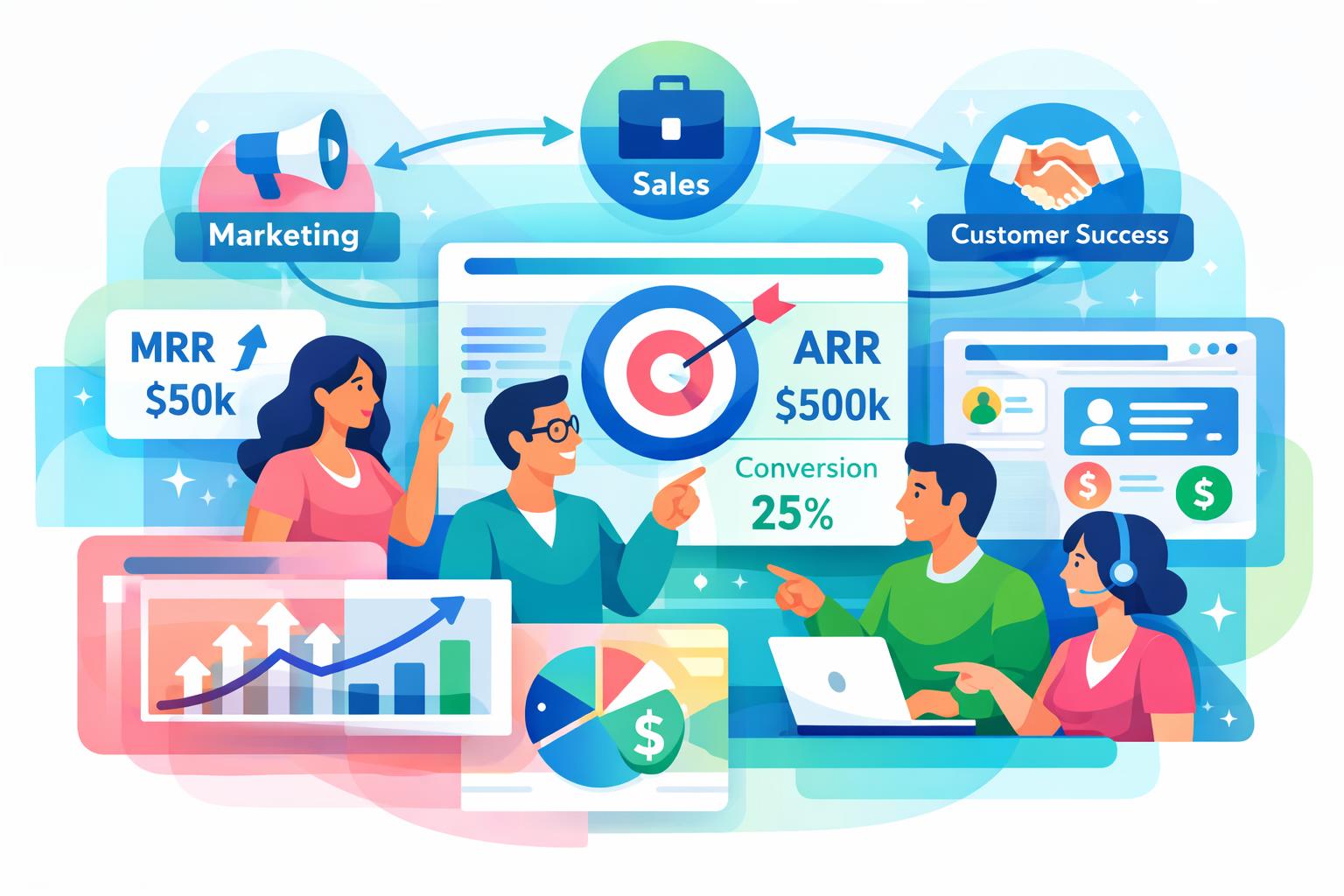
At its core, Revenue Operations (RevOps) brings marketing, sales, and customer success together around shared revenue goals. For smaller SaaS teams, that means simplifying processes—deciding what matters most, where data lives, and how deals transition from first touch to renewal. The first step is metric alignment. Rather than each team tracking separate dashboards, agree on a small set of transparent metrics like MRR, ARR, conversion rates, churn, and net revenue retention. When these are visible to everyone, conversations shift from assumptions to reliable data.
That shared visibility depends on a unified CRM. Manual spreadsheets and scattered tools quickly create confusion. A unified CRM system gives every team a single source of truth for company, contact, and deal data. With a connected view of activity history and subscriptions, founders can spot gaps early and manage revenue with confidence—without expanding software costs or headcount.
Next comes breaking data silos. Marketing insights, sales conversations, and billing data should all connect, ensuring that actions in one area affect results across the funnel. When your campaigns, deals, and renewals share a common dataset, everyone understands the downstream impact of their decisions. Platforms like marketing analytics and attribution tools and subscription and billing management make this seamless—no heavy integration projects required.
“Simplicity drives alignment. The most effective RevOps setups are the ones small teams can actually maintain.”
Workflows are the final link. Instead of over-automating, define clear handoffs between lead stages and teams. Prospects should meet entry criteria before becoming sales opportunities, and customer success should receive full context at handoff. Flexible custom workspaces allow teams to model these flows however they work best—whether simple Kanban boards or structured renewal sequences. Add AI only where it enhances context, not complexity. For instance, MainFoundry’s AI Assistant can summarize account history or suggest next steps based on live CRM data.
Scaling RevOps Principles as Revenue Grows
As your SaaS business moves toward $2–10M ARR, scaling RevOps means protecting clarity amid increasing complexity. Many teams over-engineer too early—adding forecasting or routing tools before the basics are stable. Instead, focus on tightening definitions. Ensure everyone agrees on what constitutes an active customer, how churn is recorded, and when pipeline stages change. This consistency keeps growth sustainable and analysis meaningful.
Regular rhythm helps reinforce structure: weekly pipeline reviews and monthly revenue check-ins maintain accountability without slowing execution. Because all activity lives in one system, these reviews are faster and more actionable. A unified platform such as MainFoundry aligns CRM, marketing, and billing data under one model. That minimizes manual syncing and reduces operational overhead—a core benefit before hiring dedicated RevOps talent.
Pro Tip: Build consistency first. The simplest RevOps discipline—shared definitions and visible metrics—delivers more clarity than any tool stack.
Key Takeaways
- RevOps for small SaaS teams focuses on alignment and simplicity—no extra hires or complex stacks required.
- Standardizing shared revenue metrics fosters transparency and better decision-making across functions.
- A unified CRM system eliminates data silos and keeps everyone working from the same source of truth.
- Simple, clearly defined workflows outperform heavy automation at early growth stages.
- Platforms like MainFoundry provide everything small SaaS teams need to run RevOps efficiently before scaling up.
Related Reading
Discover how alignment impacts growth in building a unified CRM system or explore marketing analytics and attribution strategies for small SaaS companies.