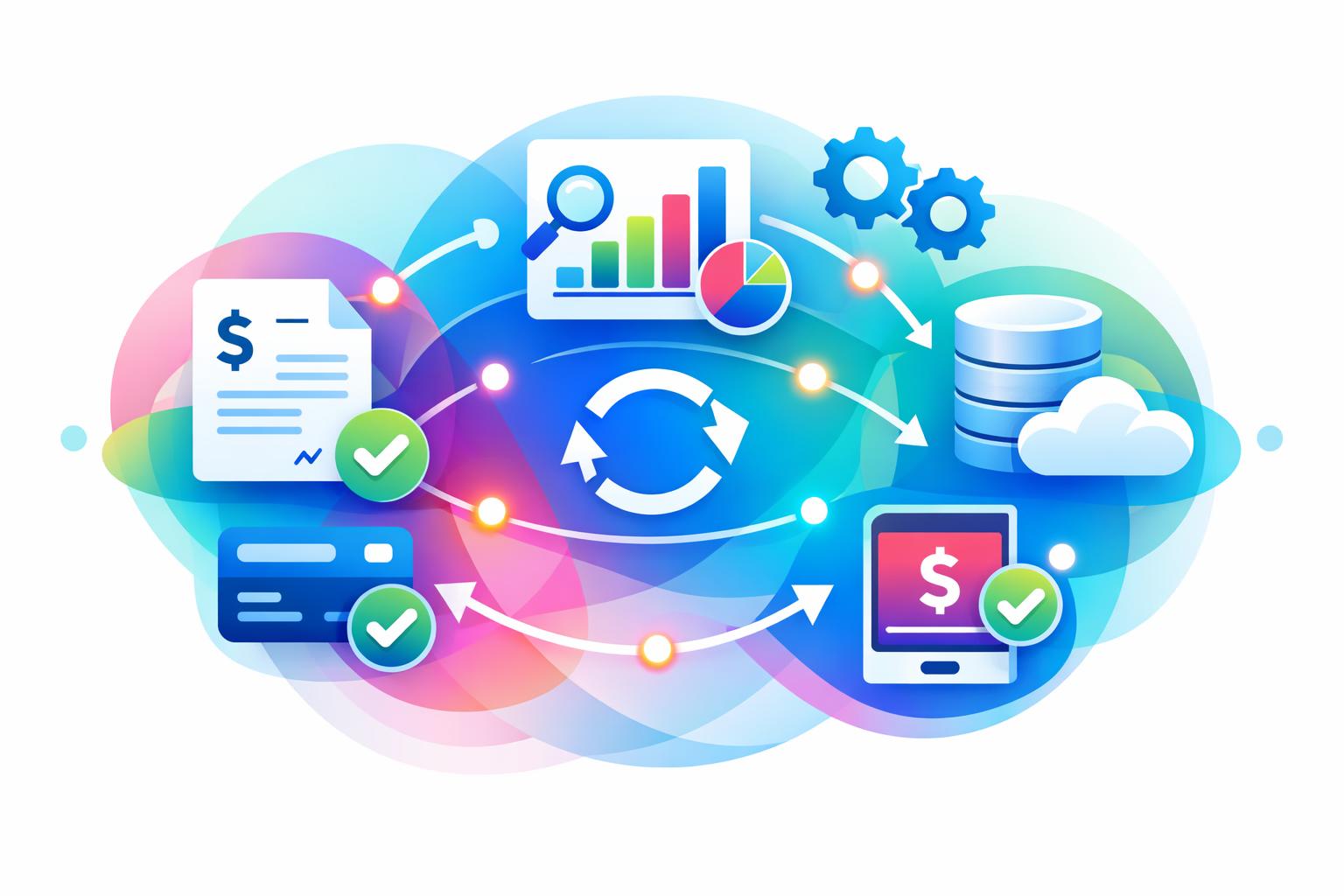
Managing accounting in a growing SaaS business can quickly turn into a juggling act with invoices, payments, and expenses scattered across multiple systems. The result is often manual reconciliation, duplicate entries, and reporting headaches. This post explores how e-conomic integration for SaaS teams, powered by MainFoundry, simplifies bookkeeping. You’ll discover how automated invoice syncing, payment matching, and expense categorization reduce friction and give finance teams the accuracy and speed they need to scale with confidence.
Why SaaS Teams Struggle with Disconnected billing and accounting
Most SaaS businesses begin with simple tools for billing and accounting—great for small customer bases but increasingly fragile as the business grows. Once subscriptions and revenue streams expand, exporting invoices and importing CSV files becomes a daily pain point. Even basic tasks like verifying payments or checking overdue invoices start eating into valuable time that could be spent on strategic work.
Disconnected systems cause delays in the order-to-cash cycle and produce inconsistent reports. Since SaaS metrics like revenue recognition and churn rely on precision, these gaps make informed decision-making harder. Integrating billing with accounting through an e-conomic integration for SaaS ensures that every financial action reflects real-time business activity—reducing errors and administrative drag.
“When billing and accounting move in sync, finance teams stop chasing data and start managing growth.”
How MainFoundry’s e-conomic Integration Automates Bookkeeping
MainFoundry connects CRM, billing, and finance functions in one platform—making its e-conomic integration particularly effective for SaaS teams. Once an order is confirmed or a subscription renews, the platform automatically generates an invoice and syncs it to e-conomic with the correct customer details, taxes, and totals. This eliminates the tedious step of re-creating invoices and ensures data consistency across systems.
The automation continues as payments roll in. MainFoundry matches each payment—whether through card or bank transfer—to the corresponding invoice and updates the status in both systems. This automatic reconciliation keeps accounts current and avoids duplicate or missed transactions. Likewise, expenses logged in MainFoundry flow seamlessly into e-conomic under the right categories, keeping reporting consistent as your transaction volume grows.
Automation in accounting isn’t just about saving time—it’s about ensuring every financial record mirrors real business performance.
With all billing, CRM, and reporting data unified, SaaS teams can easily trace financial insights back to specific customers or subscriptions. The integration enhances oversight while maintaining e-conomic as the core accounting ledger. You can read more about connected workflows through MainFoundry’s finance management features, which demonstrate how unified systems improve operational clarity.
- Faster invoice delivery without double entry
- Automatic payment reconciliation that keeps ledgers current
- Consistent expense categorization that scales effortlessly
Pro Tip: Integrations produce the best results when part of a single, unified system—avoid isolated connectors that increase maintenance and data risk.
Key Takeaways
An effective e-conomic integration for SaaS isn’t only about data synchronization—it’s about trust and scalability. By aligning billing, payments, and accounting processes, teams eliminate repetitive bookkeeping and reduce human error. MainFoundry delivers this automation in a way that’s both secure and scalable, giving finance leaders confidence in every report.
- Syncing billing with accounting ensures real-time financial visibility
- Automation minimizes manual touchpoints and compliance risk
- Integrated data improves forecasting and operational insight
- Unified platforms support better governance and audit control
Related Reading
Explore more automation strategies in Optimizing Your SaaS Finance Workflow.