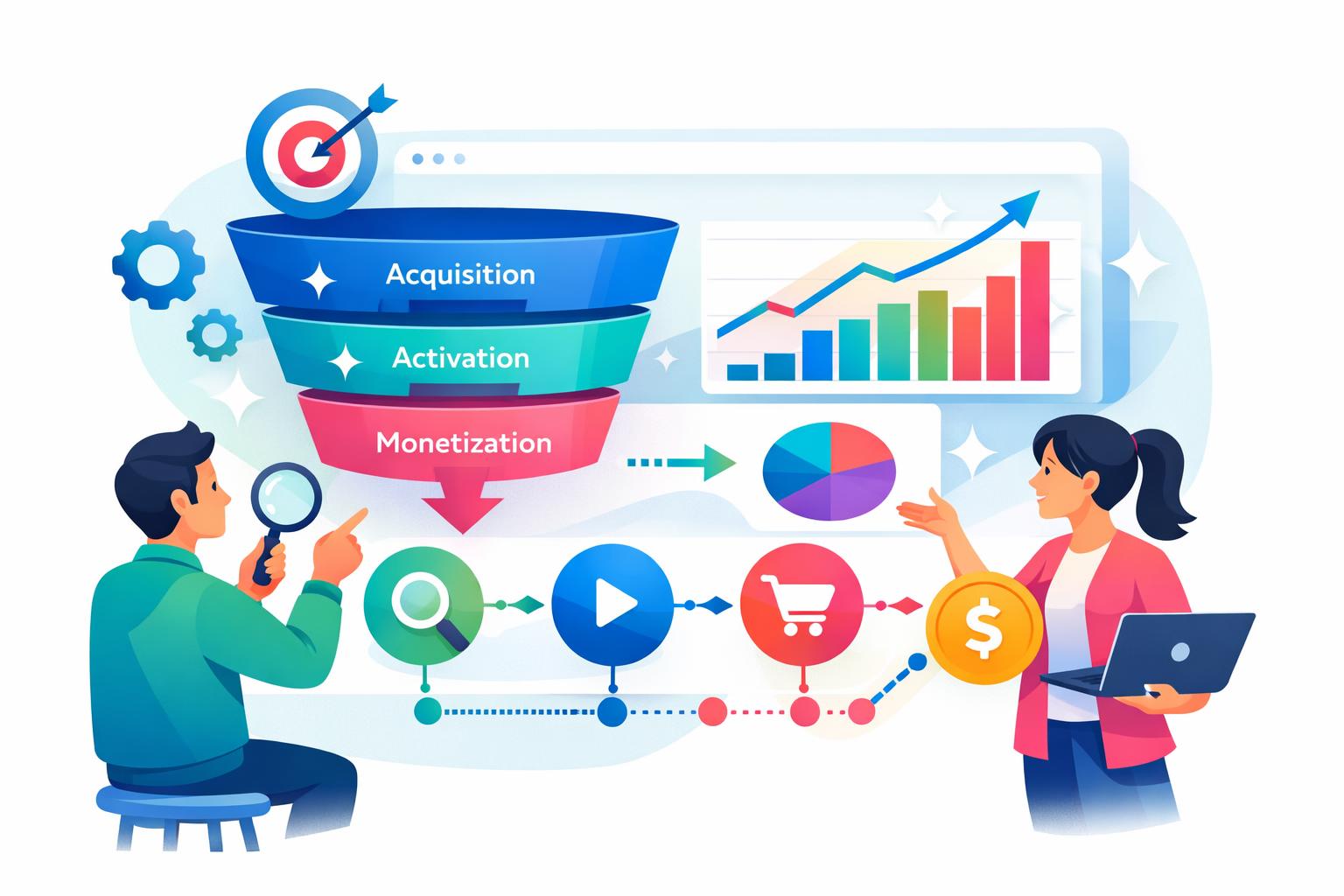
If you’re serious about growth, learning how to set up event tracking for SaaS marketing is no longer optional. Page views and vanity metrics can’t reveal which campaigns create real users, which users activate, or what truly drives upgrades. Event-based tracking solves this by connecting marketing activity to product behavior and revenue outcomes.
This guide outlines a practical, end-to-end framework for SaaS teams. You’ll learn how to define meaningful events, implement tracking across product and backend systems, and build funnels that show how signups turn into revenue. Along the way, we’ll see how MainFoundry’s integrated analytics and attribution tools help unify tracking without complex integrations.
Building a Strong Foundation for SaaS Event Tracking
Effective event tracking starts before any code is written. The biggest pitfall is skipping the conceptual step—teams often track everything without agreeing on what questions the data must answer. Begin by clarifying the business decisions you expect event data to support, especially around conversion quality and user activation.
To stay aligned, document a simple but clear tracking plan listing each event, triggers, locations, and attached properties. This shared reference prevents duplicate naming, missing data, and inconsistent properties. In SaaS, events commonly map to the lifecycle—acquisition, activation, engagement, and monetization. Each phase connects marketing signals to real business impact.
Consistency in structure allows platforms like MainFoundry’s marketing analytics to visualize which campaigns truly drive activation and upgrades.
“An event plan is not documentation—it’s alignment. It turns data from reactive reporting into proactive learning.”
From Implementation to Insight: Turning Events into Growth Data
With your event taxonomy defined, implementation becomes easier. Use client-side tracking for behavioral signals like feature usage and onboarding, and server-side tracking for revenue-critical actions such as signups and plan changes. Align user IDs across both for a unified dataset that tools like MainFoundry can merge with billing and subscription data.
Validation is equally crucial. During rollout, test core flows to ensure each event fires once with correct properties. Monitor event volumes regularly—unexplained drops often signal broken tracking, not behavior shifts. Maintaining clean, verified data avoids false insights later on.
Once your data flows reliably, connect the dots through funnels and conversion analysis. Start with visitor-to-signup, then signup-to-activation, and finally activation-to-upgrade. These funnels reveal where users succeed or stall, showing which acquisition sources bring engaged customers and which features predict upgrades.
Consistently structured events turn your funnel data into a map of growth—showing not just where users drop off, but why.
MainFoundry’s Events and Conversions modules simplify this by combining marketing data with product metrics. Because they share the same infrastructure, teams can analyze campaign impact, activation behavior, and subscription revenue without separate tools or syncs. As campaigns evolve, keep refining event definitions and funnels to sustain accuracy.
Key Takeaways
- Define clear marketing and product questions before instrumenting any events.
- Use consistent naming conventions and aligned identifiers across all tracking sources.
- Validate and monitor events continuously to ensure accurate reporting.
- Build funnels that connect acquisition, activation, and revenue for a full growth picture.
- Explore unified tools like MainFoundry to simplify analytics and reduce tracking complexity.
Related Reading
Read more about creating data-driven campaigns in Event-Driven SaaS Growth Strategies.