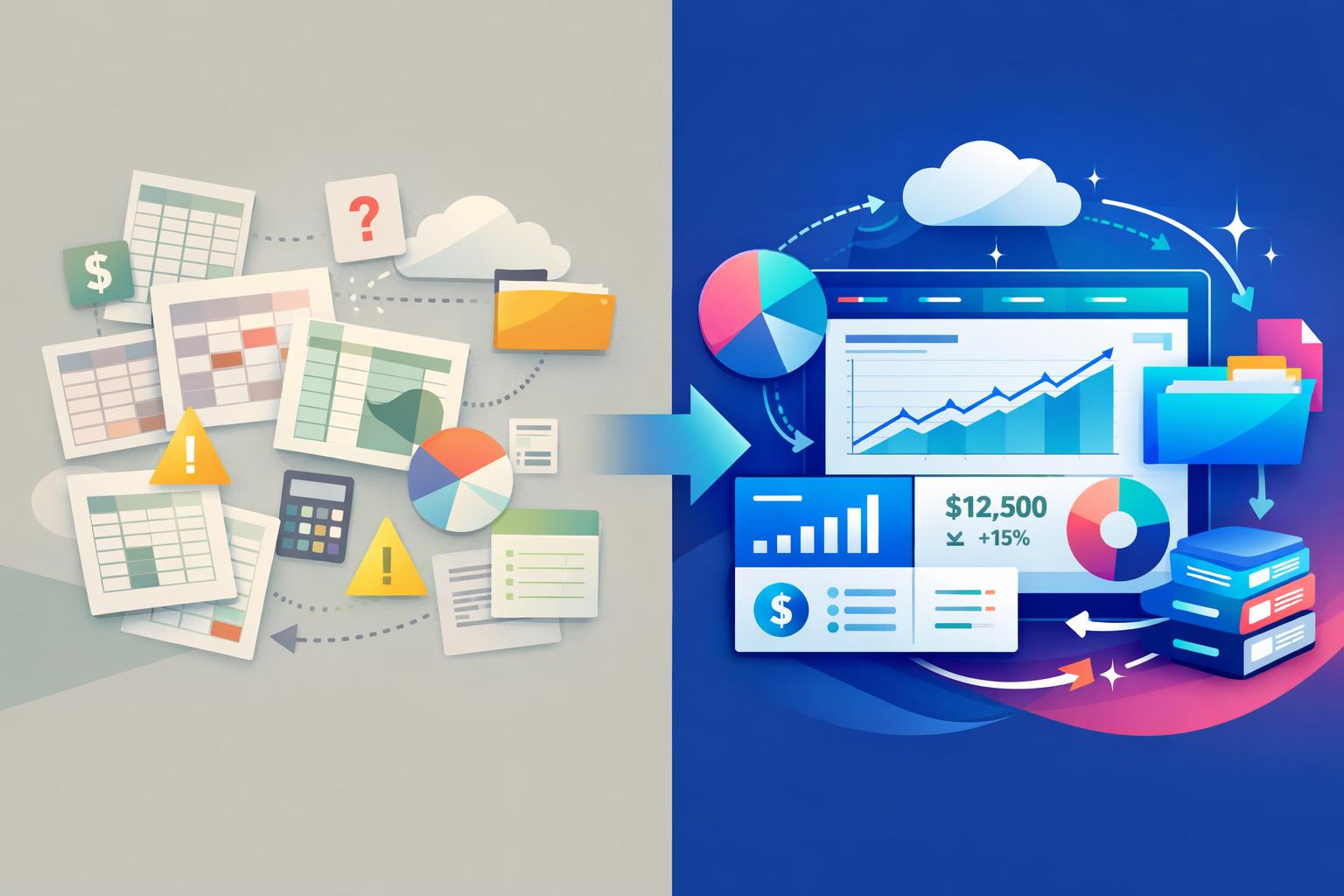
Financial reporting failures in SaaS don’t happen overnight—they grow quietly in spreadsheets and inconsistent data as startups chase speed over structure. Before long, what looked “good enough” becomes a liability. This post explores why SaaS companies fail at financial reporting, highlighting the early missteps that distort performance and create turbulence during growth. You’ll learn how small accounting inconsistencies lead to big problems, and how structured systems help SaaS teams build reporting that scales with clarity and confidence.
The hidden setup: why SaaS financial reporting goes wrong early
In the early stages of a SaaS business, financial hygiene often takes a back seat to growth. Founders prioritize launching features and signing customers, assuming they can “clean up the books” later. But SaaS financials are unique—subscription revenue, deferred income, renewals, upgrades, and lifetime value must be tracked systematically for decisions to be sound. When these details aren’t managed consistently, founders end up steering with distorted data, and investors quickly lose confidence.
Most financial reporting breakdowns stem from recurring mistakes: blending cash and accrual accounting, mishandling deferred revenue, and misclassifying expenses. Each alone might seem manageable, but together they create statements no one fully trusts. When deferred revenue is recognized too early, growth looks inflated and churn invisible—until sudden revenue drops expose the truth. Inconsistency between subscription data, billing tools, and financials compounds the confusion and makes audits painful.
“SaaS reporting failures rarely come from complexity—they come from inconsistency.”
Building structured systems that scale with your SaaS
Preventing future reporting chaos starts with consistent accrual-based accounting. Each contract should follow the same revenue recognition logic, updating automatically as customers renew or upgrade. Deferred revenue schedules must be tied to actual service delivery—not cash in the bank. This ensures your financial statements keep their internal logic even as transaction volume grows and business models evolve.
Equally critical is aligning operational metrics like MRR, ARR, churn, and expansion revenue with your financial system. Many SaaS teams track these metrics in isolated dashboards, disconnected from accounting data. When both metrics and financials pull from the same structured foundation, you gain a single version of truth. Platforms such as MainFoundry’s finance management tools make this integration seamless, ensuring deferred revenue and invoicing remain in sync from the start.
A clean chart of accounts and department-level expense tracking are equally important for clarity. They make metrics like gross margin and burn rate instantly visible, not buried in manual reports. With custom workspaces and flexible data models, teams can connect financial and operational insights without rigid templates. And by linking CRM and finance data directly through MainFoundry’s unified CRM integration, you can finally connect revenue to customers, contracts, and lifecycle stages—all in one consistent system.
Pro Tip: Invest in connected financial infrastructure early—fixing reporting when it breaks later costs exponentially more than building it right from day one.
Key Takeaways
- SaaS reporting issues begin early, caused by unstructured data and mixed accounting methods.
- Deferred revenue mismanagement inflates short-term performance while hiding churn and risk.
- Consistent accrual accounting and integrated systems create reliable, scalable financial visibility.
- Platforms like MainFoundry align subscriptions, billing, and CRM data to maintain a single source of truth.
- If your reports feel fragile, revisit your foundation—accuracy and consistency are the ultimate growth assets.
Related Reading
Discover how modern SaaS firms automate revenue recognition in MainFoundry’s billing and subscription insights.