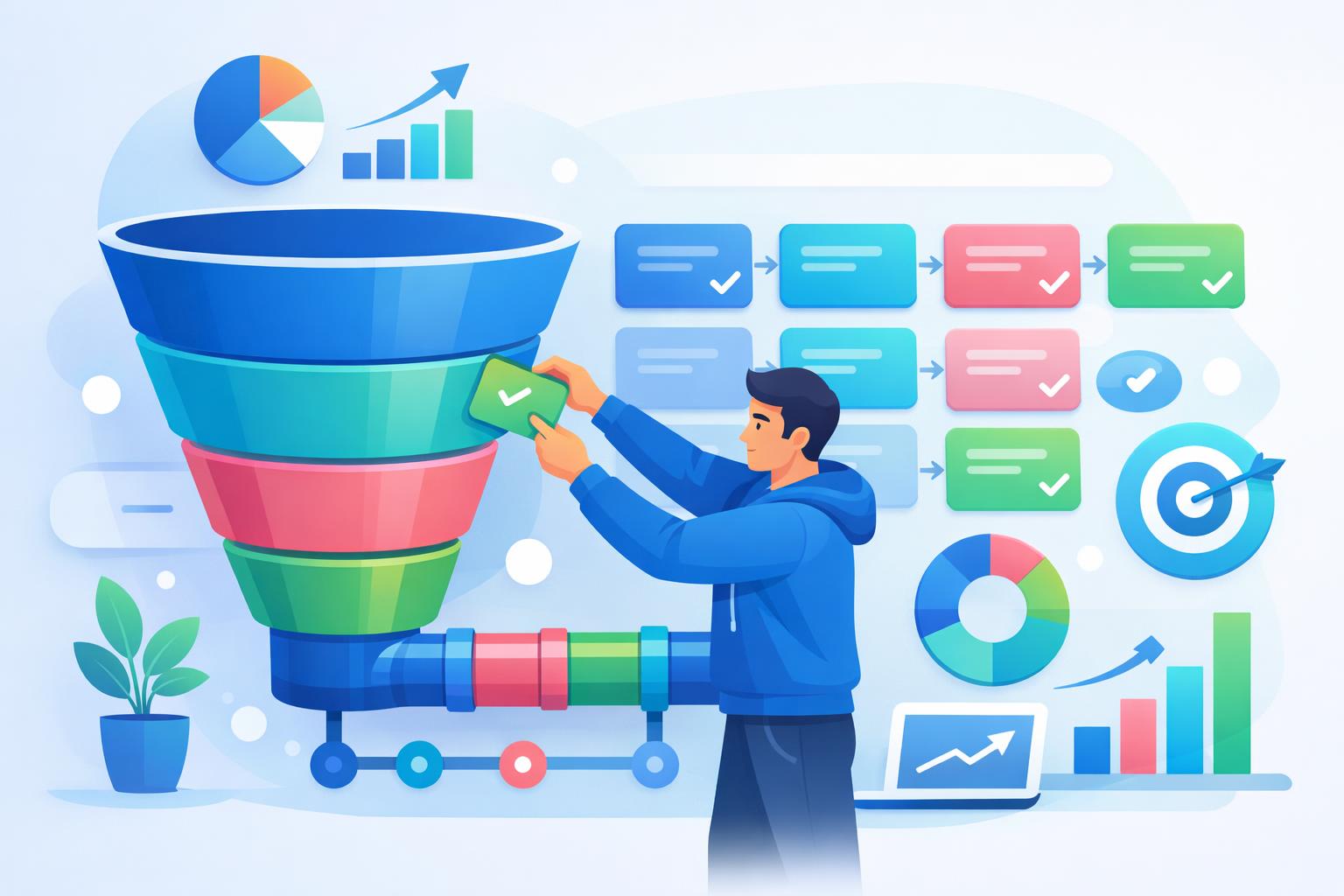
Building your first B2B sales process as a SaaS founder can feel like trying to juggle strategy and survival at once. You’re refining the product, talking with early adopters, and figuring out how to close deals without a clear blueprint. The key isn’t adding bureaucracy—it’s creating clarity. In this guide, you’ll learn how to define structured stages, create purposeful follow-up cadences, and measure conversion rates to transform founder-led selling into a predictable, scalable system.
Defining a B2B Sales Process with Clear Stages and exit criteria
At its core, a B2B sales process is a shared understanding of how a deal moves from first contact to a closed customer. For most early-stage SaaS teams, this involves six to seven realistic stages that mirror buyer behavior. The biggest mistake founders make is naming stages without defining what qualifies a deal to advance. That leads to bloated pipelines and unreliable forecasts.
Each stage should answer one simple question: *What must happen before this deal earns the right to move forward?* When you define clear exit criteria, your pipeline becomes a living to-do list rather than a wishful scenario. For instance, a deal shouldn’t leave prospecting because you sent an email—it should move forward only when there’s a meaningful response, like a booked meeting or a request for more details.
“Define the rules of progress early—your pipeline should reflect buyer action, not seller optimism.”
During qualification, exit criteria should confirm fit—evidence of a real problem, budget alignment, and access to a decision-maker. Without these, advancing to a demo creates false momentum. This is where using a unified CRM pipeline makes a major difference. In tools like MainFoundry’s CRM pipeline and activity tracking, every deal lives with its related emails, meetings, and tasks in a chronological view. Custom fields can enforce your qualification rules, keeping your data truthful as volume grows.
Pro Tip: Document exit criteria directly inside your CRM so new sales hires instantly understand what qualifies a deal to move forward.
Clearly defined criteria not only create better visibility—it also simplifies delegation. When you eventually bring in sales support, you’re no longer asking someone to “sell like you.” You’re giving them a structured playbook showing what good looks like at each stage of the journey.
Making Sales Predictable Through Follow-Up Cadences and conversion metrics
Once you define your sales stages, consistency becomes the next challenge. Deals rarely fall apart from disinterest—they fade due to vague follow-up. “Checking back in” is not a system. Strong follow-up cadences define when and how to re-engage at each stage, ensuring your outreach adds value rather than noise.
Effective cadences tie directly to pipeline activity. After an initial outreach, schedule a follow-up within a few days if there’s no response, ideally providing helpful context or new insight. Following a demo, structure touchpoints around next steps such as summarizing findings, confirming pricing, or reviewing a trial’s progress. When every email, call, or meeting automatically triggers a task, your pipeline no longer depends on memory—it operates on process. Platforms like MainFoundry’s custom workspaces make these workflows easy to model for trials, pilots, or proofs of concept.
Predictability emerges when follow-ups are scheduled, not remembered.
Once your activities are consistent, conversion metrics reveal your process health. Tracking how many deals move from stage to stage exposes where momentum stalls. For instance, if prospects often reach demos but few request pricing, your discovery messaging may need refinement. If trials rarely convert, focus on the onboarding experience or time-to-value. Dashboards like those in MainFoundry’s marketing and sales analytics can reveal where deals advance or drop off by linking source data, activities, and outcomes.
Over time, these metrics enable early revenue forecasting. Even if initial numbers fluctuate, they provide more accuracy than guesswork and improve as your process matures. What begins as founder-led selling can become a reliable system for steady growth.
Key Takeaways
- Define pipeline stages based on buyer actions and set strict exit criteria before advancing deals.
- Systemize follow-up cadences to maintain consistency and prevent opportunities from going cold.
- Use conversion metrics between stages to diagnose bottlenecks and prioritize improvements.
- Centralize pipeline visibility, activities, and analytics in one platform like MainFoundry for unified tracking.
- Iterate regularly—your first version of the process is the foundation for scalable, predictable growth.
Related Reading
Learn more about building predictable SaaS growth systems in MainFoundry CRM and activity tracking.